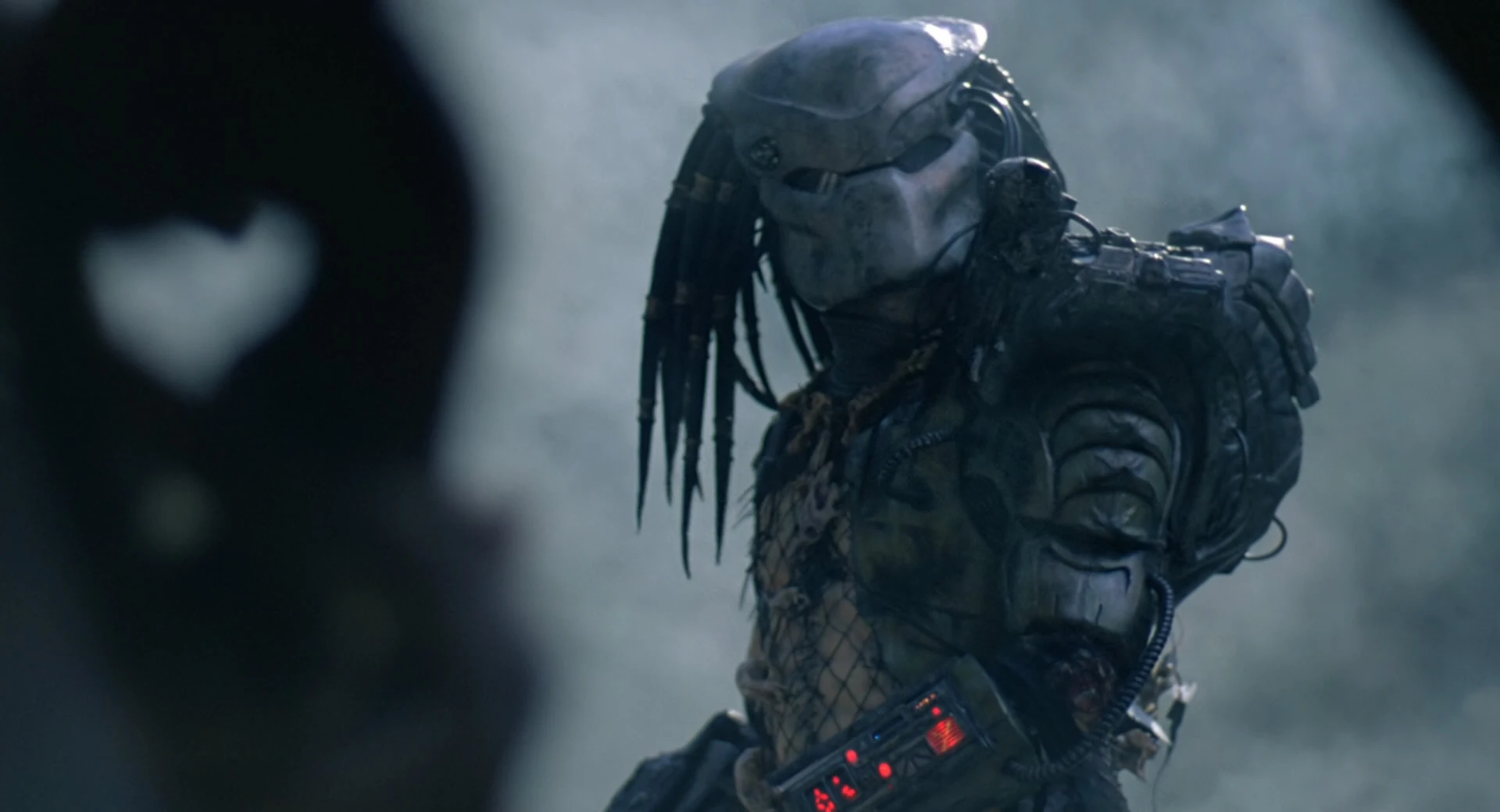
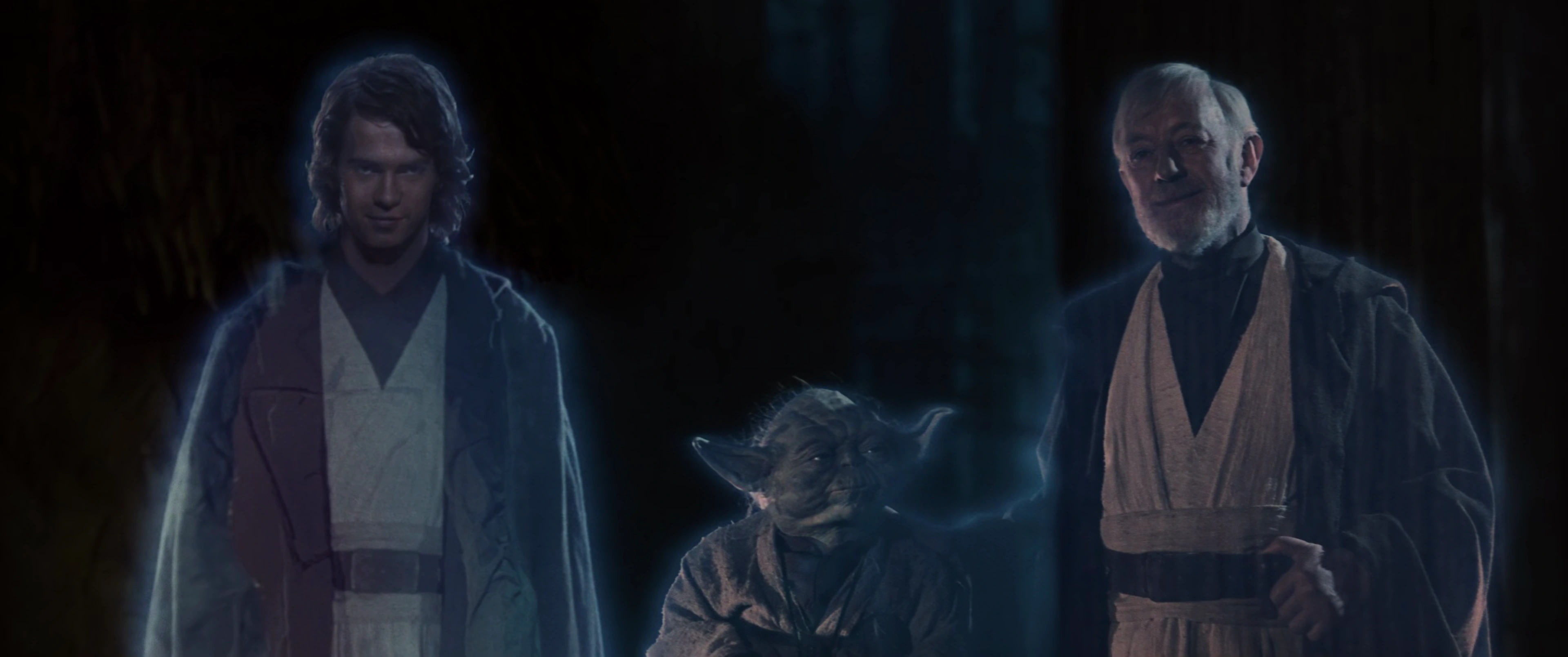
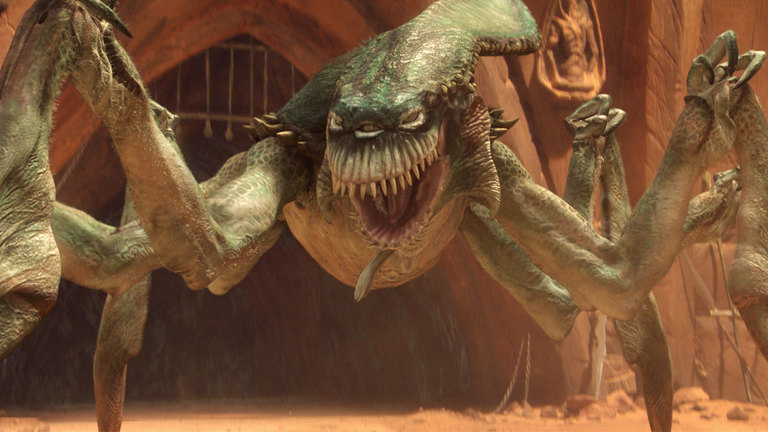
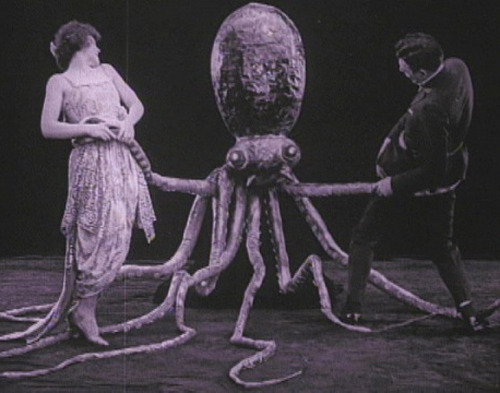
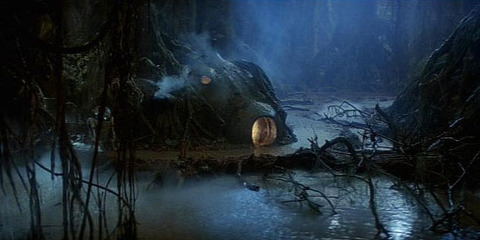
Yesterday, I released a document on Broken Communion ghosts, including the means of creating your own. I want to follow this up with a few sample ghosts, in part to test how such rules work and make sure that I have all necessary pieces in place, and also to offer you, dear reader, an idea of what such ghosts might look like. Naturally, any of these can be dropped into your Psi-Wars game, but they can also be adjusted and used in a horror or Monster Hunters game.
This is a publicly available document, available for free and it should be fairly easy to divine how these ghosts are intended to work, but if you're not yet a patron and would like a better understanding of the system behind their creation, the design document is available to all $1 patrons, and can be accessed via the link above.
If you're a patron, check it out. If you're not a patron, you can still check it out! And enjoy.
Showing posts with label Psi Wars - Iteration 5. Show all posts
Wednesday, January 24, 2018
Tuesday, January 23, 2018
Patreon Special: Space Ghosts Revisited
![]() |
| Ghost Cvlt by Ramsesmelendez |
When I first dove into Communion itself, I wanted to break up the simplistic duality of “good and evil” that Star Wars offered. I don’t necessarily object to “good and evil,” I just find that it can sharply limit the sort of stories GMs might want to tell or what sorts of characters people want to play. I conceived of Broken Communion as the crux of that change, as it introduced something that both “Good” and “Evil” could face off against, (the “Ugly” of “the Good, the Bad and the Ugly”), or something that could redefine “evil.” What’s worse, someone who is selfish but mostly hurts themselves, or a broken person who hurts others without meaning to? I wanted Broken Communion to offer both a terrible evil to fight, and a terrible pain to heal, creating a tension that was neither really evil, nor really good, but still a potential problem.
The core of that “problem” would be in its effects on the psionic characters who interacted with it the most. Those who wielded it would find themselves corrupted by it, and those who entered areas sacred to Broken Communion would find their psychic powers twisted by it. I also suggested that Broken Communion, unlike other forms of Communion, might “create miracles on its own.” In principle, any form of Communion might do this (Miracles “just happen” all the time), but Broken Communion seemed especially prone to doing that.
I left the details up to the GM, but the theme of “haunting” definitely arose from the ideas in Broken Communion and the nature of its miracles. Where True Communion had themes of the holy and sacred and Dark Communion had themes of fantasy-esque “cool evil,” with raging orcs and demonic seductresses and dark wizards, Broken Communion had distinctly horrific imagery. The haunted spaceship, the mass grave, or the terrifying jungle full of stalking, squamous things might all be places steeped in Broken Communion. But I left the details of this up to the GM.
I have found, though, from the feedback of my fans, that many of you don’t really like this “leave the details up to the GM” mentality. It’s rife through GURPS, especially in books that don’t really succeed, while books that make those details much more explicit, including catalog books like GURPS Magic, or campaign frameworks like GURPS Dungeon Fantasy, tend to do really well. In retrospect, this makes sense: if you knew how to do it, you would, and you could ignore any details I give you that you dislike. If you can’t, a vague suggestion is of no help, but a highly detailed discussion of how it might work helps a great deal. Thus, it’s better to favor too much detail over not enough (provided that detail doesn’t become mandatory).
Thus, I came upon the handle of ghosts.
Monday, July 24, 2017
Patreon Post: (Old) Dreadnought Playthrough
I've wanted to take some time to look at spaceships again, because I see more points where they need work, and especially as dive into the specifics of Iteration 6, I want to take greater control over my setting (using generic Starhawks and Typhoons is fine if we want to just rapidly prototype a setting, but if I'm going to build it in detail, why not build my ships as well?)
This is likely to go on for awhile, and this week is mostly cleaning up loose ends. This also means I need to dive into whatever changes I propose to make sure they work, so I hope you like playtests! Most of these will be $1+, because, they're mainly mechanical asides and technical discussions, but when I start building ships for the final version, those will be $3+.
Today's post is a companion post to an old post, going back to the dawn of my Patreon, back, I think, to literally my first Patreon exclusive. It's the playtest between dreadnoughts that confirmed the rules I documented in Dreadnoughts Revisited. I've gone ahead and included the resulting document here, for ease. I'm posting this because a few of my Patrons heard it existed and were very curious about it. Note that by the time my update is finished, a lot of the rules contained herein will be invalidated, but I find it a fun read, especially the battle between the Reaper and the Rain of Fire (the third one), which is the first time I think I've ever shown dreadnoughts at their actual scale of power.
It's for $1+ Patrons, so if you're a Patron at all, check it out! If not, as always, I'd love to have you.
This is likely to go on for awhile, and this week is mostly cleaning up loose ends. This also means I need to dive into whatever changes I propose to make sure they work, so I hope you like playtests! Most of these will be $1+, because, they're mainly mechanical asides and technical discussions, but when I start building ships for the final version, those will be $3+.
Today's post is a companion post to an old post, going back to the dawn of my Patreon, back, I think, to literally my first Patreon exclusive. It's the playtest between dreadnoughts that confirmed the rules I documented in Dreadnoughts Revisited. I've gone ahead and included the resulting document here, for ease. I'm posting this because a few of my Patrons heard it existed and were very curious about it. Note that by the time my update is finished, a lot of the rules contained herein will be invalidated, but I find it a fun read, especially the battle between the Reaper and the Rain of Fire (the third one), which is the first time I think I've ever shown dreadnoughts at their actual scale of power.
It's for $1+ Patrons, so if you're a Patron at all, check it out! If not, as always, I'd love to have you.
Friday, March 24, 2017
A Psi-Wars Round-Up
I should pay better attention.
I wrote Psi-Wars for people to use, so when I see people using it, that warms my heart. I also believe in the Death of the Author, in the sense that I do not believe my way is the only way to run Psi-Wars, or even that it's my own setting (that's why Iteration 5 was a very good stopping point, because it gives GMs the tools they need to write their own material). Thus, when someone creates new material or goes in a new direction, I feel that adds to Psi-Wars. It can also highlight weaknesses and things I need to shore up, which makes it good feedback for me as well.
Today, I've got two blogs for you, both of which have been delving into Psi-Wars. The first is adding lots of optional rules to everyone's favorite mechanic: Communion. The second is actually using Psi-Wars for a campaign. Fun!
I wrote Psi-Wars for people to use, so when I see people using it, that warms my heart. I also believe in the Death of the Author, in the sense that I do not believe my way is the only way to run Psi-Wars, or even that it's my own setting (that's why Iteration 5 was a very good stopping point, because it gives GMs the tools they need to write their own material). Thus, when someone creates new material or goes in a new direction, I feel that adds to Psi-Wars. It can also highlight weaknesses and things I need to shore up, which makes it good feedback for me as well.
Today, I've got two blogs for you, both of which have been delving into Psi-Wars. The first is adding lots of optional rules to everyone's favorite mechanic: Communion. The second is actually using Psi-Wars for a campaign. Fun!
Thursday, February 23, 2017
Ending Iteration 5... and Beginning Iteration 6
I'm going to tell you what I should do. I should take all of the stuff I've just given you, and then offer some worked examples. For example, perhaps I could fully detail the Dun Beltain's homeworld, the World of Grist: I could show you the culture, the terrain, a few strange critters lurking in the bowels of the sewers, some of the races that frequent the world, etc. Why not do that? Because if I'm going to do that, I might as well build the entire setting!
As always, when I end an iteration, I explain why we can just stop here, and Iteration 5 is no different. With this iteration, I created the tools we need to build our own planets, organizations, cultures, etc, which means that if our players need to visit some Random New World, we can build one with a little bit of work. There's no explicit need to create a cohesive setting, since we can just keep making up stuff as we go (which is precisely what I've been doing up until now). After all, each piece can stand on its own.
But if I'm going to show you how to create a world, or an organization (say, the Empire), why not go all the way and make it official and part of my completed setting? Setting elements might interrelate in some way (How does the history of Grist interact with the history of the setting? How does it feel about the Empire? Does it house sites sacred to a widespread faith?), and when building a setting, it's often easiest to create a great framework and then begin to plugin the holes. If I'm going to think of the details of a specific world (its history and its religion and how it relates to the larger setting), I might as well go ahead and detail those other parts of the setting along with it. That's not the intention of Iteration 5, of course. We should be able to get away with not doing that, but it kills two birds with one stone, and I'm beginning to tire of Psi-Wars. I want to finish it sooner than later. So, I'm going to do it this way.
Iteration 6 thus becomes Psi-Wars as a Specific Setting and doubles as "the playtest/worked example of Iteration 5."
Oh, and are you here for the downloads? You can find them here (and in the Primer). Note to my Patrons: This material includes the most up-to-date stuff, including your feedback.
As always, when I end an iteration, I explain why we can just stop here, and Iteration 5 is no different. With this iteration, I created the tools we need to build our own planets, organizations, cultures, etc, which means that if our players need to visit some Random New World, we can build one with a little bit of work. There's no explicit need to create a cohesive setting, since we can just keep making up stuff as we go (which is precisely what I've been doing up until now). After all, each piece can stand on its own.
But if I'm going to show you how to create a world, or an organization (say, the Empire), why not go all the way and make it official and part of my completed setting? Setting elements might interrelate in some way (How does the history of Grist interact with the history of the setting? How does it feel about the Empire? Does it house sites sacred to a widespread faith?), and when building a setting, it's often easiest to create a great framework and then begin to plugin the holes. If I'm going to think of the details of a specific world (its history and its religion and how it relates to the larger setting), I might as well go ahead and detail those other parts of the setting along with it. That's not the intention of Iteration 5, of course. We should be able to get away with not doing that, but it kills two birds with one stone, and I'm beginning to tire of Psi-Wars. I want to finish it sooner than later. So, I'm going to do it this way.
Iteration 6 thus becomes Psi-Wars as a Specific Setting and doubles as "the playtest/worked example of Iteration 5."
Oh, and are you here for the downloads? You can find them here (and in the Primer). Note to my Patrons: This material includes the most up-to-date stuff, including your feedback.
Wednesday, February 22, 2017
The Traders Part 2: Culture
Last week, I introduced a series of polls for my Patrons for the creation of a new alien race known as "the Traders." An ancient race, the Traders had once warred with humanity for control of the galactic center and lost, the Carthage to humanity's Rome. I wanted them to be a clever "mastermind" race, but without a focus on psionic abilities, but beyond that, I had no idea what they should be.
The poll proved to be a hit, and I realized I had more room for user input. I intended to use Part 1 to illustrate the precepts of alien design: We need to know what they're like, we need to give them an obvious visual ("Weird-Pretty") and narrative signature ("They trade"), a mechanical schtick (ETS, Hyperdimensional Meditation, physical frailty), and then bind them into the setting (They look out for themselves). The result is a nice and trim template, but with lots of flavor, which is ideal.
But what I missed still was culture. If you hang out with Traders, what do you see? How do they dress? What do they eat? They're alien because they're physically alien, sure, but are they culturally alien? That's an open question, of course. Some aliens will just integrate with the local populace and loose any sense of unique identity, but others retain a deeply unique culture, and based on the polls, it seemed clear that the Traders were a unique culture that retained a sense of identity.
So that brings us to step 2: Trader Culture. Using the cultural checklist, I picked out a variety of values that I found potentially appropriate, a few distancing mechanisms (I have a couple more in mind: Trader language is very unique, for example, as is their life on starships), a question about how Traders organize themselves, and what cool additional secret techniques and arts they get. With that complete, we should know not just what they look like, but what life with them is like, at least enough to have space adventures with them, which is what matters.
If your a Companion-level Patron ($5+), come over and vote. If you're not, we'd love to have you, and the eventual results will be in the final setting document.
The poll proved to be a hit, and I realized I had more room for user input. I intended to use Part 1 to illustrate the precepts of alien design: We need to know what they're like, we need to give them an obvious visual ("Weird-Pretty") and narrative signature ("They trade"), a mechanical schtick (ETS, Hyperdimensional Meditation, physical frailty), and then bind them into the setting (They look out for themselves). The result is a nice and trim template, but with lots of flavor, which is ideal.
But what I missed still was culture. If you hang out with Traders, what do you see? How do they dress? What do they eat? They're alien because they're physically alien, sure, but are they culturally alien? That's an open question, of course. Some aliens will just integrate with the local populace and loose any sense of unique identity, but others retain a deeply unique culture, and based on the polls, it seemed clear that the Traders were a unique culture that retained a sense of identity.
So that brings us to step 2: Trader Culture. Using the cultural checklist, I picked out a variety of values that I found potentially appropriate, a few distancing mechanisms (I have a couple more in mind: Trader language is very unique, for example, as is their life on starships), a question about how Traders organize themselves, and what cool additional secret techniques and arts they get. With that complete, we should know not just what they look like, but what life with them is like, at least enough to have space adventures with them, which is what matters.
- Trader Culture: An Introduction
- Trader Cultural Poll 1: Values
- Trader Cultural Poll 2: Distancing Mechanics
- Trader Cultural Poll 3: Organization
- Trader Cultural Poll 4: Additional Arts
If your a Companion-level Patron ($5+), come over and vote. If you're not, we'd love to have you, and the eventual results will be in the final setting document.
Tuesday, February 21, 2017
Patron Post: The Traders (First Draft)
Last week, I put together a poll for the $5+ patrons to help me design the first Psi-Wars race, named "the Traders," an ancient race of wandering space merchants that once warred with humanity over dominion of the galactic center. Now, I offer the results of the poll, with a few edits where I had to best interpret what my voters wanted. This material is available to all $3+ patrons!
If you're a patron, check it out! If you're not a patron, I'd love to have you.
Thursday, February 16, 2017
Patron Post: Power-Up Previews
A lot of my work lately has been on organizational power, and I think some players will really want to embrace that beyond what the Officer and the Diplomat can do. They'll want to be more than action heroes, and become the movers and shakers of the setting who happen to also be action heroes. In that line, I've worked on a few new power-ups, one associated with the Spy and the Diplomat, which you may have already seen, and an entirely new power-up anyone can take for 50 points: the Conspirator and the Magnate.
If you want to look at the design notes and get a deeper look at the logic of them, become a $1+ patron!
Psi-Wars: Extreme Aliens!
| Hmmm, a little outside of your point budget |
On a related note, some of the templates I pointed you to back on Monday were too expensive for a mere 50 point template. None of the racial templates from Monster Hunters 5, for example, are remotely affordable on a 50-point budget, and your horrific Things Man Was Not Meant To Know certainly don't fit on that level of a budget. And, in a sense, that's fine, because they don't really need to fit into 50 points because, like Hutts and Wookies, their race is obviously their dominant trait. One does not introduce a Thing Man Was Not Meant To Know knowing you'll have to field questions like "What? Like a Thing Man Was Not Meant To Know Cop? Or maybe a Thing Man Was Not Meant To Know Scientist?"). But if they don't fit in our current model of character design, how do we play them?
We need a way to handle both of these problems, which are clearly interconnected. Fortunately, we have an answer and, as before in this iteration, it's Dungeon Fantasy that rides to our rescue. Specifically, Pyramid #3-50 Dungeon Fantasy II, with its article "Races as Professions." Here, Sean Punch rewrites Elves and Dwarves as occupational templates worth 250 points. For our extreme races, we can do the same. We don't have Hutt Bounty Hunters, we just have Hutts, because a Hutt costs 250 points, and he's a self-contained template.
Wednesday, February 15, 2017
Patreon Post: Building the Traders
I am, of course, knee deep in Iteration 6 as of this writing and already hard at work on the Psi-Wars setting. I've wanted user input on the Psi-Wars setting for awhile, and one of my favorite gaming companies, Amplitude, uses polls for user-content in its games, and I thought I'd follow suit. Polls allow me to direct your attention in a useful way and allow me to offer snippets of inspiration. Naturally, the end result will likely be a blend of interests and approaches, a compromise between me and my readers, but that's just how RPGs work, right?
So, today, I have the first of these, available to all my $5+ Patrons. This regards "the Traders," an ancient race of mastermind aliens that competed with humanity for dominion over the galactic center, and lost. The design uses the lessons offered in the Aliens series, including themes and niches, including:
If you're already a $5+ patron, check it out! If you're not but want to join, I'd be happy to have you.
Psi-Wars: Building Aliens Part 2: Mechanics and Templates
The beating heart of a race is its template, even if that template is constructed only of 0-point features. Yesterday, we worked guidelines and a framework for building a context for our race, what the race means for the narrative. Now, we need to work out what the race means for the mechanics of the game.
Building a template is more art than science and is ultimately subjective, but I personally think that, when designing racial templates, you should consider at least three things:
- How the mechanics of the template interact with the fluff of the race's narrative
- How the template shapes development and play for the PC
- How the template sets the race apart, and makes it a unique experience for the player.
If you want an example of someone giving a thorough fisking to racial templates, check out Psuedonym's review of the DF 3 races. He does a pretty good job of pointing out which templates are interesting and which are boring. It's our job to figure out why.
Tuesday, February 14, 2017
Psi-Wars: Building Aliens part 1: Concept and Theme
Yesterday, we discussed aliens in Psi-Wars and where to get them if you need something immediately. In a sense, that makes a good "first step" for Psi-Wars, but players will almost certainly want something more original and the GM will want something better tailored to his setting. In that case, we need to make our own aliens.
Building aliens is "just" a matter of building a template. This is simple enough, and discussed in detail in GURPS Campaigns on page 450. But I wouldn't write an entire post, just to tell you that, would I? Everyone already knows that bit. What they struggle with is how to come up with a good concept, and how to come up with a good design. Alas, we don't really have additional details in any GURPS book I can find, though I will note that Template Toolkit 1 does have some essentially good advice on templates in general despite a focus on occupational templates.
At its core, designing a racial template is no different than any other RPG mechanic, in that you need both context ("fluff") and mechanic ("crunch") and they need to complement each other well. Players who see the template need to immediately grasp what it is, what purpose it serves in the setting, and why it would be interesting to play. Star Wars, in particular, needs cinematic shorthand for its aliens. The movies never stopped to explained that Gamorreans are dumb muscle, for example, it's just obvious from the very first time you see one. Given the huge volumes of aliens that will likely fill our setting, we should follow suit.
Remember "Who Gives a Sh*t?" from the beginning of this iteration? This definitely applies to alien creation. For players who aren't deeply involved with the alien race, we don't want them to have to do homework to understand our new alien, thus we need our cinematic shorthand: the alien and its purpose should be instantly identifiable from the first description in the game, but if someone is going to play one, they'll want, at a minimum, a social context to know how to play them (what is their culture? How do they relate to the rest of the setting?) and a mechanical context (their template) and ideally enough detail that, while entirely optional, means you have plenty of story hooks and information you can feed the players should the race become increasingly important in the game.
Today, I'm going to focus on building up a good and instantly recognizable concept. Tomorrow, I'll work out the deeper mechanics, like the template.
Building aliens is "just" a matter of building a template. This is simple enough, and discussed in detail in GURPS Campaigns on page 450. But I wouldn't write an entire post, just to tell you that, would I? Everyone already knows that bit. What they struggle with is how to come up with a good concept, and how to come up with a good design. Alas, we don't really have additional details in any GURPS book I can find, though I will note that Template Toolkit 1 does have some essentially good advice on templates in general despite a focus on occupational templates.
At its core, designing a racial template is no different than any other RPG mechanic, in that you need both context ("fluff") and mechanic ("crunch") and they need to complement each other well. Players who see the template need to immediately grasp what it is, what purpose it serves in the setting, and why it would be interesting to play. Star Wars, in particular, needs cinematic shorthand for its aliens. The movies never stopped to explained that Gamorreans are dumb muscle, for example, it's just obvious from the very first time you see one. Given the huge volumes of aliens that will likely fill our setting, we should follow suit.
Remember "Who Gives a Sh*t?" from the beginning of this iteration? This definitely applies to alien creation. For players who aren't deeply involved with the alien race, we don't want them to have to do homework to understand our new alien, thus we need our cinematic shorthand: the alien and its purpose should be instantly identifiable from the first description in the game, but if someone is going to play one, they'll want, at a minimum, a social context to know how to play them (what is their culture? How do they relate to the rest of the setting?) and a mechanical context (their template) and ideally enough detail that, while entirely optional, means you have plenty of story hooks and information you can feed the players should the race become increasingly important in the game.
Today, I'm going to focus on building up a good and instantly recognizable concept. Tomorrow, I'll work out the deeper mechanics, like the template.
Monday, February 13, 2017
Aliens in Psi-Wars: Who they are and Where to find them
| Alien Heads Concept 1 by Zarnala |
When Star Wars isn't using aliens to tell a specific story, it simply populates scenes with them, to remind you that the story is set in space and not in the wild west or Edo-era Japan. We often don't even get any details about the aliens shown. For example, it took the West End Star Wars RPG before we got the name "Twi'lek." This makes sense, after a fashion, as a movie just needs some crazy costumes, but a role-playing game needs additional detail, especially if a player wants to play one. If a player says "I want to play a member of that tentacle-head species from Return of the Jedi!" then the GM needs access to details on their race, what their stats are, what they're called, etc. We need to do our homework before players can play.
Star Wars is a very cosmopolitan setting, as is the Action genre. In the latter, a Chinese businessman might dine with his African business partner somewhere in Paris, and that makes perfect sense, and in the former, we never find Twi'leks just on Ryloth, but all over the galaxy. There's no reason not to expect to find one on Coruscant or on Tatooine, or even as a Jedi. Given the fact that we have an entire galaxy worth of aliens we'd expect to meet countless aliens, far more than we can possibly stat. See "Aliens Everywhere" from GURPS Space, page 21.
This week, I'm going to discuss how to write our own aliens, but given the sheer volume of aliens we might need to sprinkle through our setting, I want to stop and take a look where you can find existing aliens to populate Psi-Wars with as little effort as possible.
Thursday, February 9, 2017
Patreon Post: Rethinking Communion
It's another Patreon post, and this time, I look at Communion. I've collected all of this material into the Iteration 5 final documents (available already to my $3+ patrons), but if you want a preview, or you want to see the design rules behind them, check out my patreon! This material is available for $1+
Space Ghost! Psionic Space Monsters in Psi-Wars
| WoooOOOoooo |
But the more I've dealt with Communion, the more obvious it is to me that ghosts and broken communion go hand-in-hand. Broken communion seeps into places and haunts them, turning them into monstrous places full of spookiness. Communion itself not only bears an imprint of all human minds, but it resonates with the powerful legends of people who embody archetypes. If you find the tomb of an undying Mystic Tyrant, it seems highly appropriate that he would still haunt his tomb, if only because people would expect it to be true, and their expectation will make that true.
But how to do I handle space ghosts when Psi-Wars characters lack any skills necessary to deal with them?
Wednesday, February 8, 2017
The Tiniest Space Monster: Space Disease
Star Wars draws its inspiration from the sort of stories where one can always punch ones opponents in the face. That would seem to preclude disease, but Star Wars also draws a great deal of inspiration from history, and plague has always been a major mover and shaker in the annals of history. Furthermore, Action has an entire section on dealing with major breakouts. Of course, Action features a medic while Psi-Wars doesn't, but Psi-Wars does have Psionic healing and mystics who can easily specialize in it. Furthermore, disease is definitely an issue when wandering around in jungles, so disease already has a presence in Psi-Wars, and thus it might be worth exploring further.
Star Wars actually features one disease already (at least, in the Old Republic): Rakghoul Plague. The Expanded Universe makes references to a variety of diseases, including imperial bioweapons. It also has a great list of possible diseases on wookiepedia, most of which I've never heard of, but this is illustrative: Star Wars tends to treat disease as either a plot device, or a bit of color.
I think we should follow suite. The point of Psi-Wars isn't to solve the mystery of the disease, as it might be in Heroes of the Galactic Frontier, but to deal with the fallout. Heroes will do one of the following:
Star Wars actually features one disease already (at least, in the Old Republic): Rakghoul Plague. The Expanded Universe makes references to a variety of diseases, including imperial bioweapons. It also has a great list of possible diseases on wookiepedia, most of which I've never heard of, but this is illustrative: Star Wars tends to treat disease as either a plot device, or a bit of color.
I think we should follow suite. The point of Psi-Wars isn't to solve the mystery of the disease, as it might be in Heroes of the Galactic Frontier, but to deal with the fallout. Heroes will do one of the following:
- Show compassion to the afflicted
- Race against the clock to prevent a major breakout from occurring
- Deal with a minor, inconvenient disease in a location appropriate to disease.
Thus, we can break diseases down into three broad categories:
- Troublesome afflictions that do not kill the victim but nonetheless result in his misery and social isolation, like Leprosy.
- A spectacularly lethal weapon that, should be it be unleashed, will doom an entire world (like weaponized Ebola or other nightmare-inducing thriller bioweapons)
- Inconvenient background flavor (like "Swamp fever").
Tuesday, February 7, 2017
BYOSM: Bring Your Own Space Monsters: the Psi-Wars Edition
Pyramid #3-27: Monsters in Space has a fantastic article called "Aliens on Hand." The idea behind the article is that with a quick shuffling of deck of cards, you can randomly generate a monster at the drop of a hat. This is perfect for Psi-Wars, as the problem we face right now is not knowing what random craziness to throw against our heroes. However, we run into the problem described yesterday, which is that these space monsters are calibrated for substantially less competent heroes, and less technological heroes, than the characters in Psi-Wars. This works fine for creating relatively mundane threats, but will not adequately oppose a fully trained Space Knight, or a well-armed Commando.
The intention in this article isn't necessarily to rewrite the ideas in "Aliens on Hand," but to re-calibrate them. If we know what sorts of threats will reasonably phase our heroes, we can rewrite a few key elements of the article to create monsters that will appropriately challenge them. This has the added benefit of focusing our minds on what sorts of threats our heroes should face. So far we've "balanced" the game on technological considerations and skill level, but how do you balance an opponent who uses no technology at all?
When this article his finished, we'll have an updated version of "Aliens on Hand" to generate our monsters randomly, and that's good, but the real benefit will be the thought we put into the process. After all, while randomly generated monsters might be useful if you're in a pinch, ideally you'd want tightly focused and well-designed creatures in your final setting. "Aliens on Hand," and any work we do to improve it, will ultimately serve as a guidelines on how to create appropriate and interesting threats for your heroes.
I want to re-iterate that this article is not going to cover realistic space monsters, but threatening space monsters. Presumably there are space-tigers and space hyenas and whatever and they're scary to other animals or to toddlers who wander out into the wild, but they're not the sorts of threats that keep a Psi-Wars PC up at night. The intent of this article is to write monsters that will make a PC sweat, and that will interest him tactically, rather than ecologically (though bonus points if you can do that too!)
The intention in this article isn't necessarily to rewrite the ideas in "Aliens on Hand," but to re-calibrate them. If we know what sorts of threats will reasonably phase our heroes, we can rewrite a few key elements of the article to create monsters that will appropriately challenge them. This has the added benefit of focusing our minds on what sorts of threats our heroes should face. So far we've "balanced" the game on technological considerations and skill level, but how do you balance an opponent who uses no technology at all?
When this article his finished, we'll have an updated version of "Aliens on Hand" to generate our monsters randomly, and that's good, but the real benefit will be the thought we put into the process. After all, while randomly generated monsters might be useful if you're in a pinch, ideally you'd want tightly focused and well-designed creatures in your final setting. "Aliens on Hand," and any work we do to improve it, will ultimately serve as a guidelines on how to create appropriate and interesting threats for your heroes.
I want to re-iterate that this article is not going to cover realistic space monsters, but threatening space monsters. Presumably there are space-tigers and space hyenas and whatever and they're scary to other animals or to toddlers who wander out into the wild, but they're not the sorts of threats that keep a Psi-Wars PC up at night. The intent of this article is to write monsters that will make a PC sweat, and that will interest him tactically, rather than ecologically (though bonus points if you can do that too!)
Monday, February 6, 2017
Space Monsters. Alien Beasts and Psi-Wars
Star Wars is loaded to the gills with space monsters. A New Hope features whatever tendril thing that was in the Death Star trash compactor, The Empire Strikes Back features the wampa beast and some great swamp creature that spits out R2-D2. The Return of the Jedi features the Great Sarlacc and the Rancor, which is probably the epitome of a Star Wars space-monster.
Star Wars isn't alone. People have been fighting space monsters in movies since they were first put to film. John Carter fought crazed plant-men and 4-armed white gorillas on Barsoom. Doctor Who has fought countless weird space creatures over his many travels. Flash Gordon had to deal with lion-men and constrictor plants. Quite a bit of sci-fi, especially after Lovecraft, turned towards horror elements, treating space monsters as monsters, and the works of H.R. Giger have left an indelible mark on what people expect a space monster to look like.
Heroes in adventure fiction have been fighting crazy monsters since the dawn of adventure fiction. The Odyssey and the Epic of Gilgamesh, two tales from the dawn of their respective literary traditions, both feature heroes battling monsters, and some mythologies start with the death of a great monster, at the hands of a celebrated god, as the creation of the world. Thus monsters and their defeat at the hands of heroes have a definite resonance with the human psyche, and thus has a place in our heroic Psi-Wars.
So, where do we get started? GURPS already has a few resources for Space Monsters, including GURPS Space, the GURPS Space Bestiary, GURPS Horror, GURPS Monster Hunters 5, and Pyramid #3-27, Monsters in Space.
Star Wars isn't alone. People have been fighting space monsters in movies since they were first put to film. John Carter fought crazed plant-men and 4-armed white gorillas on Barsoom. Doctor Who has fought countless weird space creatures over his many travels. Flash Gordon had to deal with lion-men and constrictor plants. Quite a bit of sci-fi, especially after Lovecraft, turned towards horror elements, treating space monsters as monsters, and the works of H.R. Giger have left an indelible mark on what people expect a space monster to look like.
Heroes in adventure fiction have been fighting crazy monsters since the dawn of adventure fiction. The Odyssey and the Epic of Gilgamesh, two tales from the dawn of their respective literary traditions, both feature heroes battling monsters, and some mythologies start with the death of a great monster, at the hands of a celebrated god, as the creation of the world. Thus monsters and their defeat at the hands of heroes have a definite resonance with the human psyche, and thus has a place in our heroic Psi-Wars.
So, where do we get started? GURPS already has a few resources for Space Monsters, including GURPS Space, the GURPS Space Bestiary, GURPS Horror, GURPS Monster Hunters 5, and Pyramid #3-27, Monsters in Space.
Thursday, February 2, 2017
Planetary Terrains: Swampland
| Dagobah |
Swampland environments are another interface, where land and water (or whatever the local fluid is) meet, but there is protection from the mechanical force of waves on the shore. They support abundant life, especially amphibious life.Swamps don't feature as strongly as jungles in the sort of pulp serials that Star Wars drew much of its inspiration from, but they do feature rather strongly in Star Wars itself, from the marshlands of Naboo, to Mimban from the expanded universe, to the whole of Dagobah. For the most part, Star Wars seems to treat swamps, thematically, as very wet jungles with quicksand everywhere. If we broaden our net, though, we find that swamps are often homes to unusual and interesting peoples and to ghost stories.
-GURPS Space, page 142
Planetary Terrain: Woodlands
| The Forest Moon of Endor |
Woodlands, like jungles, are mature “climax” environments of large, slow growing primary producers. Unlike jungles, woodlands are subject to greater climate variation, usually tied to the seasons. Food is abundant at certain times of the year, but scarce at other times, and everything in the environment must be able to cope with the cycle. On planets with extreme climate variation, there may be no jungles, only woodlands. By contrast, on a planet with little climate change, woodlands would be rare (replaced by something akin to a temperate or cool jungle-like, high-altitude tropical forests)Forests, like plains, tend to suffer from lacking a real exotic flavor. We're more familiar with forests than we are with a variety of other terrains. Even so, forests feature strongly in our stories, from secret, underground forests, to the forests of fairy tales to the exotic forests of alien worlds. Forests represent the core "man against nature" story, as its the first such story most westerners personally encounter. To us, "wilderness" means forest, and when one "goes camping" one goes to a forest. Our image of forests as idyllic is even shaped by our desire to preserve a sense of wilderness by cultivating forests, which are closer to parks to than to truly overgrown wilderness.
-GURPS Space, Page 143
Subscribe to:
Posts (Atom)