Showing posts with label Organizations. Show all posts

Wednesday, January 26, 2022

Organizing the Psi-Wars Organizations


 So, I paused my grand Umbral Rim rollout to write up some basic corporations, because I've noticed people sometimes ask questions about them and I have those answers and it would be nice if they were on the wiki.  Also notice that despite my best efforts to keep Psi-Wars from devolving into Cyberpunk, it's definitely taking on some elements of that, and that means giant megacorps.  I suspect this is because I "let GURPS be GURPS" and Ultra-Tech + Action skews heavily towards Cyberpunk, and even Star Wars does, once you ditch the movies and go to the EU (which even introduced hackers slicers).

Then I found myself staring at the Patron cost for a Corporation and the rank levels.  And this has been bugging me for awhile.  Way, way back in the day, I argued that Psi-Wars should aim at the 15-point Patron and the 8 Rank structure.  Why? Because this is how Action worked: the Pulling Rank request numbers line up at the 15 point patron level, and GURPS typically settles on an 8 Rank structure by default.  But does this actually make sense?

One of the things I learned from discussing Psi-Wars melee with my community is they tend to like Psi-Wars as full on GURPS Ultra-Tech space opera, where all the numbers are big. People don't wield swords because of a handwave about how it looks on screen, but because they have some sort of crazy, over the top technology that will absolutely destroy you from up close.  They want the aesthetic of space opera, but they want some sort of excuse for it so it has the veneer of plausibility, preferrably in a way that sounds comic-book-awesome.

So ages ago, I whipped up a Patreon special on the scale of the Empire where I muddled through how large the Empire would be. I tend to downplay things from literally millions of stars with trillions of people per star to "just" thousands of stars with millions of people, but you still end up with crazy numbers like multiple fleets of 5-25 multi-billion dollar dreadnoughts, and when I say that, the response is not "Wow, that's unwieldy" but "COOL!"

The question then becomes can Psi-Wars handle more extensive organizations, and should it handle more extensive organizations?

Ugh; Social Traits are the worst when it comes to world building!

Wednesday, January 19, 2022

Wiki Highlight: Slaver Cartels

 I've been hard at work on the Umbral Rim and the organizations, technology and monsters native there. I've finally worked out detail on the Slaver Empire and the sort of organizations the Slavers, aka the Temkorathim, naturally form, which I call "Slaver Cartels."  I've described them in detail on the wiki.

For Backers, I've offered up additional details for four sample Cartels, the ones described in the wiki entry itself.  I may eventually release these to the wiki as well, but I feel like the wiki has enough of an information overload and I'm not sure how necessary this level of detail is. But in any case, as a thank you to all $3+ Backers (Fellow Travelers) I have uploaded the Book of Hunger

Wednesday, March 24, 2021

Wiki Highlight: the Criminal Organizations of Psi-Wars


 Man, this has been a thing I've been thinking about for literally years now, so it's nice to finally get it down on paper, so to speak.  At last, I have a sketch of the Criminal Organizations of Psi-Wars up and available. Not all of them, of course: rebellions and pirate fleets will (probably) have their own discussion, as will occult conspiracies.

This is one of those posts that leaves me feeling like it's simultaneously "too much" with too many "example" organizations with too much detail included, but at the same time, not enough, as people will doubtlessly want to know more about particular organizations, and want more organizations.  That'll come though.  As an extra treat, Subscribers and Patrons can vote on what organizations I give greater detail to, and later, if the stars align, I'd like to do a poll wherein we create our own criminal organization.

Enjoy!

Thursday, March 18, 2021

Psi-Wars Corporate Briefs: Orion Arms


Some eagle-eyed fans have noticed the slow additions of Orion Arms gear to the wiki. I wanted to stop and take a moment to talk about them.  While I don't have "corporations as organizations" worked out yet, I think it might be something I focus on later, because a lot of it has been coming into view.

Every arms manufacturer in Psi-Wars has a theme: Syntech has the coolest, cutting edge-gadgets; Wyrmwerks goes beyond cutting edge and into prototype tech, with all the attendant issues; ARC is the High Street of arms manufacturers (it wouldn't surprise me if they had literal butlers taking your measurements before manufacturing your armor to spec), etc.  The original intent of Orion Arms was to be where I parked the arms manufacture of the Umbral Rim, the Slaver aliens and their associated races and the technology they produce to wage their wars.  I intended to base them on the military industries of "the third world," any place that produces military equipment that wasn't cutting edge, and part of the less stable, more chaotic parts of the world, as that's what I wanted to emulate with the Umbral Rim.  So I dived into my research, and didn't find what I expected.

Wednesday, July 22, 2020

Wiki Highlight: Bounty Hunter Lodges

As I was working on Bounty Hunters, I thought about organizations that might support them.  Star Wars has its Bounty Hunter Guild, but I wanted more possible variety than that.  In principle a bounty hunter needn't be part of an organization (and so "rogue" and "independent" hunters are valid options), but I wanted to give Hunters the option of belonging to a dedicated group with an interesting tradition, and why not more than one?  After all, I draw inspiration from the Mandalorian and Killjoys and the Witcher which are all, in their own ways, different traditions of bounty hunting.

Thus was born the idea of Hunting Lodges, something on which to hang the organizational hat of the Bounty Hunter.  The premise here draws more from the Mandalorian and Killjoys than from what I see in the rest of Star Wars: a broker does the work of tracking down the bounty and handling the hassles of payment and exchange, and you can focus on hunting.  Different groups might have access to different resources, areas of influence and secret knowledge to help the Hunter along.

There are four signature Lodges in Psi-Wars:
  • The Hydra Lodge, which is just "the generic lodge."  If you want the benefits of being part of a lodge, but don't want to dive into deep lore, this is the Lodge for you.
  • The Exilium: diplomatic bounty hunters who handle sensitive assignments and bridge the gap between the Empire and the Alliance, serving neither.
  • The Saruthim: an ancient tradition of monster-hunters dating to the First Tyranny, who are experts in a unique parasitic weapon, the Ferthe Dapolor, or the Flesh Carapace.
The fourth signature lodge, with a placeholder name of "Wyrmworks Cleaners" will be the last remnants of the Wyrmwerks corporation located in the Arkhaian Spiral who are experts in defeating the mad-genius AI that their corporation unleashed in their last days, rogue cyborgs and the last remnants of the Anacridian Scourge, who make excellent use of advanced Wyrmwerks technologies, such as Battlesuits.  I need to put more work into the sort of opponents they fight before I can properly put them together.

I'd also like to put together a poll at some point for a fifth bounty hunter lodge, if my Backers are game.

Thursday, April 26, 2018

Patreon Poll: the Fourth Chapter

Who is this mysterious Templar?  That's up to you!
Patreon Week continues.  If you've enjoyed the Templar Chapters, now it's your chance to make your own!  My patreon now sports no less than 10 polls that, put together, will introduce the 4th Chapter.  Are they a secret cabal waging a shadow war on the Akashic Order?  Perhaps they are an order of librarian knights preserving long-lost lore of ancient dynasties.  Perhaps they are a militant group of zealots on the edge of the galaxy, safeguarding the Keleni royal line and preparing to restore both the Knights of Communion and a new Communion Golden Age, with the last Grand Master preserved in cryostasis below, ready to be awoken.

The final results are up to you!

If you're a patron (this is for my Companions, thus $5+), check it out!  And thank you so much for your continued support.  If you're not, don't worry, I'll unveil the results when we collate all the documents of the new version of Psi-Wars.  Have fun!

Friday, April 20, 2018

The Templar Chapters: the Far Striders

Alternate Names: The Templar Vagabonds

The rim of the Galaxy has more than its fair share of beggars and religious pilgrims. One can find them in a cantina drinking quietly, or sitting in the street with a raised bowl, begging for credits or scraps of food. They seldom stay in one place long, often wending their way to some distant temple, or to richer planets. They make easy pickings for thugs or pirates, but most criminal scum native to the rim tend to leave religious itinerants alone, for they know who travels with pilgrims. Those who violate this taboo may find themselves casually disarmed by a staff-wielding pilgrim or wake up in a gutter with no memory of what happened after they first uttered a threat. The religious itinerants of the Rim enjoy the protection of the Templar Vagabonds of the Far Strider Chapter.

The Templar Vagabonds resemble the pilgrims they protect. Many wear simple brown robes, belted with a sash over a tunic and pants and sturdy, serviceable walking shoes. Others might wear an old, well-worn, patchwork vacc-suit. They often wear hats, to keep the sun off their face, or a scarf over their face to keep out dust. They typically wield either a staff, usually just a very long length of pipe or some rough-hewn wooden walking stick, or a cobbled-together force sword at their belt. Many mistake them for scavengers, beggars or wandering trash; the Templar Vagabonds prefer it that way.

Thursday, April 12, 2018

The Templar Chapters: Wardens of the Monolith

Alternate Names: The Templar Pariah, The Templar Wardens

Those who fought against the Great Galactic Menace, when away from prying ears, will sometimes whisper of a rumor of assistance from deep in that arm of the Galaxy. The wildest intelligence reports from the Cybernetic Union which discuss looming threats against the Terminus Council, confirm these rumors. Both discuss mysterious, armored space knights seemingly unstuck from time, caricatures of the Knights of Communion from before the fall of the Alexian Empire with devastating force sword skills, powerful psychic abilities and a message for all who came to the world of Sepulcher “Go. This world is forbidden.”

The Wardens of the Monolith are real. Their massive Temple-Fortress guards Sepulcher, the ancient homeworld of the Eldoth. A fully militant order, they cut an imposing figure in their traditional armor. They often fight in perfect silence, operating in squads of two to five, and they move with psychic synchronicity, intuitively knowing one another’s plans. When roused from their quarantine of Sepulcher, they have a military fleet of carriers and fighters at their disposal; they could be powerful military allies against the Cybernetic Union, or against a returning incursion of the Great Galactic Invaders and, indeed, quietly assisted Leto Daijin’s efforts to defeat the first of such incursions.

Thursday, April 5, 2018

The Templar Chapters: The Dark Vigil

Alternate Names: The Templars Vigilant

In the heart of the Tangled Expanse, on the cusp of the riotous and exotic Dark Arm of the galaxy and the ordered and imperial galactic core, lies the former ocean world of Alhari. Upon a shallow, turquoise blue sea and abutting a the great island mountain of Alhari sprawls the canal city of Maon. Hyperspace travel to and from Alhari is easier than any other world in the Tangled Expanse, and once one reaches Alhari, the restof the Tangled Expanse is easier to reach. As such, Maon is the busiest space port of the Tangled Expanse and serves as its de facto capital. All merchants, treasure hunters and pilgrims who seek to explore and exploit the Temple Worlds of the Tangled Expanse pass through it, and enjoy its rich, colorful and riotous culture. Where money flows, so too does crime, and Maon overflows with vice, with casino barges, floating brothels, and thieves clambering the tall buildings of Maon. Despite all of its crime, however, Maon has a reputation as a safe city, free of slave traders and assassins, because even with the grip the criminal underworld of the Dark Arm has on Maon, they fear one thing in the shadows whose name they mention only in hushed whispers: the Dark Vigil.

The Dark Vigil Chapter, a remnant of the legendary Knights of Communion, are Maon’s guardians. The popular image of them depicts them either in rich, silken black robes, with a force sword belted in their sash, or as extraordinarily fit and athletic men and women bearing tattoos on their backs, shoulders and arms. They perch atop the towering buildings of Maon and watch over their city; they have hidden bases and vaults scattered throughout the city in which they hide untold treasure and the secrets of immortality. They are more than just the boogeymen of the Maon’s criminal underworld, but it secret masters, demanding a cut of all profits and dictating what may and may not happen on Maon: the casinos and brothels get a nod, slavers and assassins disappear into the night. And when those in need, be they escaped slave or orphaned child, call upon the darkness of Maon for help, the Templars Vigilant answer them.

Thursday, March 22, 2018

The Knights of Communion and their Chapters

Long ago, the Knights of Communion formed the first Knightly Order of the Galaxy. The Maradonian knights that made up its ranks gave up aristocracy and the Akashic Mysteries to pursue a crusade to liberate the Temple Worlds of the Keleni. For an age, they protected those worlds, unmasked the criminal conspiracies of the Cult of the Mystic Tyrant and then fell in a war against the Alexian Empire in which they slew the last Alexian Emperor.

The Knights of Communion, or the Templars, may have fallen as an order, but they still existed. In truth, the Order had always been comprised of multiple smaller chapters, each of which served a local temple. The defeat of the Templars did not destroy the order, only scattered it and drove it underground. Many Chapters fell in the ensuing chaos, caught up in reprisals by the Cult or by last Emperor’s pogrom, but many slipped away and vanished in the shadows where they carefully watched and cultivated the growing Federation, offered their assistance secretly to the remaining temples of Communion, guarded the Temple Worlds from the shadows, and protected the lost secrets of the Templar Order.

They remain in the Galaxy to this day. Some have strayed far from their original roots and have fallen into heresy or “innovative” True Communion doctrines. Others have had to sacrifice their more knightly ways in the name of secrecy and the material means necessary to keep their orders alive. All are aware that the rise of the Emperor, the dominion of their traditional enemy, the Cult of the Mystic Tyrant, and the threat posed by the Coming Storm. All stand ready to act, stepping forth from the shadows to create a new age of prosperity and harmony, if that is what Communion will.s

Tuesday, March 20, 2018

The Temples of True Communion

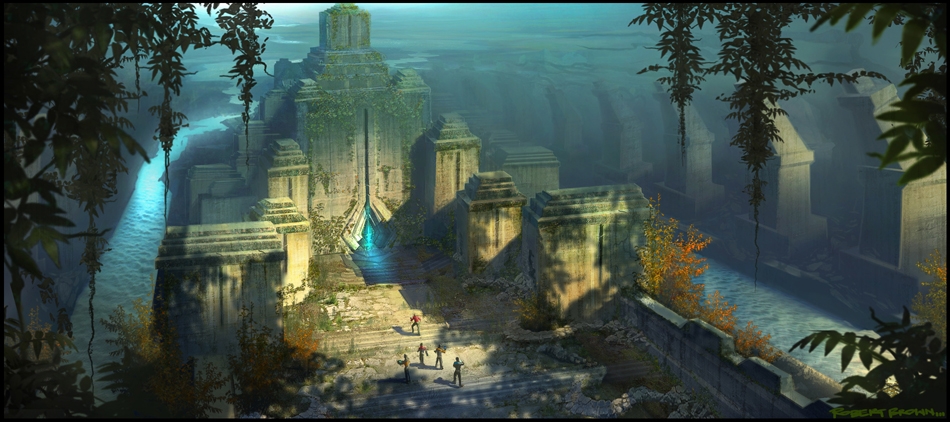
Sci-fi Temple Ruins by Robert Brown
True Communion stands in a strange position, at once one of the most popular philosophies of the Galaxy, but at the same time, reviled by the elites of both Empire and Alliance; it is a closeted philosophy, one that many adhere to, but few willingly admit. Even in its heyday, True Communion had little true hierarchy: only when the Keleni Temple-Worlds had total independence and the Keleni were united as one people, one nation, beneath their royal dynasty, did True Communion begin to look like a truly united philosophy. Instead, when one seeks to find adherents of True Communion, one finds scattered communes and communities, usually of lower class individuals, who gain their spiritual guidance from a nearby temple.

A Temple represents the core of the True Communion faith for a local community; its abbot represents the highest spiritual authority that they know. True Communion builds its temples in naturally occurring “holy places,” which tend to be found in remote, uncivilized regions. There, they seek to condense that spirituality into the heart of the temple, where Eloi Fragments can form. They also gather relics and philosophical lore for any who seek them. Ultimately, the purpose of a temple is to provide a safe haven for sacred things, and a place where those who wish to learn the ways of True Communion can go and discover themselves in peace.

Despite this, most temples end up acting as a central hub of religion for the locals. Though they must travel far (or the temple must come to them, often sending priests to look out for the local faithful), people regularly bid the monks of the temple to give them blessings, knowledge, healing, guidance and to officiate their ceremonies. Thus, temples become the secret hearts of the community of the True Communion faithful.

Wednesday, December 20, 2017

The Cult and Conspiracy of the Mystic Tyrant

The Cult of the Mystic Tyrant has existed since before the dawn of the Ranathim Empire, making it older than even humanity’s time among the starts, and among the oldest continuing institutions in the Galaxy. While it has changed somewhat over history, adding new ideas and changing form, it has always paired religion and its secret mysticism with real political power, and understands the importance of secrecy in achieving mastery of both.

Stark philosophy lies at the heart of the Cult of the Mystic Tyrant. This philosophy drives its members, who seek to master themselves and thus master their own psionic power and learn to express their inner divine will through the force that others call “Communion.” The greatest masters achieve transcendental mastery and learn to rewrite the very laws of nature for their own benefit. The cult seeks to spread its philosophy, but only to the worthy, and to induct them into their ranks so that they may guide and shape the masters of a new generation and, perhaps, find the next transcendental master.

The philosophy of the Mystic Tyrant serves a purpose, and that purpose is power. The members of the Cult of the Mystic Tyrant are, in keeping with their philosophy, deeply ambitious men who believe that only they have the capacity to rule the galaxy, and that the galaxy must be ruled. The cult might be better described as a conspiracy of powerful men who meet behind closed doors to kneel at the feet of a psychic master and then divvy up the thrones of the Galaxy amongst themselves. The Cult seeks to empower its members and those who learn of it often seek it out, eager to bend knee to its masters in hopes of being set up as a warlord or corporate master or to learn what real, ultimate power feels like. That they become slaves to dark lords with powers beyond their ken is, often, seen as a worthwhile trade.

The Cult knows the important difference between power wielded openly and power wielded secretly. The masses naturally seek strong leadership, but they recoil at the costs and horrors of true leadership. Understanding this, the Cult sets up powerful and obvious leaders, and then retreats in the shadows to perform all of the dark deeds necessary to maintain that power without besmirching the clean image of their chosen leader. This secrecy also serves their mystical pursuits, as the uninitiated neither understands, nor respects, the true power of the Mystic Tyrant. Because of its long history of secrecy, many of the great secrets of the Cult lie buried in ancient ruins or hidden in encrypted tomes with codes known only to the Cult of the Mystic Tyrant.

To maintain their secrecy and power, the Cult maintains a layer between itself and the rest of the world, which it calls “masks.” A Mask of the Tyrant is a conspiratorial cell that infiltrates other organizations. It manipulates the infiltrated organization, subverting it and turning it to the needs of the Cult. Posing as a secret society, it also recruits new members, including the rich, powerful and influential, as well as the psionically talented. Low level initiates know nothing of the true purpose of their new secret society (They believe they’ve found “the” secret heart of the organization they were recruited from); only the leadership interacts with the Cult of the Mystic Tyrant at large, though members occasionally find themselves visited by mysterious, dark-clad psions who may have special orders for their eyes only, or who may wish to recruit them into the Cult itself, revealing the true extent of the tyrannical conspiracy.

Those who achieve ultimate mastery of their inner self and of Communion itself gain the right to call themselves master (or “Thamara” in Lithian), and in some traditions, take a new (usually Lithian) name and the title “Thamet.” Those who serve the cult typically serve a specific master, and each master forms his own sub-faction within the cult, commanding lesser conspiracies and his own cadre of psionically trained spies, inquisitors and assassins. The greatest masters come together to form the Inner Circle, which ostensibly governs the Cult, but in practice, acts as a safe place where the most powerful Masters of the Cult may come together to bicker and negotiate about the future of the Cult and where their resources will go.

Wednesday, November 8, 2017

Cults of the Divine Mask

The foundation of Annifem Lithe are the old cults, the Nadomen, of the Ranathim. Their lore and theology served as the basis for how other “similar” cults from other alien races, or even other Ranathim cults. Though the cults have changed over time, Ranathim and other aliens, and even some humans, still worship those original cults, and a multitude of cults beside.

What worship means varies from cult to cult, and how believers interact with their cults, and with Annifem Lithe differ from believer to believer. Many faithful focus intently on a single cult, absorbing their specific practices and superstitions Others attend a variety of cults superficially based on their needs, treating each cult as a different set of supernatural specialists. Others take Annifem Lithe as a whole cohesive system and see individual cults as suffering from tunnel vision. Those who treat primarily with the cults are said to practice Chivare and those who treat with the Annifem Lithe as a whole are said to practice Zathare. The Nadomen, the cults, are the only meaningful organizations of the Annifem Lithe system. Those who study Zathare, or who practice broader Chivare tend to have little organization beyond local master-apprentice relationsships, or small circles of individuals sometimes called covens.

Those who follow a specific cult might, instead of having the Believer (Annifem Lithe) quirk, they might have a Believer (Specific Cult) quirk. Most believers subscribe to the various superstitions associated with their cult, which double as small ritual acts. Characters may take these as quirks, or as Delusion (Superstition) disadvantages, usually worth no more than -5 points.

Annifem Lithe categorizes all of its various cults into the categories of the 9 communion paths A sample of cults under the Annifem Lithe system include:

  • Domen Sefelina: The Cult of the Dancer celebrates hedonistic freedom, and grants that freedom to all who make offerings to their goddess. They traditionally served as the brides of the Ranathim Divine Tyrant; today they offer their services to the underworld and fight to liberate their kind from slavery. Domen Sefelina worships the Beautiful Fool. Other cults that worship the Beautiful Fool, according to Annifem Lithe, include the “Cult” of Esau Elegans.
  • Domen Sonostrum: The Knights of Rage fight against the injustices that nobody else will fight against. They take revenge for the fallen, for the outcast and dispossessed. They traditionally served as the secretive enforcers for the Ranatahim Empire, but today, the serve as a seed of insurgency against those who oppress the Ranathim. Domen Sonostrum worships the Rebellious Beat. Other cults that worship the Rebellious Beast, according to Annitehm Lithe are the Ithin-Kor, and the “Cult” of Lothar Kain.
  • Domen Venalina: The Sin-Eaters have discovered a way to purify the Ranathim of their “inherently sinful nature” and to gain access to True Communion, and they offer to liberate all other Ranathim of their sins and dark impulses and draw them into the grace of True Communion along with them. Domen Venalina worships the Bound Princess. Other cults, according to Annifem Lithe, that worship the Bound Princess, include the cult of Sissi Sabine.

Agendas of the Cults of the Divine Masks

Each Cult has their own specific concerns and agendas, but cults, taken as a whole, have similar sorts of agendas. Cults broadly tend to be concerned with protecting their holy spaces, expanding their membership and influence, and in collecting relics associated with their particular faith. The Annifem Lithe cults also rely on powerful psions if they want to gain access to Communion, thus they remain constantly on the look-out for powerful potential psions. Examples of such agendas include:

Once thought lost forever, the shifting hyperspace storms of the Tangled Expanse have opened to reveal a path that leads to a lost Ranathim world upon which a famed Ranathim temple rests in ruins. The cult must send an explorer to survey the damage, drive out any intruders, and make it safe for a pilgrimage of a Chivaga who restore is sanctity to their God.

An ancient relic, once thought forever lost after the fall of the Ranathim empire, has turned up on the antiquities black market in the hands of a human smuggler who likely doesn’t know its true power. The cult must quietly contact the smuggler and secure the relic. If his asking price is too high, the cult may use other means to secure it. However, the operation must remain quiet, lest rival cults or, worse, the Nazathan, hear of the relic and try to seize if for themselves!

The date of a great Cult festivity looms near. The faithful brim with excitement, but the authorities grow nervous as pilgrims from all across the world flock to the city in which the temple is located. The cult has never been more powerful, nor in a more precarious position! The leadership must find some way to assure the leadership that nothing unfortunate will happen, while making preparations to ensure that the festivities go off without a hitch, despite increasing political tensions which such a large mass of faithful are slowly making worse with their presence.

A daughter of the divine has been born! A cult, long without a proper Chivaga has learned of a child who has faced the milestones of the divine path, and displays a capacity of miraculous power. Naturally, her mysterious power frightens the locals and her own family, who lost their faith in the Annifem Lithe long ago. The cult must dispatch a chiva to comfort or cow the populace, collect the child, train her in her destiny as Chivaga and then install her as a new leader. Be careful! Whomever trains the child will likely control that child’s destiny and thus become a behind-the-throne power for the child-priestess!

Cult of the Divine Masks as Opposition

The Cults have access to well-trained psions and limited access to Communion. Their membership tends to be more enthusiastic than well-trained. Most cultists will have combatants no better than civilians, at BAD -0, though likely with unusual powers. More militant cults, like Domen Sonostrum, can field full space knights might field combatants as effective as BAD -5. Organizationally, the Cults typically have a BAD of -0 to -2, not because they have exceptional security measures, but because their psionic training offer them additional security. The PSI-BAD at least equals or exceeds their BAD.

Serving in a Cult of the Divine Masks

Religious Rank

6: Thamel (Master/Mistress), Chivaga (Head Priest/Priestess)

5: Chiavagi (High Priest/Priestess)

4: Chiva Siva (Special Priest/Priestess)

3: Chiva (Priest/Priestess)

2: Chivago (Lesser Priest/Priestess)

1: Kigalegi (Senior Acolyte)

0: Seva (Slave), Kigale (Acolyte)

If one wishes to serve a cult, they first submit either as a Seva (slave or servant), who labors for the temple and does whatever the cultists need of him, or they become a Kigale, an “Acolyte” (lit “Follower”). Acolytes serve in a lay faculty, serving higher priests directly and governing the Seva.

Those who have sufficient psionic acumen or who have a destiny that bring them in alignment with the path of the cult can become Chiva or priests or priestess (lit “Witch”). Apprenticeship begins with the rank of Chivago or “Lesser priest/priestess.” Such priests learn at the feet of greater priests and typically focus on Communion Oaths as the source of their connection with Communion. Once a character has graduated, they become full-fledged Chiva. Most Chiva have at least a Communion Oath, or are Archetypes. The Chiva Siva (lit “Special Witch”) work as agents out in the world, collecting artifacts, spreading doctrines and subverting danger against the cult.

The greatest priests and priestess must either be Archtypes or have achieved Communion itself. These become Chivagi (Greater priests/priestesses), or the Chivaga or Thamel. These lead the cult on a local level, running the temple, wearing the mask of their divinity and making pronouncements in their stead. No higher organization exists. There’s no “High Master of all Domen Sefelina.” Each temple follows their own cult in their own way, and some cults worshiping the same path might even begin to form rivalries with one another!

Favors of a Cult of the Divine Masks

Generally, cults offer their members access to supernatural power and insight.

Communion Miracles: The Cults of the Divine Mask do have access to Communion, albeit in a more limited way than the Cult of the Mystic Tyrant or True Communion. Treat requests for miracles as requests for technical means (PR 15), but apply an additional -2 to represent the greater cost for Communion miracles associated with the cult.

Relics: Cults of the Divine Mask regularly collect and worship relics associated with their particular path, adding them to their own god’s mythology. They may be willing to part with them, if you have sufficient draw with the cult! Treat this as gear (PR 16), but apply a -5, similar to “experimental gear with no price tag.”

Sacred Spaces: Cults of the Divine Mask have access to places “Holy” to certain forms of Communion (most commonly Dark Communion, but some cults to paths of True or Broken Communion do exist!). Treat this as Facilities (PR pp 18-19) if the characters want to make use of the site to enact a miracle.

Introduction (PR 18): While the Cults of the Divine Masks don’t really hold much sway with the galactic elite, many members of the criminal underworld, or members of outcast races, worship the Cults. However, cross-cult introductions (such as joining Domen Sonostrum and looking for an introduction to the high priestess of Domen Sefelina) do not benefit from the +5 for “introduction to members of the same organization.” The Cults of the Divine Mask are related, but not that closely!

Teaching (Services, PR 18): The Cults of the Divine Masks have access to secrets and will willingly part with them to almost all members, though Anala Izathan, the Practices of Sorcery, tend to have greater access to actual secrets, rather than the cults.

Cult Character Considerations

Requirements: Characters serving a Cult of the Divine Masks have no minimum wealth, and must have Religious Rank 0, and have a Duty of at least 9 or less. Most will have an appropriate Vow or Disciplines of Faith (Ritual).

A Favor from a Cult of the Divine Masks institute is worth 1 point/rank. A Cult as a Patron is worth 15 points as a base. A Cult as an Enemy is worth -15 points.
Wednesday, October 4, 2017

The Akashic Order as Organization

The nature of the Akashic Mysteries and their Shadow Council makes it a highly centralized organization. While ancillary organizations, like the Akashic Knights, certainly exist, and factions within the Akashic Order exist, everything ultimately orbits around the unique power and insights of the Shadow Council.

With the death of the last Alexian Empire and the seeming extinction of the Alexian line, the rest of the Galaxy and many in the Akashic Order itself lost faith in the Akashic Mysteries. They felt the fight lost, the coming storm inevitable, and the promises of the Order broken. For these former believers, the Akashic Order matters not as a way to save the galaxy from the Coming Storm, but as a cultural rallying point. For them, what matters is how the Akashic Mysteries bring everyone together. They see it as a counter point to the cold rationalism of the Empire, and a way to remind the Galaxy of the good old days. These believers attend the mysteries to meet old friends; they still approach the oracles as much for the pomp as for the advice. They seek to make the mysteries more overt, but no longer cling to the harsh strictures of the olden days.

Some, however, still feel that the Coming Storm can be defeated; this will take ingenuity and a new approach, certainly, but it can still be done! This more dedicated faction quietly dispatches its Oracles and Akashic Knights on secretive missions to shift the current timeline on a way that might, possibly, navigate the galaxy through the coming storm. It also seeks to do something that previous generations never tried: to understand the Coming Storm, and to find new allies in the fight. This group seeks to pin down exactly what will destroy humanity in the Galaxy, and seeks to contact other philosophies, like True Communion, that might aid them in the fight.

Thursday, September 21, 2017

Neo-Rational Organizations: Institutes and Salons

No single, overarching organization governs Neo-Rationalism; one can better think of Neo-Rationalism as a movement. Organizations form within that movement for the express purpose of exploring, expanding and teaching the ideas of Neo-Rationalism. Broadly speaking, these organizations break down into two categories: institutes, official organizations that teach Neo-Rationalism in a formal manner, and Salons, which teach Neo-Rationalism in an informal manner.


Tuesday, August 1, 2017

Knightly Orders of the Alliance

The aristocracy of the Alliance have more military power than just their navies and armies, they also have one another.  Like-minded knights form together into Knightly Orders, patterned after the highly successful Knights of Communion. Many amount to little more than just social clubs for bored aristocrats, but some can prove to be major military forces within the Empire, and all become powerful political factions, able to push their agenda thanks to the wealth and prestige of their members.

I offer three knightly orders as examples of what Knightly Orders might be like.  Feel free to create your own!

I personally found it odd how isolated and unique the Jedi Order was in Star Wars.  Eventually, the expanded universe added a few new groups out there, but in reality, warrior-monks tend to rise out of joining religious and martial traditions, rather than springing up ex-nihilo.  The aristocracy of the Alliance represents the legacy of the martial tradition that gave rise to the Knights of Communion, and we'll dive into the religious/philosophical tradition that gave rise to them when we dive into philosophy.

Monday, July 31, 2017

Aristocratic Regulars and Military Forces

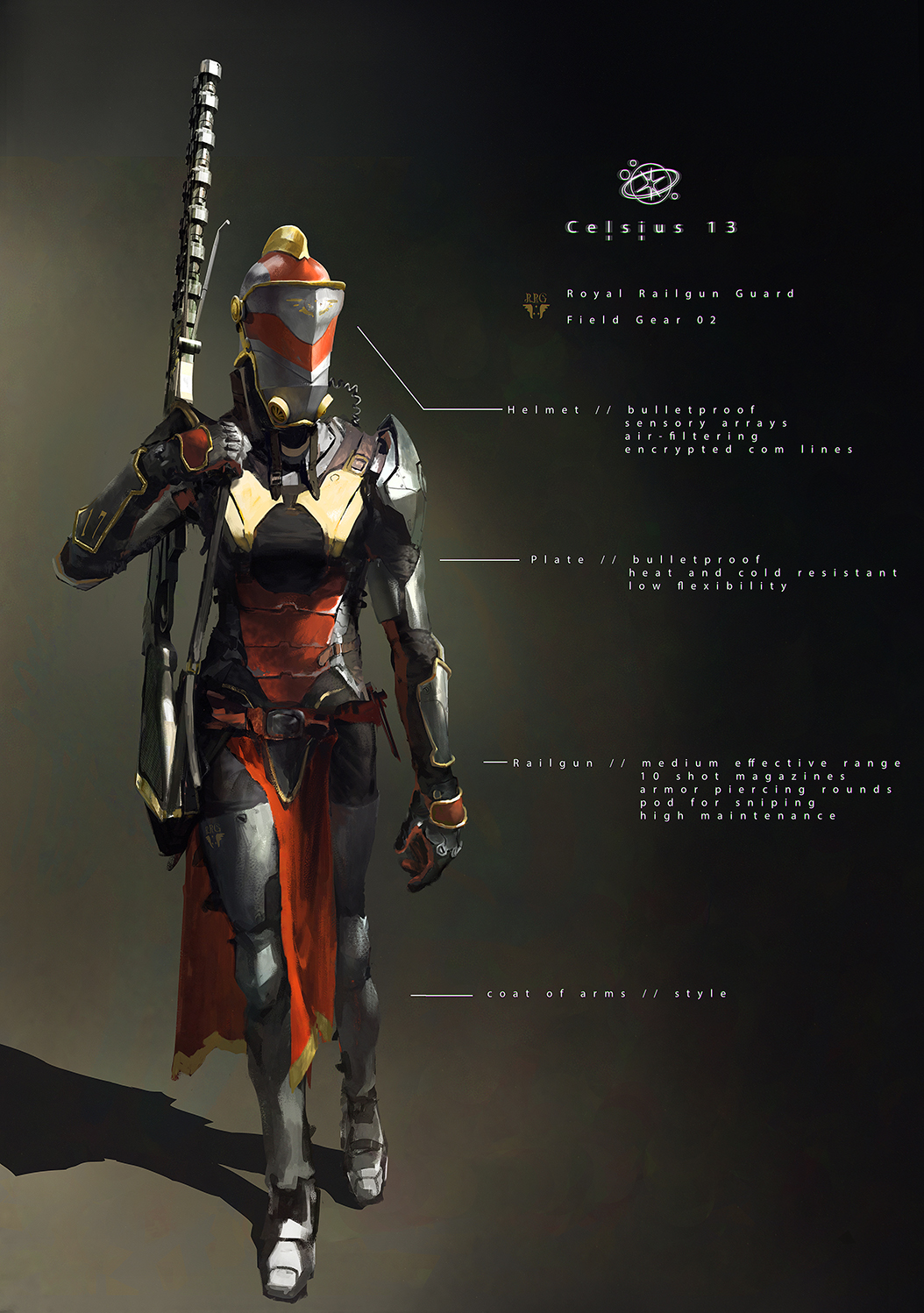
Celsius-13 Royal Railgun Guard
Not what regulars would
actually look like, but you get
the idea
Aristocratic power have nothing but the weight of tradition and law if they don't have the military power to back it up, and boy do they!  In fact, the primary reason I created the aristocracy and the Alliance was to give those who opposed the Empire reasonably access to military hardware.  While the ships will have to wait (it turns out designing the ships of the Alliance quickly turns into "Designing all of the combat ships of the Galaxy that don't belong to the Empire"), I can show you how their forces operate.

Thursday, July 27, 2017

Noble Houses as Organizations, and an Introduction

I'm not saying it was a great movie, but it does a good job
capturing how sci-fi aristocracy might look.
The aristocracy of the Alliance served as the foundation for the Federation that came before the Empire, and the Empire that came before the Federation.  It has ruled the galaxy for over a thousand years, and does not intend to stop now.  They represent both the golden age of the past, and a chance to bring about a new era for the Galaxy.  Today, I kick off a surprisingly long series that takes a deeper look at them, both as organizations and as characters.

Today, I start with noble houses as organizations, what it means to belong to one, and what they can do for you.  I want to note that this is a "first draft," and that the following is incomplete.  The deeper I dived into all of this, the more I realized I needed greater detail on spycraft and law enforcement, but I already had the latter for the Alliance in the form of the Constabulary, and the former will require a thorough look at all organizations.  Thus, take all that follows as my first stab, just as everything else I've written in Iteration 6 has been.  I'll take another look at everything before the iteration wraps up.

I'm also trying something new with how I generate these posts, so you might notice that this is much earlier than the past month's worth of posts have been.  That's because it was actually scheduled, again.

Tuesday, July 18, 2017

Alliance Militia

The Alliance believes strongly in independent sovereignty, and a key component of that sovereignty is independent military power, a feature of the Federation violated only once, a violation that caused the rise of the Empire. Each member world has the right to its own defensive force, called a Militia. In fact, the Senate sees a militia not as a right but as a duty, and typically sanctions worlds that leave their defense to the rest of the Alliance. One reason the Alliance has survived as long as it has is because a blaster lurks behind every blade of grass.

Thursday, July 13, 2017

Alliance Constabulary: Personnel

Just as criminal players dealing with the Empire will need mooks to fight, so too will criminal players facing down the criminal justice of the Alliance.  But, again, we find that the Alliance has wildly varying law enforcement.  This results in a highly customizable set of mooks that require a little bit of work from you, dear reader, to put them into action.  Once again, we have three different broad sorts of law enforcement, and we also have three different sets of equipment (the most common being Rook & Law and Stellar Dynamics).  You'll have to put the pieces together, just like you have to with insurgents, but I do have a "standard example" available for each entry.

Let me know what you think of the approach, and enjoy!

Related Posts Plugin for WordPress, Blogger...