Tuesday, November 16, 2021

Generic Space Opera Bestiary: Space Whale


You thought I was done! But no, I had a few more I wanted to do. I’ve just been distracted by yet more aliens, and these take longer to write than I expected (most of it in the variations).

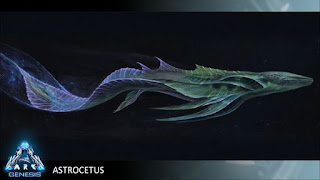
One I’ve wanted to do for a long time is the majestic whale. Of course, when we think of whale, we’re probably thinking the shape of the humpback whale, the size of the blue whale, and the ferocity of the sperm whale, but I’m leaning mostly towards the blue whale and other baleen whales. These gentle giants of the deep spark our imagination with their fantastic size and their eerie song. So much so that I think they’re the only sea creatures Paizard has tackled thus far! So I wanted to also take my shot at looking at some generic space whales for Keleni to commune with or for Westerly sailors to hunt.

Friday, November 12, 2021

The Guns of Psi-Wars


I'm pretty sure I've banged on about this before, but I've made an effort to include more alien races in Psi-Wars (there will be a post on that soon) and I've been exploring the alternate tech of alien groups like the Ranathim Tyranny and the Mug Atheocracy, which has emphasized the need to explore guns, and my own research has begun to finally bear some fruit.  As a result I've found myself confronted with the core issues with the Guns of Psi-Wars. I'm sure I've discussed this before, but there's new material before, so I apologize if this comes across as repetitive.

So, let's start with does Psi-Wars need guns? I think it does, and it needs them in the same way that settings it draws inspiration from all have guns too, despite having access to other, better weapon.  Star Wars has projectile rifles despite having blasters; 40k has slug throwers despite having micromissile "bolt" guns; Dune has Maula pistols despite having lasguns. These weapons tend to be either niche weapons meant to get around a particular problem, or they're primitive weapons used by factions that lack access to better weapons.  I particularly want to explore the latter, because the world of clean blasters and elegant, carbide armor is the Valorian Empire and the Galactic Alliance, not the world of post-apocalyptic techno-savages or primitive aliens.  Guns also allow us to deliver warheads down range.  Psi-Wars definitely has guns in a strictly literal sense in the form of grenade launchers, and weapons that fire poison darts certainly fits some factions well.

So, if we have a need for guns, how do we design them, and how do we make them fit? These two questions have plagued me, but I think I finally have some answers.

Friday, November 5, 2021

On the Importance of Factions


I've recently dropped a poll for the first of the Westerly Clan (and it might be a mistake, as I seem to have triggered analysis paralysis among my backers, but if you're a backer, go check it out. In the very least, it should offer a lot of ideas for the design of a clan or faction!), and as I worked on this, I found myself reflecting on the importance of factions.

I noticed it in a different context too. I have a problem with Warhammer 40k at the moment. In part, it's because I don't agree with some of the direction Games Workshop has been taking lately, but a lot of it is a drive to explore lesser known works, both to cultivate variety and to support the efforts of less famous creators.  But I've noticed that I keep being drawn back into the gravity of 40k.  I keep thinking of armies I'd like to try, or concepts I'd like to explore.  In particular, I've thought about building a Xenos army from one of the less well-known races (Rak'Gols or Khrave and man, that second name is great) because I think it would be fun to let someone's Space Marine army beat up on one of these groups out of legend and lore.  I noticed that I was trying to fall back into 40k, and reoriented towards one of my newer games: Rogue Stars.  Rogue Stars is a generic minis wargame that will let you design anything, so of course I could design an alien army of any type I wanted. But who cares? It lacks that particular context that gives it its verge and zing.  I would have to create and invent that context and get the other player invested in it before they would enjoy it.

Saturday, October 30, 2021

A Zero-Template Retrospective

 And that's it for my Zero-Template Challenge.  I hope you liked it, but judging from the comments and the responses on my discord, you did.

Let's touch on the specific races.

Karkadann

They seem good, a nice addition, and people were impressed by how much you could do with just a few features.  I think they highlight the core benefit of this challenge: it forces you to think about what makes your race different rather than pre-spending points somewhere (a DX +2 race with Combat Reflexes is probably much less interesting to a player than the Karkadann).  Someone also expressed surprise at the amount of lore; that's a lot easier to do when you have a lot of lore to draw on (world-building tends to snowball after awhile).

So they're in.  I'll work out some additional details.  I don't think they'll remain as a zero-template race, but most of the changes will be to either exaggerate particular elements or to give them a little more obvious physiology.

Vithani

Uh, these were passionately received.  It resulted in a lot of very heated commentary, not against them, not against one another, just the sort of commentary I often see when passions run high.  People really liked this race a lot.  It got comments, it got people planning characters, it got deep discussions about their proper place in the universe, what symbolism they needed to be a part of, etc.

They're definitely going in, and like the Karkadann, they'll get some adjustment... though less than I initially thought!  I will probably price things more fairly (Low Pressure Lungs should give points back, given how rarely it will benefit them, unless they also get some sort of extremely short-term vacuum support, which they might get, I don't know).  I'm rather inclined to at least keep Night-Adapted Vision; I might keep Ultravision too; people weren't too bothered by it, but I feel like it's the sort of thing a GM or PC would forget.  There might be some ways to tone it down, though.

Aura is popular, so we'll keep it.  I may reword their destiny, and give them back Dreamer.

I think the big lesson of the Vithani, other than sexy aliens with good art are popular, is that you can probably get a lot more mileage out of Power-Ups 9 than you think.  If the attributes are reworked for one specific race, it can create a very different sort of experience for that race.  I don't think I'd use it that much in Psi-Wars unless it's for a race that has a very different mode of existence, but it would be fascinating to approach a truly alien species in a more "hard sci-fi" game, especially a race that, say, has a very different form of intelligence. If you're looking for crazy inspiration for how to make a race play in a different way, consider looking though PU9.

The Herne

They got a more positive response than I thought, with a lot of discussion around the feasibility of the seasonal traits. Based on that discussion, I don't think I'll bring the Herne into the game.

First, a sapient race on Arcadius is already iffy.  I want that world to be a bit fey-touched, so people tell stories and they may experience things, but there's little actual concrete evidence of a race, and it might be something like sapient psychic deer or something causing all the commotion. Introducing the Herne would break that.  That's not necessarily a problem, we can discard this idea of a strange world and just replace it with a strange race (and anyway, the Labyrinth is already rather like this), but when you combine it with the second, it becomes clear this is more trouble than it's worth.

The bigger problem is obviously the seasonality.  But why? It's parasitic design, and my choices for fixing it generally amount to removing it, which suggests its a bad idea.  Let me explain.

Someone pointed out that one reason you'd want to play this race is to have a shifting toolbox, which I definitely agree with and was one of the comments that made me go "Aha!"  You want, as a Herne player, to be forced between multiple different modes; like if you have a social or combat mode, and you're in social mode and partaking in a heist, then you want to try to talk your way through. If you suddenly find yourself in combat mode, you'll shift to fighting instead.  An external force controls how you interact, and this is interesting.  But it can be troublesome, and so you might want to have some measure of control, but if you can control it, it ceases to function like a shifting toolbox: if you're in social mode but would rather fight, you just change back to combat mode and fight.  Then the interesting element is removed as just a small, weird speed bump to doing what you want.  If you want to have some player agency in their mode, some ability to influence it, but you don't want them to just flip between two modes, you might give them a variety of modes and let them shift between one or two, but most of their modes are locked out a time.  That gives them the flexibility to shift a little without losing the strange, mercurial nature of the character.

But it gets a lot more complex. The player needs to know a bunch of rules, the GM needs to know a bunch of rules, I need to write a bunch of rules, and what benefit is all of this complexity? The player is constantly bugging the GM to tell him about a season on a remote world and then sighing and telling the players that he cannot do the thing because it's the wrong season.  The rest of the players have no connection to this, and the only reason the GM knows this at all is because ONE SINGLE PLAYER decided to play as the Herne.  I do believe this is that the kids these days call Parasitic Design. So the solution is either to remove it as irrelevant or make it relevant to everyone.

One of my rules at work is "if it hurts, do it more." I think this applies, in a sense, to gameplay.  If it matters at all, then everyone should have an opportunity to interface with it. It should affect everyone's gameplay. It might not affect them directly, and it might not be something they even know about, but they should be able to capitalize on knowledge of it, if they want, without a major investment.  A good example of this is the Deep Engine: it's a secret that only certain sorcerers can directly access.  That said, even if you're not a sorcerer who is in the know, it's also a great source of bad guys, monsters, dungeons, etc.  You can run across Deep Engine Sites, for example, so its existence and knowledge is useful to the GM for more than just that once sorcerer.

So what if the Herne were influenced not by the season of Arcadius, but by the galactic season? In the Great Book of Destiny, I refer to these as Hours, and they would tie into Fortune-Telling, what sort of Destinies people could get, and might be something that other people could hang sorceries or other powers on. The Herne, then, would be tied to something that's useful for the GM to know for reasons other than just the Herne.  

Of course, this also sounds more like something the Vithani should be associated with than a race on Arcadius, and I wanted the third "Master" race of the Umbral Rim to have something akin to this, as this is a great thing to hang an "occulted system" on, if certain modifiers or available spells change based on a mysterious arrangement of stars or other things and you have to learn to read those and see how they interact with other elements of the game.  This third "Master" race was also set at the fringe of the Umbral Rim, which is where the Vithani are, and so we start to see some connections.  I'm not saying the Vithani are the third master race, but they might come from the same region, and a picture starts to emerge of a particular region of the Umbral Rim and its history and relationship with the early Ranathim Tyranny. 

Such a system becomes something integrated into the rest of the game, and greater complexity is much less of a problem, because knowing that complexity is rewarding to more than just the Herne player. But it also ceases to be something I'd associate with the Herne and Arcadius.  We could change it instead to be something more a reaction to the ambient temperature of the world, which starts to borrow on ideas form World-Walking, which is your available options depend on the nature of the world you're on, which is interesting for a world-hopping campaign, but then again the Herne lose their unusual connection to an unusual world.

So either way I see it, while this mechanic might be perfectly fine, I feel like the Herne are the wrong place to put it.  So we'll park it, park the race and see if we can cannibalize the ideas for a different race or set of systems.

The Rejects

The Blue-Skinned Arctic Monkeys saw some positive responses.  Infravision, blue skin and being naturally accustomed to colder weather is interesting enough to make someone stand out.  They're not especially interesting to play, but they're also not just a reorientation of points.  Humans aren't especially interesting to play, and this race is about that interesting. I'll think about this one. Psi-Wars doesn't have a lot of arctic content, but we can also borrow ideas from here for a "hot-blooded" race too.

The Gasping Maga-Pillars had more interest than I expected, but mostly discussions of alternate forms. I think there are some interesting ideas here, but few of them have anything to do with the actual design here and more the ideas they inspire. The Sylvan Spiral Needs Races Badly, but this one isn't it.

The Deep-Song Triton-Men got a laugh.  This one felt more like vented frustration with the challenge than a genuinely interesting race.

The Void-Dancers got more interest than I expected.  I think we can afford to have a vacuum-native race somewhere, but it feels more like a background element unless they have means by which they can interact with the rest of the part in a more face-to-face manner without always being in armor.

That said, always being in armor is actually an interesting racial concept. The Arkhaians sort of do this already, but there's room for more, something like the Breen, the Vorlon or one of the earlier conceptions of the Mandalorians.  As I commented before, I'm trying hard to get people out of their armor, but a race that is always in its armor is distinct, depending on what the armor is like.  It's not something I really touched on much, but a race native to a very different gas mixture might have something like that. I still wouldn't call it a feature, though, but a disadvantage.

The Challenge

I had fun.  It generated a lot of discussion and seemed to inspire a lot.  It also told me there's a lot of hunger for minor races, regardless of their point cost.  A proposed variation on the challenge is a race worth no more than +/- 5 points, with no more than an absolute value of 10 points in traits, advantages, disadvantages etc.  I will note that I often found features to be more sweeping than perks or 5 point traits so you'll still find it a fairly limiting challenge.

It did get me thinking about how much of my racial templates are largely cosmetic features, things like "Horns and fangs and teeth and tails." I wonder if it would be worth a sidebar discussion about removing those traits, or ignoring them, for greater simplicity. It's a rather fine-grained accounting to worry about minor levels of night vision of +1 crushing damage from a headbutt, even though these are certainly advantages.

Friday, October 29, 2021

The Zero-Template Challenge: The Rejects

 No, this isn't about a race called "the Rejects." I came up with a bunch of races that didn't make the cut because I couldn't quite make them work. I thought I'd lay them out and discuss some of the ideas that I rejected, because they might prove fruitful to you, dear reader, or they might inspire something with a looser set of restrictions than this fairly harsh challenge.

The Arctic Monkey

Features: Blue Skin [0]; Digitigrade [0]; Infravision [0]; Tail [0] Temperature Range (5° to 60°) [0]

So this was my first scratched-pad example that popped into my head.  Most of it works fine, and it even makes sense: this is a race native to a very cold environment and there are likely to be large temperature gradients, so it has learned to "see" by that temperature gradient. IR vision arguably has less problems with it than Ultravision does, so it could even prove to be a useful, if blurry, feature to have.

I have an issue with temperature range, though. A recurring theme you'll see throughout this series is that features look like disadvantages in the wrong context. It's not to say they're poorly balanced, but if you have a tightly defined set of assumptions about play, the more someone veers outside of that, the more of a problem they will have.  This race isn't too bad: they're mostly going to complain that you need to turn the heating down to the point where humans (Ranathim, Keleni, Karkadann, Mogwai...) start rubbing their arms and complaining that it's cold (Asrathi, Gaunt and Traders, in their space suits, might not mind, though). In an adventure, though, they're going to suffer a lot more in the heat. For example, in 90° requires an HT roll every 30 minutes to not lose one FP; the Arctic Monkey would need the same, but would lose 2 FP every time they failed the roll, and would start to lose fatigue at reasonable temperatures, like 70°.  This isn't so bad, not untenable, and balanced by the fact that they'd be fine when Ranathim are questioning their wardrobe choices.  But it does encourage us to ponder a question:

Who cares?

When's the last time you played Psi-Wars and made people roll HT for the heat?  I've run 4 games now, and only one was ever in an environment where characters might be concerned about heat. Much of a game is going to take place climate controlled environments, and characters have access to climate controlled armor.  And I've been fighting to get people out of armor.  If we made a race of sultry Ice Queens, or truly weird and horrifying creatures from beneath the ice, how are you going to know if they're covered up all the time?  Worse, when it does come up, nobody is going to remember, because it comes up so rarely!

There's a few things we can do to fix this, if we really wanted to focus on it.  First, let's change how this temperature thing works.  I quite like the mechanics of Low-Pressure Lungs, as it's easier to remember bands than it is to remember specific numbers. Humans risk losing 1 fatigue every 30 minutes when t's below 35°, or above 80° (though we can simplify this latter number to 90°).  They suffer a penalty to HT to resist this loss at -10° and lose one additional fatigue for all exertions after it hits 90° and 2 additional fatigue at over 120°.  If we wanted to "shift" our arctic aliens one band colder, that would mean they would be fine likely from about -10° to 35° (45°, rather than 55°); we might say they don't start suffering HT penalties for the cost until -60°, and they suffer the increased fatigue cost from 35° to 80° (55° band rather than 30° band) and then +2 additional fatigue from 90° to 120° and they start to burn after 120°.  Is that a feature? Well, I think technically what you're looking at is a slightly reduced comfort band (a quirk) and a slightly increased "hot" band (maybe a weird variation of Temperature Tolerance as a perk?), so probably a feature, and it's easier to remember: if it's normal for a human, it's hot for an Arctic Monkey, and if it's hot for a human, it's double-hot for an arctic monkey, and it's Cold for a human, it's normal for an Arctic Monkey, et cetera, you get the idea.

Next, I'd want to make the player of the Arctic Monkey think about temperature a lot. I'd give them technology that depends on low temperatures (quantum computers? Superconductors?) or some sort of benefit from natural ambient cold, as opposed to climate-controlled cold (or at least some reason to take the armor off and be subject to natural environmental conditions), and possibly some ability to adjust temperature (Cryokinesis).

That brings us to the second problem with this design: it doesn't really do anything interesting. You're hot everywhere, and you see in IR you look funny. A funny look is already "enough" for a visual medium, but for a game, we want a funny mechanic to emphasize our alien nature.  The proposals for making temperature more important would help, though.

I think if I turned this into a final race, I'd keep the blue skin, the lowered temperature band rather than the weird temperature tolerance, the IR vision and ditch the digitigrade and tail.  Add some temperature mechanic gameplay and I think we'd be alright.  I think blue-skinned, red-eyed people with white-or-black hair would be great.  Put them in the Arkhaian and make them allies of the Empire, perhaps with one achieving great success in the Imperial Navy, I dunno.

The Gasping Maggo-Pillar

Features: Born Biter 1 [0]; Light Exoskeleton [0]; High Pressure Lungs [0]; No Legs (Slithers) [0]; Potential Form [0].

Most of my flailing about with Zero-Template races was an effort to find a truly bizarre and physiologically strange race that I could do for zero points and fit into the Sylvan Spiral.  The zero point No Legs options seemed promising, so I started with Slithers.

"Slithers" would imply something like a naga: the race would still have a head and two arms, but would have a serpentine tail.  However, that also implies a degree of flexibility, or possibly a constriction attack, etc, all of which would cost points, so that was out. Rolls would almost be better, with something like a robot that has a humanoid torso and head atop a ball-structure that it moves around on, but that's not an alien, that's a robot.  

What else could reasonably limit the flexibility of a slitherer?  Well, what if we gave it an exoskeleton? Worms are still highly flexible, but maggots might not be. Can you have a 0-point exoskeleton? Here's what Space has to say:

On small insects (a rigid exoskeleton) is not much different from skin
Hmmm. Okay. Maybe. But it also doesn't cover the costs of much.  If a light exoskeleton justified buying DR and allowed you to avoid sunburn, it's a perk, right? Plus I think most people would imagine at least a DR 1. And in any case, a man-sized maggot is going to be horrifying.  That means a disad, and we can't do that.  What sort of slithering insectoid can we have? Oh, what about a caterpillar? Why must I always go with maggots? Ugh, anyway. They don't really slither so much as have lots and lots of legs, but I think we could arguable wave the difference; it might be a slithering thing that looks like a colorful caterpillar and have nice, soft fuzzy bits that make people go "Aww, I don't feel the immediate urge to murder it."

Born Biter is more me playing with whatever features I could jam on, and High Pressure Lungs might be, I dunno, it comes from a dense jungle world rich in oxygen (explaining its large size). The X-pressure Lungs are another good example of "features that feel like disadvantages" because I've never seen a Psi-Wars game take place in an environment with high atmospheric pressure.  At least you can sort of justify Low-Pressure Lungs by claiming that an asteroid has Trace atmosphere, you can treat it as Very Thin (You'll still suffocate, but you can walk around without a space suit on), and a moon might have Very Thin atmosphere, which you can breath like Thin, so it's plausible that it will come up, but it's implausible that high pressure worlds will come up unless we went out of our way to make them, likely the world the race is from, making them a "Dryad" race that never wants to leave its "Tree."  So, it's neat, but I'd ditch it.

Finally, if we're talking a magg... caterpillar, then we're talking about a larval form. Template Toolkits 2 has an interesting feature called potential form. It means that the character can make a one-way transformation at some point.  Our maggot caterpillar can become a horrifying beautiful fly-demon butterfly.  This means we can push our complex, expensive template down the line.

But why stop at one thing it can become? One interesting concept might be a race with more than two genders. How would that work? I don't know, we could do some research.  There are options like all three need to be involved (very exotic), or you run into things that are all able to breed, but the result of their breeding creates different things (an X and a Y always result in more Xs and Ys, but a Z and an X might result in a Z or a Y, and a Z and a Y might result in a Z or an X).  I seem to remember reading about actual animals that have this sort of construction.  But we might also imagine our race a bit like an ant: after it hits maturity, it morphs into one of the "Castes" of the hive and is permanently in that state: warrior, worker, queen, etc.  So we could give the player a choice of templates to choose from once they mature.

This is neat, but I'm not sure how nice this is when it comes to gameplay. In practice, you're just delaying your choice of alien race, and then choosing one later on. If you knew up front that you wanted to play a maggo-pillar queen why not, just, play a maggo-pillar queen right off the bat?  There's some narrative tension to be gained from the change, especially if the player has no control ("Let's roll to see what you become") but whatever benefits you get are lost once the change has happened (and a random change has, uh, some potential downsides as far as player experience is concerned).

I think a more interesting mechanic might be a race that can change its form at will.  Perhaps they cocoon for a day, and when they come out, they're in an upgraded form that can only last for so long before they tire, sleep and revert to their original form. This becomes like an intense, physical form of spell-preparation, where you know what you want, what you plan, and you build for it, but once you're set, you're committed.  But only for awhile, and then you can play with something else.

This concept arguably encroaches on the schticks of the Vikuthim or the Ithin-Kor, but I think there's enough room for multiple shape-changing bug-things, given different bug forms.

Incidentally, one concept I toyed with and discarded was this, from Template Toolkits 2:

If a race has a mouth, as most biological races do, and its parts offer more extensibility, flexibility, and opposability than do human mouthparts (e.g., a parrot’s beak and tongue), this can be pressed into service as an arm, usually Short and with No Physical Attack
"Is that maggo-pillar holding a blaster in its mouth? Can it shoot like that? Oh he just threw the safety with his side mandible. He's... gargling something threatening around the gun, I think we better listen to... whatever it is he's saying."

If I had points, I'd be so tempted to have an armless maggo-pillar with a crazy flexible mouth that has the sort of precision and dexterity to pick locks, fire blasters, type on a computer (leaving wet, sticky keys), etc.

The Deep-Song Walrus-Man

Features: Doesn't Breath (Gills) [0]; Semi-Aquatic [0]; Subsonic Speech [0]

Did you know a Tritonoid morphology is a feature? You can be a fish with a man's body for zero points.  Of course, this is useless in most Psi-Wars games, because the action generally doesn't take place in the water.  Doesn't Breath (Gills) isn't such a problem: we can give the character some sort of water-breathing apparatus to walk around in the air. But being unable to walk on land is a problem.  Semi-Aquatic allows it, though.  The character would have a lower half of not a fish, but a seal: walking its four flipper-legs.  Well, waddling.  It would average a ground-move of 1. But hey, water-move of 5!  Finally, subsonic speech is a feature if it's the only thing you can do. Does that give you Subsonic hearing [5] or [0] for free? I don't know. I hope not the latter.

The problem? Nobody would play this thing. This is the prime example of "feature as free disadvantage." You swap water for air, but air comes up a lot more than water.  You swap sea for land, but land comes up more than sea.  You swap the subsonic for the sonic, but that just means you can talk to the Menhiri and nobody else.  Good job! It's possible you can't even hear humans!

There's some interesting ideas in a race that breaths a different medium than humans do. It's not the end of the world to give them a breathing apparatus, like the Kel Dor from Star Wars, and it just becomes part of their aesthetic. But this does mean that they have a vulnerability nobody else does (their gas mask) and how often will this be reversed, so that they'll be in an environment where they can breath, but nobody else can? We could introduce such environments, but then we're introducing such environments and it's another thing to track. It's also another reason for everyone to be in armor all the time.  I'd also want the character to get something out of their unique atmosphere. Water, thus, is a more plausible option.

But I can't see the rest working.  There's no hook to intrigue a player other than "Water!" and it's more hassle than it's worth.

The Void Dancer

Secondary Characteristics: SM +1 [0]; 

Features: Doesn't Breath (Anaerobic) [0]; Native Gravity 0g [0]; Native Pressure 0 atm [0]; Signals (Vague) [0]

So it seems possible to have "Doesn't breath" without needing any air at all (again, Template Toolkit 2), and you seem to be able to define your own native pressure and gravity. Zero-G natives are certainly acceptable. Is 0 atm permissible? Can you be "native" to vacuum?  That might seem like "vacuum support" for free, but we can suggest that the race would really struggle in atmosphere: if we treated as "Trace Pressure Lungs" then they would treat Very Thin as Dense (breathable, but with difficulty), Thin as Very Dense (It could potentially visit a Vithani girlfriend, but it would need a resperator) and Normal atmosphere as crushingly heavy Super Dense. That seems plausible.

Signals (Vague) is from Template Toolkits 2: the race is able to flash a light or change color in a way to communicate with others of its kind, but it does so in a way that's not as good as proper speech.  This makes it a feature, and explains how they can "talk" in space.  

What it in effect means is that our gangly, strange void-walker would need to be in a space suit to be in a normal environment, but could skitter about free outside of the ship.  That's... not the worst mechanic.  Vacuum happens, so its traits don't completely isolate it from the game.  However, I don't really see a sufficient upside to make it an intriguing character, and most void-based characters or races aren't built like this.  We might expect instead a race that had Doesn't Breath of either the Oxygen Storage variety or it just straight-up doesn't need to breath, and Vacuum support, so it can enter a spaceship just fine without a suit.  We might also expect some form of space-based propulsion, so it can maneuver around in space too.

The idea of a space-based race seems fine to me, it's just not something I'd do with features.
Thursday, October 28, 2021

The Zero-Template Challenge: The Herne, the Forest-Walkers

Rumors and whispers had long swirled through the colonist population of Arcadius that the world was inhabited. Finally, when Sovereign fell, the Herne revealed themselves and spoke in flawless Galactic Common: "Our season has come." They sought and gained a seat on the Alliance Senate and the recognition of the Viscontess of Arcadius.  Now, their hunters serve as rangers and footman in her forces, and they've even begun to travel the stars.

The Herne tower over most humans at 7' to 9', but with no more mass, giving them a long, stretched-out appearance.  Their long arms end with three-fingered hands, and their lean, digitigrade legs end in slender hooves. A long, thin tail sways sinuously behind them.  They have long faces with flat nose that ends in a triangular, moist rhinarium and have narrow mouths which, combined, give them the appearance of a very flat muzzle.  Their large eyes take in everything with a patient gaze, and their ears are long and end in square tips. The Herne, like humans, are mostly covered in skin, but all Herne have a tuft of fur on the tip of their tail, and many males have shaggy hair on the bottom of their legs and their forearms and a thick ruff over their head and completely covering their neck, like a great mane. Females have less hair, with just enough atop their head to resemble a short, cute "pixie" cut of hair.

Herne coloration varies with the seasons.  In summer, their hair takes on a rich, golden hue similar to the color of Arcadian foliage, and their skin deepens to a rich and dappled mohagony. A Herne in the grip of its summer colors is sometimes called a Goldback Herne.  By winter, as the snows begin to fall, their hair turns silver and their skin fades to a dappled ivory. A Herne in the grip of its summer colors is sometimes called a Silverback Herne. The specifics vary from Herne to Herne: some grow darker in summer or lighter in winter, and the nature of their dappling and patterns vary, but the seasonal nature remains a constant, and their seasonality is deeply tied to the conditions on Arcadius.

The seasons of Arcadius change more than just the coloration of the Herne.  Their personalities change with it.  By summer, they grow congenial and gather together in great groups.  For them, summer is a time of merriment and holiday, and the celebrate the abundance of Arcadius.  As cold of winter chills their world, though, they grow taciturn, territorial and isolationist, scattering out over their world.  Many Herne are naturally psychic as well, and this seasonality affects their powers.  By summer, their powers benefit one another, while by winter, they become nightmarish warriors and dangerous hunters.

The Herne have become an unremarkable sight on Arcadius, but they remain novel in the Alliance.  The arrival of the Arcadian Viscontess with her lanky, alien bodyguard causes quite a stir every year at Atrium still. But their hunters have begun to spread and participate in the wars of the Alliance.  The first Herne recently fell in battle against the Empire.  Exactly why they chose this time to reveal themselves is unknown, but the truth likely lies in their religion and its connections to Arcadius.

Wednesday, October 27, 2021

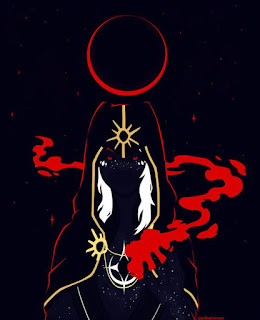
The Zero-Template Challenge: The Vithani, the Star-Children of the Umbral Fringe


Few humans have even heard of the Vithani, and fewer still have laid eyes upon a Vithani slave, much less enjoyed their company. The brutal slavers of the Umbral Rim covet them, but since the Dark Cataclysm cut their world off from the rest of the galaxy, they've had to make do with the population of the Vithani that remain in the galaxy, and their fragile biology paired with their fraught personal lives means they tend to meet untimely ends, and their number slowly, but steadily, dwindles.

The Vithani share the same humanoid body-plan that most humanoids of the galaxy, but with a slighter build and more gracile features. They have remarkable coloration, however, with inky black skin, freckled with patterns of small diamond or square "spots" of white, white lips and long, white hair.  Some have different colors, and they may have a deep violet and very dark blue skin, or they might have a bright magenta coloration to their hair, spots and lips, or a vivid, neon-blue or brilliant crimson hue.  These spots sometimes chart out recognizable patterns, like stars in the night sky, hence their nickname of Star-Children.

The Vithani come from a star within the globular cluster just beyond the Umbral Rim.  Their world has very thin air and retains little light even by day, when their star appears to be but the brightest of a great collection of vivid, beautiful stars. They have evolved to see by this starlight, and stripped of starlight or sunlight, they are blind, and the full sunlight of more daylight worlds can blind them.  They have evolved to breath the refined, celestial air of their world, and they labor under the thicker air that blankets most worlds.

Their relationship with the stars does not end with their appearance and their ability to see so well by starlight: it shapes their very lives! The Vithani have an intensely strong relationship with fate and fortune, and it is written in the stars, and in their stars. Almost all Vithani have a Destiny of some kind, and when it affects them, it affects them much more keenly than it affects other races. They mastered astrology to better understand how the shape of the stars affected their lives. This can make them powerful if their astrologies point to fortunate destinies, but it spells their doom when the stars are misaligned.

Finally, while many describe the Vithani as "magical" or "naturally psychic," this isn't exactly true. Instead, the have a unique relationship with psionic abilities: all Vithani that are strong-willed and beautiful are also naturally powerful with psychic abilities; Vithani that are weak-willed and ugly have little facility with psychic power. Those who have studied them are not sure why these things correlate, and have only noted that they do.

The explorers of the First Tyranny found a navigable hyperspatial route to the Vithani cluster and discovered their world.  The Vithani themselves had not yet discovered star travel, but were technological enough to forestall any Ranathim invasion and held off the Tyranny, who turned to a strategy of trade and espionage until they unlocked the secret of Vithani astrology.  With that stolen secret, they learned the fates of the Vithani and struck at the darkest hour of the race, easily conquering them.  The rarified princes and princess of the Star-Children became the slaves of the Ranathim, and so it remained until the Dark Cataclysm rewrote the hyperspatial map of the Umbral Rim, and cut off all contact with the Vithani cluster.  The Vithani slaves left in the Umbral Rim like to think the natives isolated in their cluster have long since thrown off their masters and live free lives.

Today, the Vithani can mostly be found as rare treasures held in the collections of wealthy slavers.  Free Vithani do roam the galaxy, either having liberated themselves, or descended from those slaves who escaped and set up small, isolated colonies on remote moons with thin, gauzy atmospheres. When they travel, they often pass themselves off as rare cousins of the Keleni, to whom they bear a passing resemblance, when they bother to explain themselves at all.  Generally, like all Vithani, they are compelled to follow their fate and lead interesting lives of danger and adventure.

Related Posts Plugin for WordPress, Blogger...