Monday, October 30, 2017

After Action Report: Tinker Titan Rebel Spy, Session 1

I wrapped up the first session of Tinker Titan Rebel Spy a couple of weeks ago, and I don't have to give you a session report, because loads of my players already did that.  You can see them here:

I also have some commentary from Kalzazz, which I'll include a the tail end of this post.

Today's post, thus, will not be about what happened, but why I did what I did and what I thought about things.

Sunday, October 29, 2017

State of the Patreon: November

Another month has finished.  This would be yet another month where the blog continued it's rise if I hadn't drastically slowed my pace of posting, which I'll talk about shortly.  The most popular posts of the month, setting aside the Primer, are Tinker Titan Rebel Spy, which received a huge response (I want to thank everyone for that) and I'll have an after-action report up soon.  Then we have Akashic Ancestor Veneration followed by (surprise surprise) Grimshaw Ancestor Veneration (You guys like Grimshaw huh?) and then the Divine Masks cultural context.  I'm surprised to see the warm reception it's received.  I felt it was an important philosophy to tackle, but I assumed most of my readership would give it a collective shrug.  That seems not to be the case!

After a big talk with my wife about the stress of getting the posts out in time paired with my fatherly duties and my work, she made the wise suggestion of "Just don't post so much."  I used to write once a week.  So why do I post 4x a week now?  Because I want to get through this.  I wanted to finish by the end of the year.  That's not going to happen, and perhaps I should just acknowledge that I'm generating a lot of content, but a breakneck pace like I've been writing isn't really feasible and it's getting in the way of other projects that I really need to get back to.  So, expect to see 1-2 posts a week, rather than 4 posts a week like you have been seeing.  I would still like to get Patreon posts out at their regular schedule though.

Speaking of the Patron, it's going well, and I've hit my goal for sketch art, and I've paid for my first piece of art, a sketch of the Ranathim, for the Ranathim preview.  With luck I'll be able to land the first official artwork, and once I have the ball rolling on that, we should see quite a few more coming out.  At least, that's my hope.

In the coming month, for you, my dear Patrons, I have a $3 patron preview for the Tarvathim, the constructed race of the Ranathim, built out of synthetic flesh with forbidden arts to be their psionically vulnerable foot soldiers for their God-Emperor, but since the fall of that decadent Empire, they still proliferate throughout the galaxy, trying to find their place while their original purpose has faded away.  I also have a $5+ poll for the Death Cult of the Ranathim!   For $1+, I have something in the works, but I don't want to talk about it in case I am unable to finish it, in which case I don't want to make promises that I can't kee.

For everyone, this month will complete the Divine Masks, including Beliefs and Symbolism, a look at Ranathim Communion Cults (including three detailed cults), and then two "Sorcery" styles inspired by (space!) witchcraft and (space!) wizardry.  And of course, Tinker Titan Rebel Spy continues.

Thanks so much for supporting the blog this month, and I hope you continue your support in the coming month.  As usual, if you're not a patron, I'm glad you read my stuff, use my material, and chat with me on Discord!

Friday, October 27, 2017

Patreon Post: Ranathim Preview

I have, today, the first of the new races.  We cannot discuss a Ranathim ideology without looking at the Ranathim themselves.  Today, I have a preview document for the Ranathim, and I want to emphasize preview. I lack a detailed look at their technology or their complete culture (though I would argue that between this document and the Divine Masks, they don't need much more culture to be fairly distinct).  I am definitely open to feedback on this, as the final version won't be released before the next iteration.

This post is available to all $3+ Patrons!  If you're a patron, check it out.  If not, as always, I'd love to have you.


Support me on Patreon!

Thursday, October 26, 2017

The Divine Masks: Cultural Context

Aliens ruled the galaxy long before humanity ever set foot on another planet. The race that ruled he galaxy in the epoch before the rise of man were the Ranathim, a race of beautiful psychic vampires driven by their insatiable appetites. They fought off foreign empires and conquered their own arm of the galaxy and then the galactic core and created a long era of ruthless, though cosmopolitan, rule.

The Ranathim, being innately psionic, have a tradition of psionic cults, and many of the most devout had already begun to touch upon the power of Communion (though, being psychic vampires, the Ranathim were limited to Dark and Broken Communion). Each cult had their own beliefs, and as the Empire conquered other cultures, those cultures tossed their psionic insights and morals into the vast melting pot of the Ranathim Empire, including True Communion, which wielded powers alien to the Ranathim. Rather than crush all dissent, the Ranathim Emperor created an “umbrella” philosophy, called the Annifem Lithe or more simply Anala, sometimes termed “the Nifemnic Mysteries,” the Divine Masks, or the Practices, which put forward that all people worshiped the same Gods, but the apparent differences could be explained by the fact that they worshiped aspects of the “true” Gods, that is, that the gods of all cultures were but masks over the true and unknowable divinity beneath. Those who worshiped the brutal and terrifying Ithin-Kor worshipped the same god as those who worshiped the ferocious war-god Thamet Sonostra. At the head of these many cults stood the Domen Meret, the imperial cult, which was the mask worn by the Mystic Tyrant.

The collapse of their home star into a blackhole by some unknown means shattered their empire, and the once proud Ranathim empire collapsed, leaving its people scattered and unprotected. New powers rose up, enslaving many Ranathim, or forcing them to flee or fight to keep what scraps of power they had left. Even so, their metaphysical system, Annifem Lithe, remained in place, as many non-Ranathim had adopted it and adapted their belief systems to its conceits.

As Annifem Lithe as a religious system faded in importance, the powerful symbolism and the effective occult imagery remained in place, and people, Ranathim or otherwise, began to study it for greater facility with psionic powers and, perhaps, to gain some measure of access to and control over Communion. This created a split in Anala between Anala Izathan, or “magical practices” and Anala Ichiva, or “religious practices”, but while the latter tends to be antagonistic towards the former’s wholesale appropriation of their sacred traditions, the metaphysics of both systems more-or-less agree.

Today, Annifem Lithe is mostly a curiosity. Aliens who practice strange, old cults or weird alien warlocks and witches who harrow their enemies with strange psionic “spells” both get accused, rightly or wrongly, of practicing Anala. Anala tend to frustrate imperials who try to impose their Neo-Rationalism on the inherently irrational and mystical values of Anala.

Ranathim Culture and Values

Primal instincts and insatiable desire drive the Ranathim and, in turn, their culture. Where other cultures might celebrate restraint, the Ranathim take it as a matter of course that all species wish to indulge their appetites, and so they celebrate their own decadence, and envy the decadence of others. When they wish to honor one another, they do so by indulging one another's basest desires.

Unfortunately, this comes at a cost, which someone must bear, especially given the Ranathim’s vampiric nature. If one Ranathim is to enjoy a feast, upon whom is he feasting? Who must labor to indulge another, and who enjoys the benefits of those labors? For the Ranathim, life is a zero-sum game, with winners and losers. The winners enjoy the spoils of victory and become masters, or thamara, while the losers become their victims and slaves, or seva. This dichotomy between master and slave informs much of Ranathim culture, and thus they care a great deal about prestige. A Ranathim prince or princess would need to exercise their power, not just to gain access to that which they wanted, but to remind people of their power and, hopefully, to keep anyone from even trying to exploit them. By the same token, a Ranathim slave learns to abject themselves before their masters so as not to be beaten; those who served particularly well might gain the favor of their master and even find their freedom through service; an imperial slave was often more powerful than a free master! Thus, masters flaunt their power with rich jewelry and finery, while slaves bear marks that denote their close relationship to their master. The more richly dressed the slave, the more powerful the master!

For the Ranathim, mystical power is as real as physical power, and they see the two as intertwined. Ranathim with deep insights into the nature of psionic power command the fear and admiration of all Ranathim. Those who command the powers of Communion, of course, command the greatest respect, but reaching such levels of power and self-control requires intense discipline and a ritualistic lifestyle. When a Ranathim, caught up in the throes of channeling Dark Communion speaks a commandment, the Ranathim listen, in part because they hope to gain some measure of that same power, but also because the practitioners of Dark Communion are obviously thamara, powerful enough to crush you, so you must do what they say. Religious edict is typically the only lasting means of checking the rapacious hungers of the Ranathim race, and thus became the ultimate tool for the state.

Calling the Ranathim tolerant might be a stretch. They saw themselves as masters and other races as slaves. But they understood that power is power, and they practiced it in whatever form they could. They also had no delusions about who was powerful. Of course a mighty alien could best and enslave a Ranathim, and of course he would want to! The Ranathim would do the same in his position! Thus, if the Ranathim found themselves under the boot of another race, the wisest Ranathim would borrow from their traditions, seem to empower themselves, and then overthrow their oppressors. The Ranathim Empire enshrined this principle of respect for all forms of mystical power via its traditions of the Divine Masks.

The Divine Masks and the Galaxy

Annifem lithe once dominated the galaxy, but that was thousands of years ago, and today, most races largely considered a curiosity throughout most of the galaxy. It lacks the state sanction of Neo-Rationalism or the Akashic Mysteries and the wide-spread popularity of True Communion. It does inform the basic implicit cultural assumptions of many aliens in the galactic core and into the dark arm of the galaxy, and forms the basis for many existing cults, cabals and religions among more remote alien species. It also contains legitimately powerful psionic secrets, which intrigue imperial archeologists, who often learn of Anala to better understand the artifacts they dig up.

Anala Ichiva cults, or domen, remain popular in the dark arm of the galaxy, in the part of the galaxy where the Ranathim originated, and where their power was strongest. Aliens continue to worship as they did for centuries, and where their cults come under fire (which they often do, as outsiders tend to see them as subversive, bloody and frightening), they’re quick to go underground and take up arms. Anala Izathan, by contrast, is found in many places throughout the galaxy, often in spooky old shops in the underbelly of space stations or in creepy clubs set up by wealthy imperials who enjoy exploring the “occult” ideas of Anala. Anala Izathan has the most non-Ranathim practitioners, as it demands no rigorous worship, just a willingness to explore mystical ideas, and thus even psionically-talented humans might have a few Zathanis works in their libraries.


Wednesday, October 25, 2017

The Divine Masks: An Introduction

“The driving force behind black magic is hunger for power” --Richard Cavendish, The Black Arts


“Is Psi-Wars like Star Wars? Does it have Sith Alchemy? Because if you don’t have magic in it, it’s not Star Wars.” --GodBeastX, I think, and paraphrased, because I can’t find the comment anymore


Star Wars is space opera. It tries to invoke the same feel as fantasy stories, wild west stories and pulp exploration stories where the heroes stumble across a cannibalistic tribe featuring crazy witch doctors. Unfortunately, Star Wars doesn’t invoke this feel, which leads to one of my big complaints about it, in that, for the most part, it only has “the Force,” with the Sith vs the Jedi, and that’s it. We have no spooky space magic, no weird traditions, no alternate ideas.

This changes in the expanded setting because of course it does. It must! You cannot tell enough stories of adventure and exploration if you keep coming back to the same setting elements over and over again. And thus, we gained the Nightsisters, a witchy offshoot that comes from the same world as Darth Maul, Dathomir which, for my money is probably one of the single best additions made to the setting. We get a complete world with its own alternate culture, alternate magic system, its own races and social dynamics and its own aesthetic. Wonderful!

So far in Psi-Wars, we’ve only explored human philosophy, and we know that we’re getting close to the “Sith” philosophy of the Cult of the Mystic Tyrant and the “Jedi” philosophy of True Communion. So why insert this weird bastard child that nobody asked for? Doesn’t it violate the “Keep it simple” principle of Psi-Wars? What purpose does it serve.

The Divine Masks offer us that chance to explore something alien. We know what humanity looks like. Now we can tip-toe into the alien quarter and find their wild and ecstatic witch doctors and gyrating, orientalist dancers. The problem with the Cult of the Mystic Tyrant and True Communion is that they represent superior alien philosophy, the thought that (by base default assumptions) make a mockery of human philosophy. We need to represent alien “superstition,” one that is inferior or at least no better than human philosophy.

The Divine Masks also represents an occult tradition of psionics, one that wraps itself thoroughly in the mystical nature of psionics. It does not seek to explain psionics, only to embellish them. It embraces the imagery of communion without really understanding it. It sits at the feet of greater traditions like True Communion and the Cult of the Mystic Tyrant, but genuinely understands the basics, making it serve as a great “setting gateway.” An alien who follows the traditions of the Divine Masks will happily quote to you most of the stuff in the rules on Communion, at least the basic stuff on paths.

A final note: to emphasize its exotic nature, the Divine Masks uses a con-lang to create its terminology. I’ve chosen the Lithian language, a conlang by @ttekusariko. The idea here is not to pretentiously show off my cool new conlang (it’s not even mine! If you like it, give all glory to Mr. Ttekusariko!), but to have an internally consistent language that fits in with the naming scheme I choose for this race, and to be able to generate quotes that also fit with the language. It also emphasizes the exotic, alien nature of the philosophy. I will translate the terms, but please note that I’ve taken a little artistic license with my choice of words, that my mastery of the language is shaky at best, and that ttekusariko is still at work on the language, which means it might change between the writing of these posts and when you get to reading them, if you want to check my work.


The Historical Inspiration: Roman Syncretism

If the Akashic Mysteries are the Elusinian Mysteries, and Neo-Rationalism is “pagan philosophy” and Neo-Platonism, then the Nifmena traditions are the various “barbarian” cults that the Roman Empire tolerated, and even folded into their larger system.

The Mediterranean civilization was already ancient by the time the Roman Empire came to dominate it. The Egyptians still worshiped Isis, Osiris and their many Gods, as did the Greeks, and the Persians, etc. Rome had learned an important lesson about religious tolerance (one it would later forget), in that it understood they shouldn’t stop on the cultures of the conquered, with some notable exceptions (the Jews, eventually). Instead, the Romans “appropriated” the cultures of others. The image above is Serapis, was an invention of the Ptolemaic dynasty to fuse Egyptian imagery of Osiris and Apis with Greek imagery of Hades, Demeter and Dionysus. The Romans took this a step further, noting that various gods were all facets of one another: Demeter was Ceres was Isis; Hermes was Mercury was Thoth and together were Hermes Trismegistus, which served as the foundation for hermetic magic.

The Greco-Roman world wasn’t the only, first, or last to fuse various deities into one. (Some forms of) Hinduism does something similar, arguing that all the various Gods of India are, ultimately, just facets of Brahman. Syncretism pops up in East Asia too, where various Daoist or Shinto “deities” fused with Buddhist imagery to create a new sort of conception of both. Wherever cultures have mixed in a sufficiently large degree, they begin to find parallels and conflate one religion with another, forming larger and greater communities, often with richer and more complex traditions as a result.

The Divine Masks follows a similar trend. The alien empire that conquered many worlds fused its own cults with those of other worlds and argued that they were all facets of the same thing and, like the Roman Empire, placed its own imperial cult at the pinnacle, planting the seeds for the Cult of the Mystic Tyrant to arise later. This is helped by the nature of Communion archetypes, which also argues that various divinities may well just be facets of a particular path.

Chaos Magick, the Occult and Neo-Paganism

“You are a magpie of magic. A thief of tradition. You steal from other people's cultures and beliefs to suit your own purposes.” --Papa Midnite, Constantine

The Divine Masks are an ancient tradition, one that dates back to before even the rise of humanity, let alone their Empire. The philosophies of humanity supplanted the alien philosophies that preceded them, but not completely. They still remain in older, more distant parts of the galaxy, and they still have a compelling power for cultures that object to mankind’s dominance and wish to return to their old ways. In this sense, they parallel Neo-Paganism, which is fundamentally an objection to the dominance of Christianity and an attempt to re-connect with one’s ancient roots. Here too, the tradition of the Divine Masks is either a continuous cult from ancient times, or an attempt to reconstruct that cult from days gone by in an attempt to regain one’s roots.

But at the same time, the tradition of the Divine Masks is an attempt at a single, cohesive cosmology that covers all psionics and all religion and tosses them into a single bag. This requires a rather expansive philosophical system, one that has become more academic than religious over time, and in a way completely unrelated to the actual religious practice. They explore the power of this religious imagery in a manner stripped of faith, for the pursuit of their own gains. Rather than heal with faith, they’ll heal with the imagery of faith, and the ritual of faith, and the words of faith, but they treat it as a system.

This creates a tension between those who believe, and those who attempt to manipulate in a coldly logical manner. Most occult systems, but especially post-modern occult systems like Chaos Magick follow a similar path. They largely dismiss faith and the fundamental mystical experience of becoming one with the divine, or trusting that the divine will make everything okay, and seeing religious practices as something of a science or an art, a system that can be manipulated and used. If a religious ritual allows one to boil a few grains of rice and say a special prayer/incantation over it to get more rice, then surely one can boil a few coins of gold and say a special incantation over it to get more gold!

Imagine if modern Wiccans and Vodouists, practicing their faith, came across a magician who thought their traditions were “neat” and co-opted them for his magical rituals. Imagine the tension this might create. The traditions of the Divine Masks has such practitioners who explore the metaphysics behind the various cults, as defined by the tradition of Divine Masks, and attempt to turn it into a cohesive occult system.

The Divine Masks as the RPG Religion

D&D drew considerable inspiration from the Greco-Roman world, and greatly simplified the idea of polytheism to create a simple system that allowed magical priests to align themselves with a specific power. This, of course, isn’t really how polytheism worked, which is a big catch-all that covers everything from animistic systems stuffed to the gills with small gods, to complex systems where the masses worshiped a pantheon of Gods, to systems where multiple religions were cast under a single umbrella. However, simplification works well, and in this case, while I’m trying to capture the complexity of the ancient world, in practice, most of the practitioners of the Divine Masks either act like wizards, who approach the system as one vast mystical tradition, or like clerics, who follow one single deity and gain power from that singular association.

But D&D isn’t the only, or even primary, source of RPG inspiration for the Divine Masks. Instead, Communion itself serves as inspiration. I use religion and philosophy as vehicles for interpreting the Communion system I’ve created, but we need at least one that follows the default interpretation, especially with a deep focus on the Paths. The Paths offer us modifiers similar to the GURPS Cabal modifiers, and the sort of devotion found Unknown Armies with its Avatars. The Divine Masks takes full advantage of these sources to create what I hope feels like a deeply occult system that rewards knowledge of how the various paths work. It also means that many of the cults might seem fairly obvious in their execution (the cult of the Beautiful Fool will tend to specialize in the miracles of the Beautiful Fool, etc).

What is the Tradition of the Divine Masks?

At its core, the Traditions of Divine Masks aren’t really a thing. It’s a story told by a long-dead empire in an effort to get everyone within that empire to get along. They created a cohesive metaphysics meant to explain, justify and empower the various cults that had gathered in that Empire.

When that Empire died, the culture behind those traditions remained. It created a system in which various followers of that culture could interact and allowed cults to remain on good terms with one another. Some followers of that culture began to fixate on the conceptual metaphysics behind the cults, however, they began to look at the story itself, rather than the purpose of the story, and explored it for its own sake, creating an occult system that they used to empower their psionic abilities.

The Divine Masks is also a vehicle for players to better understand and interact with the Paths of Communion, one of the more popular features of Communion, and given its inherent flexibility, it serves as a tradition that players interested in other philosophies can relatively easily bolt onto their chosen philosophy.





Monday, October 23, 2017

Patreon Post: The Divine Masks preview document

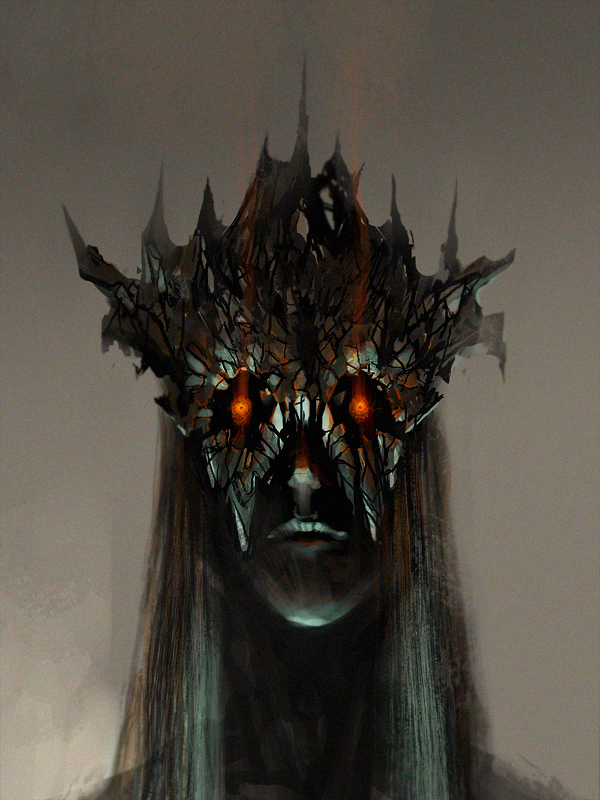
Mask of Madness by Chris Cold
The Divine Masks are the accumulation of psionic communion cults from an alien race named the "Ranathim" that once ruled an empire that spanned the galaxy long before humanity rose up to conquer it.  The scattered remains of their cults still lurk in dark places, on the edges of the galaxy and in disenfranchised communities bemoaning their fall from grace.  While most modern denizens of the Galaxy think of it as little more than a collection of superstitions, it served as the foundation from which the Cult of the Mystic Tyrant sprang, and continues to serve as the basis of belief for many alien cultures.

Today, I offer all $3+ patrons a preview of the Divine Masks.  If you're a patron, check it out!  If you're not a patron, as usual, I'd love to have you.


Support me on Patreon!

Saturday, October 14, 2017

Patreon Double Trouble: Occult Communion and Psychokinesis Revisited

It's Patreon Friday! On Saturday!  How unusual!  I've been busy (and ill) and I've needed to re-prioritize some things, but for your patience, I have not one post, but two!

First, Akashic Ancestry Veneration and the up-coming Divine Masks allow access to facets of Communion without the whole thing, via paths.  The first document, Occult Communion, looks at accessing Communion without psionic powers, and without "total access" to Communion.

The second arose from a discussion on Discord about Psychokinesis, which is also a problem I ran into. The Divine Masks has a cult that makes use of Psychokinesis and Psi-Wars lacks much variety for PK.  Thus, I've returned to take a look at it, including a look at how to fix Innate Attack for Psi-Wars, which will be a change that propagates to other psionic powers and also into cybernetics.

EDIT: This used to be a Patron-only post, but as the content has largely been subsumed in the publicly available wiki, I'm making it available to the public so anyone can read up on the logic of some of these changes. You can read it here.

Support me on Patreon!
Related Posts Plugin for WordPress, Blogger...