While things have been quiet on the art front, those gears still churn in the background. I've been unable to contact my fashion designer, so the male artworks for humanity have languished, but I've made do with something I'm fairly confident I can design on my own: Space Knights.
Space Knight artwork is important for me because it's critical to differentiate a Psi-Wars Space Knight from a Star Wars Jedi. The primary differences are obvious, in that Psi-Wars characters wear armor while armor seems mostly a fashion choice in Star Wars. But I also see the force sword as fundamentally different than a lightsaber in a few ways (a coalesced force screen "blade," like a force ward "edge on" vs a "laser sword"), and the function of the Space Knight is very different. The Jedi are space paladins from a sacred order, but in Psi-Wars, I've tried to create the core concept of Space Knights as soldiers who serve one specific faction, like the knights of old (complete with aristocratic bloodlines that allow for eugenically engineered psychic powers), and this means that not everything they do is practical, as their somewhat ostentatious armor is as much for show as for practical purposes.
But nothing says all of this like an actual work of art, and so I've commissed THE Psi-Wars artist (Christian Villacis), who gave us three pieces to illustrate what a space knight might look like. This artwork is available to all $3! patrons. Enjoy, and thank you.
Tuesday, August 27, 2019


Saturday, August 24, 2019
The State of (My) GURPS Vehicles Addendum: My Process

If you're a patron, you can follow along with these supplementary documents.
Monday, August 19, 2019
The State of (My) GURPS Vehicles
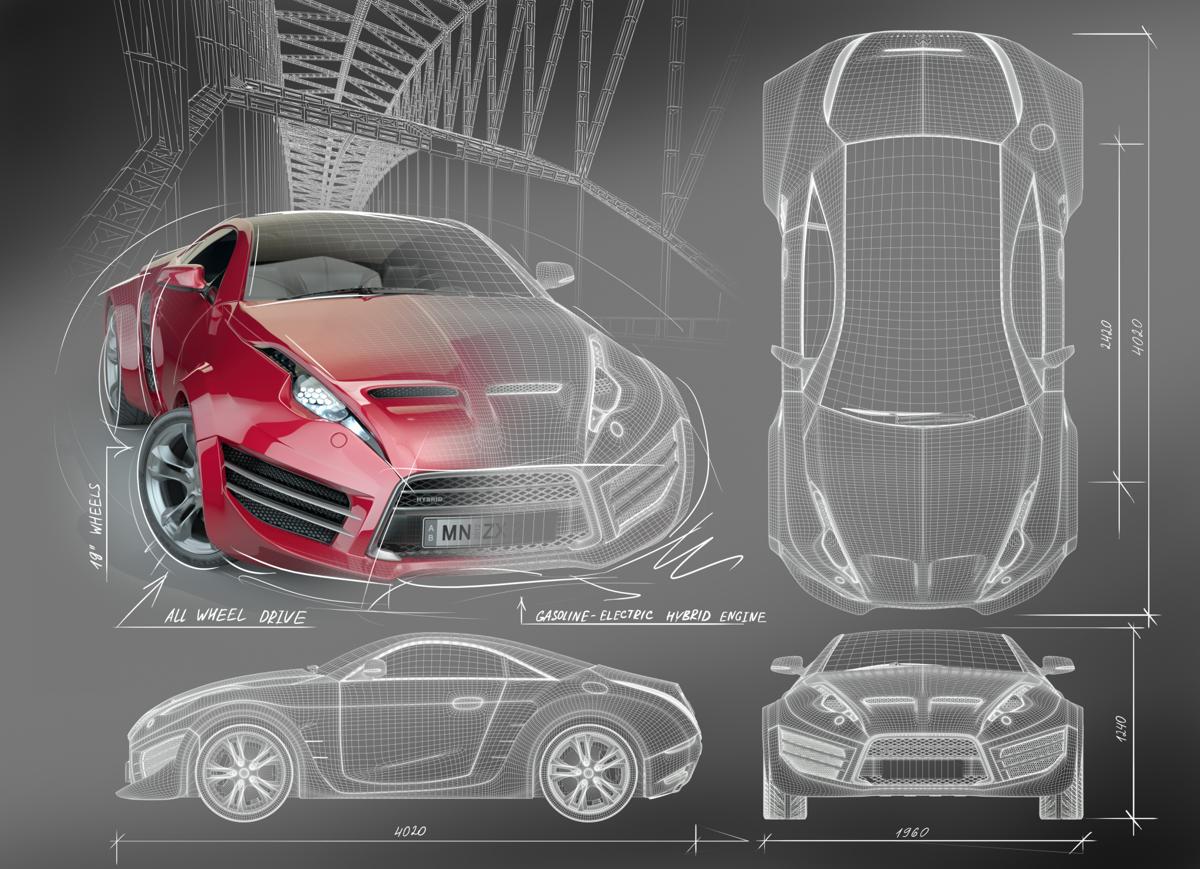
I also wanted to talk about my experience working with Vehicles throughout the past year to build the gear for Psi-Wars, what I think works, what I think doesn't, and my feelings in general on the Vehicles vs Spaceships debate.
Friday, August 16, 2019
Martial Arts as Power-Ups: Retrospective

This reminds me of how cool and detailed GURPS can be in its nitty-gritty combat. But in all my GURPS experience (with 5-6 players) you really have to skip over most of the details, making most enemies simple ‘mooks’ that go down in 1-2 hits. - Scott McleanThis generated an entire conversation over on facebook about the ins and outs of handling martial arts detail. If I can sum up for everyone here:
If you want to run a good martial arts game, I find it best to focus pretty strictly on the detail you want and to make sure combat flows quickly. Try to eliminate all rule-hunting mid-game, or long, complicated discussions about what the character wants to do. Instead, create cheat-sheets (trademark moves go a long way to helping with that) so all the complex work is done ahead of time and you just have to reference your trademark move. As a GM, I also recommend what I call the "5 second" rule, which is if you don't say what you're going to do in 5 seconds of your turn, then you do nothing.
A lot of problems that I see with GURPS newbies is that they often come from games like D&D where a "turn" is conceived of as a unit of "work" rather than a unit of "time." A turn, in the D&D context, is enough time to do something meaningful. For example, in D&D, the idea (as I understand it) is that you're doing all kinds of things, but the action you actually take is the only meaningful thing that happens in your turn. This means that ever turn, something should happen.
By contrast, GURPS is more about the flow of time, so you might stand around doing nothing for a second, or you might be drawing your gun, or you might be aiming. If you're used to D&D-style turns, it feels like you're wasting turns, and the idea that a fight might go on for 30 turns is just too horrible to contemplate ("That would take all day"). However, if you understand that a GURPS turn is like reducing an action film to a slideshow, then it makes sense that there are seconds when not much happens. But to make that work, you need to keep more-or-less everyone taking a minimum amount of real-world time, hence my advice on keeping turns flowing. If one player can kill three NPCs in the time it takes you to draw your weapon, he's really really fast, and probably paid a premium for the privilege.
I could probably talk all day about this topic, and I have, but I'll pause here. Nonetheless, I find it an interesting topic; given some of the responses, perhaps I should revisit a generic martial arts setting at some point and discuss how to build it.
All three of your posts are helping me tremendously with my martial arts game world that I am creating. -Andre TrochA few people commented on how "eye-opening" or how much of a "game-changer" these articles were for them. Great! I had hoped the design ideas would assist people. Incidentally, if you'd like to get more help or advice, I have a Discord here you can check out if you'd like to talk to me or the Psi-Wars community, who seem pretty helpful chaps.
Did you ever consider style talents as part of this article? -WigglesI did not. In fact, I had to go hunting around to even figure out what that meant, and I couldn't find a reference. My best guess here is that Wiggles is referring to a custom talent that applies to a single style, similar to a Wildcard Skill for a style. I actually have a few issues with these, and I think it can be boiled down to my shortlived time playing with Christopher Rice: I had taken a Wildcard Skill as a style, and he kept hedging on what it could do, because it was unclear and he was erring on the side of not letting it be too "overpowered," while I tend to feel that Wildcard Skills tend to be pretty marginal anyway, so you should really give them the benefit of the doubt. The point here is not who is right, but the fact that such things lend themselves to ambiguities like this.
A talent wouldn't have to be the same. Power-Ups 3: Talents actually has a side bar on defaults, which is that you handle the defaults without the talent, and then apply the bonus; that is, if you normally have a Karate of 14 and a Jeet Kun Do talent of +4, and you want to Elbow Strike someone (Karate -1), you work out the base level (13) and then add the talent (13+4 = 17). It feels like a convoluted way of saying "Just apply the default normally, but the talent doesn't give you some double-dipped benefit). Okay, simple enough: a Style Talent would be a very small talent (5 points, I'm guessing) that adds to the skills of that Style and the techniques of that style only. So, for example, if your Jeet Kun Do guy has Jeet Kun Do Talent +4, he gets a +4 to his Elbow Strike (which is a JKD technique) but not to Choke Hold (which is not a JKD technique).
I think such a talent would look a lot like "I'm good at X skills within a talent, but only with some of the techniques, making this worse than just being talented at Karate or Judo." It also tends to mean that you're better off improving your talent rather than your techniques, which means your facility with a style becomes your level of talent. It also leads to a proliferation of talents (every style you learn becomes a talent).
This is not necessarily a problem, though. It doesn't fit what I'm trying to do, but imagine a game with 20 styles that your character can learn, but you just buy them in talent blocks, like "I know JKD at +4, and Jujutsu at +1!" it might be a decent way to simplify the styles, though I don't know how much it would simplify in practice, and if your players would appreciate the simplification.
Don’t worry about “real practitioners complaining a fundamental piece of an art is missing.” MA book already does that for at least a few. -MaoI want to clarify my statement on this a little. My intention is not to say "Those crabby martial artists are always complaining," but to point out a problem with this approach and real-world martial arts. This sort of approach tends to simplify a style down to a set of a handful of moves and forces you to approach the martial art in a particular way. This has the benefit of making the martial art really bold and distinct, but loses a lot of subtlety.
To use Smasha as an example, we had quite a discussion on the Clinch perk, with some people defending its inclusion. One thing that struck me as I worked more with Smasha is that its strange construction makes more sense in the standard MA format if you see it as three interlocking styles: if you buy Boxing (A) DX+4 [16], Brawling (E) DX [1], Wrestling (A) DX-1 [1], then you're really a brutal boxer and you'll focus on the boxing techniques, and some people argued that Clinch makes sense in this context (I dunno, I feel like "Spend that point in Wrestling to get it up to DX and you'll get way more bang for your buck). You can do the same spread but with different skills (16 points in Brawling, one in the rest, 16 in Wrestling, one in the rest), and you have three different fighters who all use the same style, but use it in completely different ways and have different relationships with the style. This is not wrong, and it's the sort of thing that I suspect happens out in the martial art world (and, taken to extreme, explains sub-styles and how styles evolve over time; if Western orcs constantly focus on the Wrestling side, you may eventually get Western Smasha as some sort of Combat Wrestling variant that becomes its own distinct style). I think it's a real and legit expression of martial arts too, but it's something that my approach doesn't handle that well. Thus, you gain something, but you lose something else.
I've had some people point this out, and what I'd recommend for people who prefer the old approach is to keep the original martial art around, sort of how DF has its templates, but also a discussion of appropriate traits, as the latter allows you to make your own character your way. If you have a Smasha player that wants to build his own move (say, a Trademark Punch to the Vitals, which has great synergy with Secrets of the Ripperjack), they can.
Should you allow that, though? Well, that's an answer I leave to you. I would argue it's the same sort of debate DF people have over whether or not templates should be strict. On the one hand, those templates force people to be sufficiently flexible while having necessary core traits, they protect niches, and they help the players explore the world that DF itself is setting out for them. On the other hand, sometimes people want to do their own thing and they're not hurting anything by it... most of the time. I think there are reasons to go with either approach, and it depends on the sort of game you want.
Finally,
... - Peter Dell'Orto
Wednesday, August 14, 2019
Martial Arts as Power-Ups 3: Smasha as Power-Up
Smasha as Power-Ups
This is a worked example of a GURPS Martial Art reorganized into a set of structured power-ups.
These power-ups are intended for characters with no previous character points spent in these traits; they're based on how I'd treat martial arts for Psi-Wars. If you want to use this in a GURPS DF game, you can use it "as written" for most characters, but use the DF Martial Artist lens if applying it to a DF Monk.
If writing your own martial arts power-ups for your groups, I highly recommend putting in more detail (everything necessary to use the specific power-up) that I've not done here, primarily because I don't want to replicate GURPS rules on the internet.
If writing your own martial arts power-ups for your groups, I highly recommend putting in more detail (everything necessary to use the specific power-up) that I've not done here, primarily because I don't want to replicate GURPS rules on the internet.
Smasha – Martial Artist Lens: 0 points
Prerequisite: None
If attempting to use these power-ups in a GURPS DF game for a monk, use the following Lens instead of the Student and Adept templates. The character is considered an Adept for the purposes of Prerequisites.
This lens does fundamentally change the nature of the Martial Artist template in GURPS DF, but if you're using these power-ups, then what makes the Martial Artist stand out is his depth of focus and facility with martial arts, not his grab-bag of Chi Powers.
Advantages: Add Style Familiarity (Smasha) [1]; Remove Chi Talent 2 [30] and replace with Striking ST 2 [10] and either Black-Iron Orc or Secrets of the Ripperjack both [20]. Add "Or take one or more Smasha moves" to the advantage list.
This lens does fundamentally change the nature of the Martial Artist template in GURPS DF, but if you're using these power-ups, then what makes the Martial Artist stand out is his depth of focus and facility with martial arts, not his grab-bag of Chi Powers.
Advantages: Add Style Familiarity (Smasha) [1]; Remove Chi Talent 2 [30] and replace with Striking ST 2 [10] and either Black-Iron Orc or Secrets of the Ripperjack both [20]. Add "Or take one or more Smasha moves" to the advantage list.
Primary Skills: Replace the Martial Artist Primary Skills entry with the following:
Jumping (E) DX [1]-16;
Acrobatics (H) DX-1 [2]-15;
Brawling (E) DX+2 [4]-18;
Wrestling DX+2 [8]-18;
Special Skills: Remove this option and increase the number of freely available advantage points for the Martial Artist by 13 to 33. Alternatively, increase the template advantage points by 3 (to 23) and require the character to take 2 Smasha moves.
Tuesday, August 13, 2019
Martial Arts as Power-Ups 2: Theory and Smasha
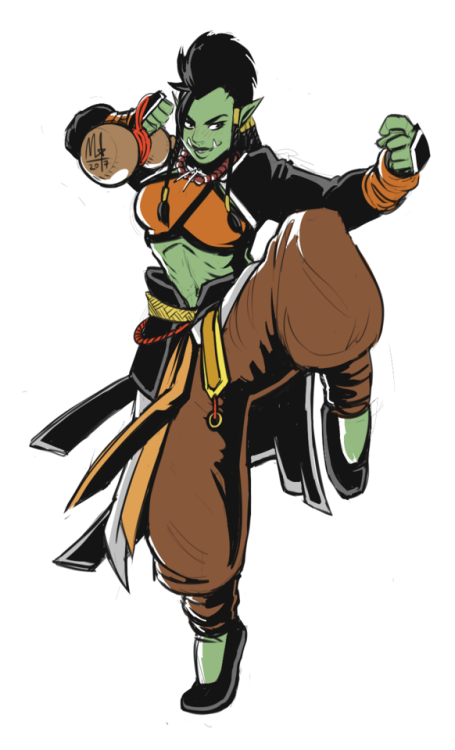
Today, I'm going to go through a worked example using Smasha, which is freely available in the Martial Arts pdf preview, so you can follow along, and is a fictional style. I personally find that real-world styles are, realistically, way too complex to perfectly capture in a more "gamist" system like what we're going to create, so inevitably some real practitioner of it will complain about how you inevitably miss some fundamental aspect of the style and turned it into a caricature of itself, because that's precisely what we'll be doing. Fictional styles, by contrast, beg to be caricatures, because the point is to be something that a fictional hero learns, and fictional heroes need to be painted in broad, obvious strokes.
It should be noted that Smasha, like several GURPS Martial Arts styles if examined up close, has some issues. Some of them come down to age or editorial mistakes, like traits that probably changed their rules in an edit and become obsolete for a particular style (such as the Clinch perk for Smasha), or the innovation of new rules in later works that didn't make it into Martial Arts, because Martial Arts is an older book (Dirty Fighting and Finishing Moves for Smasha). Thus, we'll also be adjusting and updating Smasha as we go, which means the final version won't be the same as the original, and you might not agree with it, and that's okay. The point here is not to "fix" Smasha so much as show how you can structure any martial art this way, and to give you inspiration about how you might do it yourself.
Monday, August 12, 2019
Martial Arts as Power-Ups: Building a Narrative atop the Foundation of GURPS Martial Arts

Thus, it might come as no surprise that GURPS Martial Arts is one of my favorite GURPS books. I've build several campaigns out of it, including Cherry Blossom Rain, in which I just straight up used the templates and styles straight from the book, at least as the basis of my game. That said, though, I initially found the principles laid out in the book frustrating, as it was a pretty big paradigm shift from most depictions of martial arts in most RPGs I was familiar with, a sentiment I think others have had too.
In the end, I grasped what martial arts was trying to do and I've embraced its approach. But that doesn't mean I don't miss a more "classic" take on how most RPGs handle martial arts, and my close relationship with GURPS Martial Arts has evolved over time: it's helped me see what I liked about those other books, how that sort of thing is possible with GURPS Martial Arts, and while working on the kung fu of the Psi-Wars Space Knight, I think I may have stumbled across a solution that gives me all the elements I want, while still maintaining the enlightening perspective of GURPS Martial Arts.
This will be a three-part series. Today, I'll lay out my thoughts on most traditional RPG approaches to martial arts (at least those that I'm familiar with; there are others), how it differs from GURPS Martial Arts, and then the tools and structures we can use to adapt martial arts to a more "traditional" approach. Tomorrow, I'll use implement this atop an existing, fictional Martial Art: Smasha. Finally, I'll give you the "finished" version of an updated and re-organized Smasha.
Subscribe to:
Posts (Atom)
