Monday, January 16, 2017

Pulling Rank in Psi-Wars

The next step in looking at our Social Engineering rules is to take a deeper look at Organizations.  This would be the bit where I would first try to argue against Organizations, but I cannot. First, Pulling Rank is right there in GURPS Action.  It's a fundamental element of how Action plays (and, in fact, largely spawned later works on the topic).  I'd need a really good, Star Wars-backed reason to remove it, only Star Wars itself is largely about organizations.  One might describe Star Wars as a battle between the heroic Rebellion (an organization) and the sinister Empire (an organization) while plucky heroes seek the last remnants of the Jedi Order (an organization) for help.  Unlike your typical murder-hobo game, and rather like most modern action thrillers, the characters' actions largely take place in a larger context of a conflict between organizations, and often involves interacting with organizations (like the Hutt Cartel, or the Galactic Senate).

Thus, Psi-Wars is necessarily a game that features organizations as one of its foundations.  This is convenient for us, though, because you may have noticed that organizations serve as natural containers for things like martial arts, cultural distancing mechanisms. military doctrines, and opposing minions.  We might say things like "The empire fights differently than the rebel alliance,"  or "The Order of True Communion offers a different understanding of Communion than the Oracular Monks".  In all these cases, we were already talking about organizations.  Now, we can talk about them in more detail.

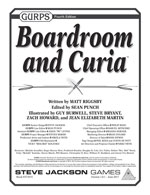
As I look into this in more detail, I'll be primarily using three books: GURPS Action 1, and its section on Pulling Rank, then GURPS Social Engineering: Pulling Rank, for an even deeper look at that, and then Boardroom and Curia, for a look at building organizations from the ground up.  Finally, I'll be using GURPS Space for some thoughts on what sorts of organizations to populate my setting with.

Thursday, January 12, 2017

Building the Con Artist and the fine art of Forgery

I trust he needs no introduction
Lando Calrissian remains one of my favorite characters from Star Wars, not just because he was so stylish, but because of what he represented.  For the most part, the core invaded the rim, with great imperial vessels descending on backwater worlds, or the rebels bringing the politics of the core with them out to the desolate worlds of the rim.  But with Lando, the criminal sensibilities of the rim dived into the elegance of a core world.  He danced a delicate line between honest governance, real politick and rapscallionry and he made it look good.

The con-artist definitely fits Psi-Wars even better than Star Wars, though, because Psi-Wars is about Action, and Action needs a faceman.  Who better to be that than someone like Lando Calrissian?  But more than Lando, I want someone who not just defines elegance, but undermines it.  He's a confidence man, sure, but he's also a card-sharp, a gambler, and a forger.  He knows how to rub shoulders with the elegant, how to pretend to be like them, how to pawn off his forgeries as the real thing.  I want le Comte de St. Germain, or for those a little more up-to-date in their references, I want Neal Caffery. In spaaaaace.


Wednesday, January 11, 2017

A Psi-Wars Cultural Checklist


The point of all of the previous posts in this mini-series is to give you ideas on what do for a new and unusual culture in your setting.  The point of an unusual culture in psi-wars is to remind the players that they're in an alien setting.  It should be filled with aliens clicking their prayer beads while chanting mantras in foreign languages, or a tattooed savage looking to trade exotic fire weasels for much needed survival supplies.  Star Wars is a very cosmopolitan setting, where aliens can be regularly found off-world, rubbing shoulders and mingling with one another, rather than the more segregated sci-fi settings, like Star Trek. Thus,we should be ready to conjure up a new alien culture at the drop of a hat.

But those cultures don't have the be terribly unusual.  In such a cosmopolitan setting, many cultures will have already rubbed their traditions off on each other.  In the real world, everyone from the US to Europe to Japan and China know who "Iron Man" is, and most of them at least know what Christmas is, even if they don't all celebrate it.  Girls wear skirts and high heels, men wear suits and ties, and everyone can wear a t-shirt and jeans.  We might expect something similar of our Psi-Wars cultures. Some cultures might remain distinct and unusual, but only so far as to give local flavor (the British have different accents and food than Americans, but they're not so alien that they inflict a cultural familiarity penalty).  For most "local color" like this, I recommend no more than about three distancing mechanisms.

However, some cultures remain extremely distinct.  Sometimes, these cultures represent entire cultural spheres.  The "Sinosphere," or the area around China, all use Chinese characters to some extent, and know works like the Romance of the Three Kingdoms or the works of Confucious.  They're well-versed in the ideas of Buddhism, at least, and often Confucianism or Daoism.  They tend to favor cuisine featuring rice and noodles and using chopsticks to eat.  They tend to share values too, to some extent.  Someone from Vietnam travelling to Korea will definitely have to deal with some local differences (the language, at least, will be different), but he'll still find things far more understandable than if he flies to Boston or Paris.  There might be a Cultural Familiarity penalty between the West and the Sinosphere, but not between two places within the Sinosphere or the West.  Likewise, Psi-Wars might have something similar, where you have a "galactic core" culture that's different from the culture of a particular galactic arm, like the difference in Star Wars between Imperial space and Hutt space.

Some cultures remain distinct and unusual within a given cultural sphere.  This might be the result of strength, or of colonization, but it could just be a distinct minority that clings carefully to its traditions.  Jews, throughout history, have often been this sort of culture, interfacing well with outside cultures, while remaining inscrutable to those outside cultures.  Such a culture might have a cultural familiarity penalty while its adherents have purchased Cultural Familiarity with the local dominant culture.

In the case of a genuinely distinct culture, one that inflicts a cultural familiarity penalty, I recommend at least 3 cultural differences, and at least one value that contrasts with the "Galactic Standard society" that explains the fundamental distinctness of the culture.  You can certainly do more than this, but be careful with going crazy, unless you and your players particularly enjoy deep cultural exploration or really exotic cultures. Whatever you design, you have to remember, maintain and run.


Tuesday, January 10, 2017

The Philosophy (and Religion) of Psi-Wars

Philosophy is devoted to rational discourse, whereas mysticism tries to reach beyond the limits of reason to what cannot be said or even thought.
- Peter Adamson, the History of Philosophy Without Any Gaps
(Philosphy) particularly suits a martial-arts campaign in which the character knows combat skills with different (and even antagonistic) spiritual teachings; by adopting both schools' philosophical teachings, they may be combined without conflict.
-GURPS Compendium I
In Psi-Wars, I've chosen to use the Philosophy skill where I should probably use Theology. I've done this, first, as a legacy of GURPS 3e, where "Theology" has a Western connotation (Catholicism is studied with theology not philosophy), while "Philosophy" has an Eastern connotation (Buddhism is studied with philosophy not theology).  I suspect 4e would disagree and suggest that all religion is theology and rational discourse about the nature of reality is covered with philosophy.  Furthermore, Philosophy suggests a state of mind, which is more important to a game about psionic powers.  While Communion is definitely inspired by, and carries the trappings of, religion, it is in fact a highly psionic phenomenon, and understanding it carries the same sorts of approach that understanding natural philosophy might.  Which brings us to the blurry line between philosophy and theology, in that both traditions have defined a culture's worldview, often discussed the nature of God, ethics, morality, the meaning of existence, the immortality of souls, and so on.  Theology and philosophy often informed one another, and throughout much of history, except for artificial distinctions ("Philosophy is Greek, Theology is Islamic"), they represented a similar sort of body of knowledge.  Thus, for my purposes, I'm going to largely treat them as the same, but we must realize that they are not the same.  Philosophy arms its adherents with the logical skills necessary to pursue an argument to its natural conclusion, while theology concerns itself more with an understanding of a body of religious doctrines, texts and laws.

If we look at religion and philosophy both as a way of viewing the world, then we can see the common ground more clearly between the two, and we understand their place as a distancing mechanism.  We're describing through what lens a culture views the world, how they choose to describe it, and the points of agreement all in a culture have (and the fault lines of their most common arguments). Religion in particular is a major touchstone for a culture.  It contains all the rites and traditions associated with a culture: If people go to mass on Sundays and dress "their Sunday best" and attend the same weddings, they begin to form a community, a specific community that might not contain those who follow other beliefs.  A common refrain to describe this is "belonging before believing," an idea that people  join a community before they come to accept its deepest teachings.  Philosophy doesn't necessarily contain this sort of power, though some communities definitely rise up around philosophies (such as the Marxist commune or various attempts to create Libertarian communities).  Nonetheless, I'm going to attempt to discuss both at once.

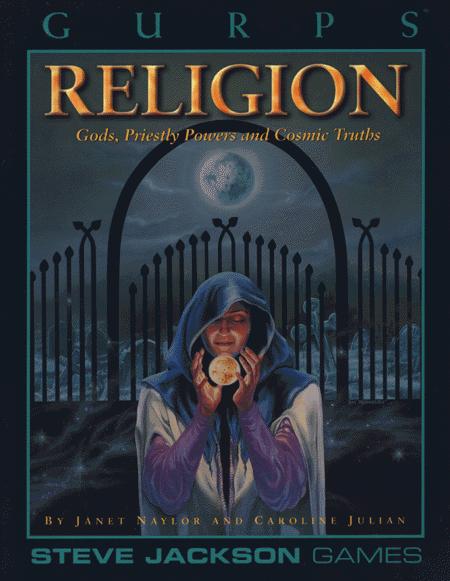
I'm going to do this so that I can use the excellent GURPS Religion, which to this day remains one of my favorite books from the 3e days and is still very much relevant today.  We'll have a few troubles with it, namely that we're using a sci-fi setting which has some specific issues (though Religion does touch on those), that what we're describing isn't entirely religious in nature, and that GURPS Religion must necessarily be limited in scope, but I'll try to add what I've learned from my various forays into the world of Philosophy and Theology.

I'll tackle religious creation here the same way I did Social Engineering a few days back: the book itself is "good enough" without further commentary, but I'd like to post more than just "Here you go, use this book!"  So I'll walk through the Religion Creation Checklist with you, to give you an idea of what points to hit and what points you might skip, and where major questions might arise.


Monday, January 9, 2017

The Ways of Psi-Wars: Cultures and their values and literature

Most of the distancing mechanisms we've discussed have, ultimately, been very superficial:  how a culture dresses, how a culture plays, how a culture speaks.  When you peel back the surface, though, you'll start to see that all of these things are just expressions of what a culture values, which itself is often shaped by its experience with the world (though it often sees those experiences through the lens of its values, so this cuts both ways)

I began this series with language and I'm going to end with religion ("philosophy"), because, to me, these are the two ultimate expressions of culture.  Language describes not just how a culture speaks,but how it thinks and how it formulates what it thinks, how it expresses it.  Its religion enshrines what it believes, how it sees the world, and how it comes together as a community.

I want to restate, before I go any further, that the intent in Psi-Wars isn't an in-depth exploration of culture.  Psi-Wars is not Anthropologists In Spaaaace, but a crazy action game.  The intent here is to rapidly conjure up a sufficiently interesting species that someone could play them, or they could pose an interesting challenge to a group (for example, a diplomat who is trying to negotiate for an alliance against the Empire).  The point of values is to get at the heart of how a culture thinks, to make the rest of your design organic, but you can just as easily turn it the other way around.  If you have a street-savvy race with a weird dialect and a penchant for extremely colorful clothes, and someone decides they want to play as them, then it might be worth going back and pondering why the race thinks as it does.

It's also worth pointing out that Psi-Wars will feature a few major elements, like the Empire, the Alliance, and the remnants of whatever culture existed before the two fractured into their sprawling, galactic civil war.  Not every "alien culture" actually features aliens.  Our weird, distant culture is often human... though we need to be careful not to make them too weird!


Saturday, January 7, 2017

Mailanka Rants: It's okay to like bad movies

So, a friend recently linked me to this guy's channel on movie editing and criticism, and he gets into some pretty deep stuff, but the one that leapt out at me, that I felt demanded greater discussion, was this video.  The question he is asked is this:
Jurassic World: I liked the movie because it felt like a bad B-movie.  Do you think movies can be genuinely good because of their "badness"?
 To which Folding Thoughts stumbles a bit, because how can you call something good because of its badness?  Then he begins to discuss genre, but I think his initial confusion signaled something important: the questioner framed his question badly, and I think I know why.

The question isn't really "Can bad movies be good?"  but "Is it okay for me to like a critically panned movie?"

The answer is yes.  It's also not the point.


Thursday, January 5, 2017

Blogging, One Year On

In retrospect (ha!) I really should have posted this last week, but I wanted to be close to one year on the nose as I could.

Last year, I committed to running one blog post per week for the rest of the year.  The result should be 52 blog posts,  The actual result is nearly 5 times that, though not all of that has been GURPS as promised.  Still, it seems I more than exceeded my goal.

My approach was to try to write about something that I felt would regularly generate content (that is, to have a framework) and to "write forward," to pad my post count by writing two or three posts in a row and arranging for their eventual release.  The result is that I always hit my deadline with loads of time to spare, so that pleases me.  It means this approach works.

What I didn't do is post about half the stuff I wanted to.  It's been all Psi-Wars all the time, and we're not even done yet!  People don't seem to mind, as my approach is multi-faceted, so even if you're tired of non-stop Star Wars, the specifics of a given post might still appeal.  It also showed me a lot about the work involved in writing up a particular setting the way I'd like to.  But it's also shown me just how much work you can get done once you commit to something.  I've generated some quality (by "my campaign notes" standards) material with a serious word-count associated with it.  I've also put my Nobilis campaign back on the map.  I think I'd like to continue this cycle of "4 posts a week for GURPS, one for some other campaign I want to get moving."  This year, I'd like to see if I can breath some life into an old Lady Blackbird project I had.

I think the blog has been modestly well received.  My blog is pretty high up on the front page of SJGames when it comes to view numbers, though not nearly close to the big two of Gaming Ballistic or Ravens'n'Pennies (and likely Dungeon Fantastic, though I don't think that has a thread on SJGames at all).  That suggests of "the other blogs" I'm doing pretty well. My views are fairly consistently neck-in-neck with the other big name to start this year, Let's GURPS (and the reason for our mutual success is likely similar: Consistent publication!).  For my personal views, I went from having a high of ~400-500 views a month to sometimes having 400-500 views a day.  I'm not sure if that comes from the quality of my material or from more extensive advertising on my part.

Or the part of others.  I've received some traffic from aggregation sites, Reddit, 4chan and RPG.net where people, not me, have plugged my sight.  I feel honored by that, I must admit.  I've also seen a few people start up new campaigns inspired by my work.  That's even greater praise for what I'm doing.  On the more critical side, I've had some complaints about my Psi-Wars material, but I think those criticisms have largely strengthened my work.  Early on, some people suggested I was brave for "showing how the sausage was made," but I think the result is more people figuring how to build their own campaigns, and my own work becoming better, so I feel it's been win win.

This year I released my first PDFs for Psi-Wars and I've been able to track their downloads.  I'm close to 75 downloads of the core PDF and nearly 200 downloads over all.  That says my material is definitely getting out there!

What's also surprised me is where my views have gone.  Early on, I would try to predict what would be a big hit, or I would be especially proud of a particular piece, only to have something I ripped out in an hour completely dwarf everything else I've written.  My general articles tend to be the biggest draws, but sometimes I feel like what works and doesn't is more determined by zeitgeist than anything I can do, or perhaps that I'm just a terrible judge of my own quality.  A selection of notably popular posts are:

  • Psi-Wars: Don't Convert; Create! which likely gained popularity due to being one of my first posts, but it's also a topic I see pop up in a few places, so people like to reference it.
  • The Riddle of Systems, a general gaming post that evidently spoke to a lot of people.
  • Rewriting Combat: Optional Rules likely earned a lot of views because it speaks very much to the sort of thing a lot of people need in their game.
  • Starfighter Tactics has had more than its fair share of views despite being something I tossed together larger as an after-thought because, I suspect, it addresses a hole in the GURPS system that a lot of people would like to see filled.
  • The Luke vs Vader Breakdown is fantastically popular, in my top ten of all time, despite being very specific.  Breakdowns seem evidently rather popular, and this one seems to touch one something a lot of people would like to see, and is also paired with a sense of nostalgia.
  • Rafari 2.1, one of my signature characters, is peculiarly popular.  Like, one of my top ten posts of all time.  He has no comments or +1s, just a ton of views, don't know what that's about.
  • Assassin 2.0, and Scavenger 2.0, both templates, are also peculiarly popular, in largely the same way.  Surprising, given how new they are, and their lack of artwork.  Perhaps people are using them for their characters?
  • Psi-Wars: Linguistics just came out and is already rocking nearly 400 views, which is shockingly quick growth.  As a fan of languages, that pleases me!
  • And last but definitely not least, the Psi-Wars Primer has not a single +1, but is the most viewed post of the year, and I regularly see traffic from it.  It's proven an ideal touch-stone for people who want to jump into Psi-Wars late in the game.  This is probably my favorite post, as it's the smartest one I think I could do.
If you have any thoughts on particularly beloved posts, dear reader, feel free to leave them in the comments below.

Going forward, I want to wrap up Psi-Wars (finally!).  I'm about half-way through Iteration 5, so I don't expect it to take more than another 4-6 weeks. After that, I'd like to jump into Iteration 6, which will be a concrete setting, ready for play.  I might go on to an Iteration 7, wherein I put together some adventures and run them as a final playtest.  I'd like to be finished by summer.

Expansion Plans and Justifications

My original plan was to write for a single year to practice self-discipline.  My original intent, after writing a year of GURPS material, which I would enjoy, I'd dive into something more difficult: Writing blog posts about programming.  I already have such a blog, and with the sort of time and effort I've put into Mailanka's Musing, I could write my own game or greatly expand my skillset, both of which have considerable economic rewards.  However, I've been impressed by the warmth of the response of the community and, in particular, the number of people who've said that my material is worth money.  If that's so, I can certainly justify continuing to write at the pace I am "for free."  And, in fact, if you're really willing to spend your pennies on me, there's some interesting things I can do, like commission artwork!  So, if you're interested in furthering my writing, then by all means, check out my fully operational patreon!


Next, after tackling not-Star-Wars with Psi-Wars, I'd like to tackle not-Star-Trek with Heroes of the Galactic Frontier, which is actually a project I've already put considerable work.  Where Psi-Wars has been the conversion of largely existing material to create a facsimile of another setting, Heroes of the Galactic Frontier will be about building new campaign frameworks and about using design elements to give us precisely the gameplay we want.  It also won't feature its own setting, but a more direct, toolkit approach for building your own setting (as a good Star Trek game needs to be able to conjure civilizations, space empires and planets whenever players go into a new star system and figure out what's there)

Finally, I'd like to expand my look at the community: I happen to believe that the average gamer is more creative, more innovative and more interesting than he realizes, and there are a few fellow gamers and creators I'd like to highlight with interviews.  I'd like to see if I can drop one interview a month, to introduce the larger gaming world to you, and to help particularly creative gamers get their message out.

So, here's to an interesting 2017!
Related Posts Plugin for WordPress, Blogger...