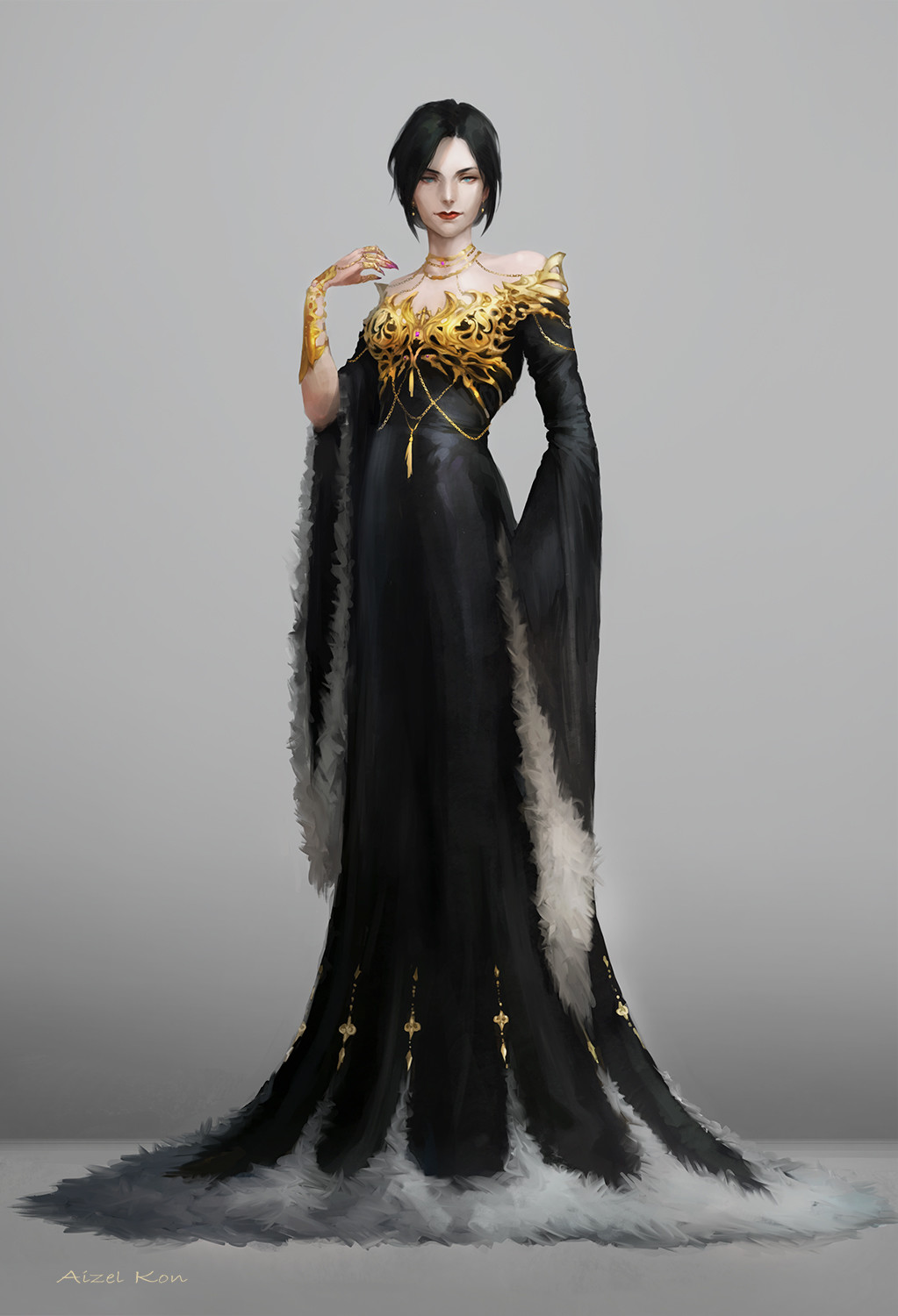
I asked my patrons to vote on which aristocratic lenses they wanted to see, and four options tied for second. This is the third (and last that I'll discuss here; the fourth was the Last Alexian, which is a Patreon special, available in the Lost book of Houses).
I was honestly a little surprised to see Ranathim Aristocracy do as well as it did. I'm glad it did, though, because it gives us a chance to look at some truly alien nobility. Most of our aristocrats are either human, or only superficially different from human nobility (you could, for example, build an Asrathi noble as a generic aristocrat, but there's nothing in that post that would encourage you to make him different from, say, a Pelian noble). This gave me a chance to explore a really different sort of aristocracy, to set up some unusual and alien traditions.
One concern I had going into the design of the Mithanna was mounting complexity. I didn't mind adding more and more houses to Maradonian nobility, because they're a central focus of the game and I expect players will want to see a lot of detail about them. The Ranathim pose a different problem, as they're explicitly "foreign." They're the "Red Men of Mars" that John Carter goes and learns about, with their Jeds and Jeddaks and Tharks, or the Klingons with their overly nuanced sense of honor and their unique language. They're meant to feel foreign and exotic, which both means they need a lot of detail, and that people don't care about their detail until they really care about their detail.
So I wanted to make something something that felt weird but didn't actually use any new mechanics. If you're familiar with the Divine Masks, you're already familiar with Oath Magic (ie, just buying a learned prayer as a straight up trait and slapping an oath modifier on it), so I chose that mechanic as my core focus. I chose a single oath (the Mithna Edict) as the focus of the characters, the one thing they turn on, then added a handful of ways to customize your characters (a few new oaths, some psychic abilities, a few common traits, etc).
I felt three houses were enough, though I've heard murmurings of wanting a fourth or making their own, but I'll leave that as an exercise for the reader. With the Maradonian nobility, I could easily see games centered entirely on them. The Maradonian aristocracy are one of the participants of the central conflict of the setting, and they're a familiar sort of nobility, which allows players to easily understand them. They could well want to play one and find that the four houses offered aren't enough, hence the Lost Book of Houses. With the Ranathim Aristocracy, I don't see that nearly as much of a concern. I see most players experiencing the Umbral Rim as outsiders, and those that want to run a strictly Umbral Rim/Ranathim game are, first, likely to be rare and, second, served already by the great variety of the region. They can play as a member of one of the three Mithna, or they can play as a Slaver-lord, or they can play as a Gaunt priestess, or they can play as a Trader Merchant-King, or they can play as a Keleni prophet, etc and so on. The region is already rich with variety, so the Mithanna only really need enough variety to lightly outline how they might vary from one another, and then they can be tossed into the wild mish-mash of ideas brewing in the Umbral Rim.
What emerged from my design was, as someone pointed out, very Fae-like. This wasn't actually intentional (I drew more inspiration from Vampires, especially Vampire: the Masquerade. If you squint, you can even see the Gangrel behind Mithna Galantim), but I can see it. Like with most things I put into the Umbral Rim, the idea is to create a disorienting set of rules that nobody properly explains to the player, making him feel like an outsider, so that he staggers into insulting one of these and ends up dueling them in some crazy, pulp space opera dueling chamber with a gyrating floor and spike traps, while a Ranathim princess struggles with her feelings for this strangely compelling Earth man and the fact that her Edict forbids her from loving him (unless he does these equally weird, arbitrary things that the princess sighs and rolls her eyes when explaining it to him, as though it were the most obvious thing in the world). I also had to explain how the aristocrats of a broken empire could still keep their power, given the constant churn of disorder and anarchy in the Umbral Rim. I think it worked out well.
The dueling, blood-feuds, and the explicit bonds to worlds (such as Galantim ruling an estate on Hekatomb) is based on feedback from the Disciples. They thought the Mithanna needed more context.
Friday, October 4, 2019


Thursday, October 3, 2019
Wiki Showcase: Aristocratic Lens - Maradonian Noble

I created the Maradonian aristocracy for a few reasons, but primarily I wanted real opposition to the Empire. Star Wars presents the rebellion as a plucky group of rag-tag farmers and adventurers who just happen to have their own fleet. This is based on a very optimistic and romantic notion of what a "rebellion" looks like. To be sure, the American revolution saw the Americans with their own fleet, and the American civil war likewise saw the Confederation sport their own fleet, but in both cases, these were fully fledged states waging war on one another, rather than a band of guerrillas. You need shipyards and workers to maintain a fleet, you need training grounds to train your pilots, you need to perform exercises to get your fleet to work well with one another. George Lucas based a lot of his vision of the rebellion on a romantic view of the Viet Cong, but they didn't need to fight naval battles on the scale of what we saw on WW2 and, even if they did, they had the backing of a state (North Korea, which itself had the backing of China).
So, if you want to have large, sweeping naval battles in space, you need a state. If Psi-Wars is WW2, and the Empire is Germany, then the Alliance is Britain. Other good inspirations would be Napoleon vs the monarchies of Europe, or the aristocratic arm of the Roman civil war that led to the rise of Augustus Caesar.
I also created them because we need space princesses. Space opera is based heavily on the "fiction of the day," and the fiction of the day that inspired works like Star Wars were fantasy works and, especially, the Ruritanian Romance, stories that involve swashbuckling adventures in small, valley kingdoms with very 19th century aristocrats. One needn't look that hard at Star Wars, with its princesses and heroic space knights rushing to rescue them from a grasping, napoleonic Empire. We like stories about prim princesses who need a good scolding, or who heroically rebel against their gilded cage, or princes who seek to earn their father's favor and who must bear the crushing responsibilities of the state and the needs of the people at a tender, youthful age. And, of course, everyone must know how to duel.
To make such an aristocracy work, we need to embed them in the setting and create a mythology around them. In large part, aristocracy is built on mythology, the story that some people are better than others, and that they're the better people. They trace ancient, prestigious lineages, and they explain that their bloodline gives them greater right to rule. In Psi-Wars, we manifest this with their eugenic bloodlines and their ancestor veneration. This gives them a reason to be picky about whom they marry, or to look down their noses at one another ("Bloodline purity 0? Seriously? Were your parents even trying to retain their dignity, or did they just give up when they decided to have you?"). Their heritage as space knights gives them a reason to retain their martial lineage, but the lack lack of warfare has turned it into something ceremonial, a game that focused duelists seek to win, rather than a way of war.
Thus, if you're thinking of Psi-Wars Aristocracy, chances are, you're thinking of one of them. So, check them out here. If you find my varieties of aristocracy confusing, just ignore the rest and focus on these, because they're the ones people seem to know best. Currently, I have four houses, four lineages. You can make your own, and I have four more available in the Lost Book of Houses if you're a patron.
Wednesday, October 2, 2019
Wiki Showcase: the Aristocratic Background Lens - The Imperial Heir
So, what's it like to play the second most important person in the Galaxy? You can't play as the Emperor of course (right? I mean, that would be silly), but why not one of his children?
Star Wars never really talked about imperial succession, because it was interested in having a tightly constrained narrative that it could wrap up with a bow: find the Emperor, kill the Emperor, the galaxy is saved. Hooray! But we have the luxury of exploring these possibilities. We can have an imperial prince or princess and a convoluted race for succession if the Emperor ever actually dies, including which person gets backed to be the next in power.
Like the Corporate Heir from yesterday, the Imperial Heir is not powerful in their own right, but because of who they're deeply connected with. Just as we can look to real-world corporate heirs, we can look to the children of real-world dictators and see what they might be like: spoiled, with nobody in their empire willing to say no to them, though sometimes, they come to see the plight of their people and may act as a sort of hero figure (or be set up as one by their father's very clever propaganda arm).
Of course, playing such a character isn't cheap (60 points! For the basics!) but that's to be expected. The ability to throw a tantrum, and then get your own dreadnought for your birthday, is a pretty powerful one. And the GM needs to be careful if allowing this, as the campaign can quickly become about the Imperial Heir, which isn't necessarily a problem, but it's not the sort of character you just chuck into a campaign without working out some of the details first. But if you want to play that sort of campaign, you have the tools to do so here.
Tuesday, October 1, 2019
State of the Blog: The October Roadmap
September Retrospective
Last month was, to my surprise given the volume of posts, a mediocre month for views. The big posts for this month were:- The Conditional Injury Deep Dive
- Redjack Military Doctrine
- And my post answering Lord Buss's questions.
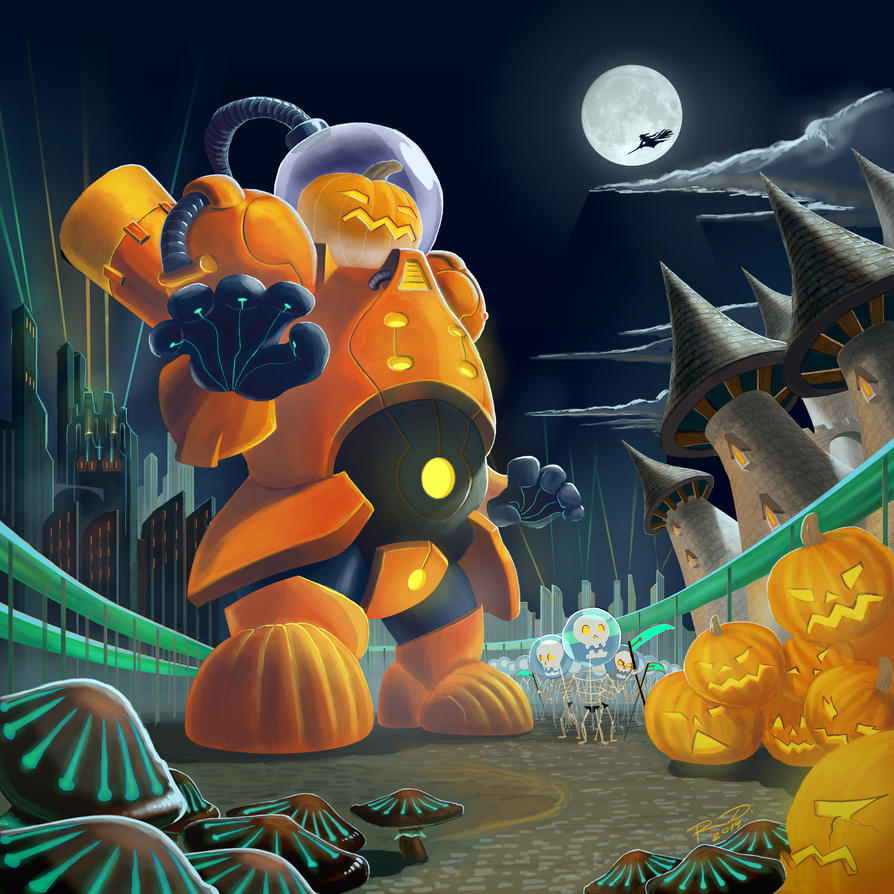
Of the vehicles, the Switchback seems the most popular, but the Nomad isn't far behind, and the Ranathim Mithanna get a special mention, likely because people like that picture.
I lost a Disciple Patron, which always hurts, but a I gained a new Companion patron, so overall Patreon is a wash. I had a "drive-by" patron; some people really hate that, but I don't mind. I find most patrons stay for the long haul and join in with the community. That said, I've seen a surge in comments and discord use, so I'm rather pleased with the direction of the Psi-Wars community.
The big wiki-updates this month have been:
- Psionic Powers
- The Aristocrat Background Lens (Which, as of this post, is still in progress).
An October Perspective
As always, I have a vote for what topics you guys would like me to cover. The winners this month are:
For Rules Collation: Communion. That'll be a big one.
For Template Collation: The Space Knight (with the Wanderer Background Lens in second place)
For General Topic: A tie between "What is magic, really?" and "Modular Robots Revisited."
Communion
Communion has been popular since I released it back in Iteration 3, and it's been largely uchanged since then except for Broken Communion, which keeps getting weirder. We now have ghosts, and quite a treatise on them, and things like psychic diseases and loads of other problems that Broken Communion can cause. I might also change how it's priced, as it seems increasingly reasonable to have True Communion miracles to break or override Broken Communion miracles (ie, you can use True Communion to purge Broken Communion sanctity) and perhaps you should be able to protect yourself from Broken Communion the same way you can protect yourself from ghosts.
The biggest change to Communion was introduced with the Divine Masks: occult communion and a greater role for Paths. I had originally conceived of Paths as a way of specializing one's form of Communion, but I've been increasingly seeing it as a "road to Communion." That is, a Templar or a Mystical Tyrant might command Communion, but most people who interact with it do so unwittingly by embodying archetypes. This needs to be codified, and that means Paths need to be expanded, because normal communion gives you access to all of Communion, while a path gives you only a limited subset of Communion.
Finally, I've decided we need more paths. I find three paths per form of communion a little constraining. I'd like to add one more path per form of Communion, to better refine the concepts of the Paths, which means some things will get shifted around. All names subject to change.
True Communion gets the Wounded Healer, who moves some of the gentle, self-sacrificing things from the Bound Princess, who becomes more of a self-sacrificing authority figure. Domen Venalina (the Ranathim Sin Eaters) will shift from the Bound Princess to the Wounded Healer.
Broken Communion gets the Void. This will focus on thoughts of nothing of nothingness and emptiness, the inability to grasp both the infinite and the truly empty. It'll touch on cosmic themes and, obviously, travel powers and higher dimensional powers.
The Space Knight
The Space Knight is a tricky one, easily on par with (or more difficult than) the Aristocrat. It's not so much that we need a ton of setting information, because we have most of that. We need to dive into force swordsmanship using my new approach, and I still need to work out a couple of styles. Fortunately, you already know what "Martial Arts as Power-Ups" looks like, so that shouldn't be too bad.
The biggest problem with space knights is tackling their sheer variety. One of my goals with Psi-Wars was to open up the "Jedi" template to a much broader range, and I think I've succeeded. Templars feel like Jedi and the Tyrants like Sith, but Maradonian Space Knights feel like, well, knights, and the Satemo of the Umbral Rim feel more like vengeful ronin, and we have room for "Street Knights," like Dun Beltain. We need to not only integrate all of these different cultural elements, but also their martial arts and their psionic powers or, in the case of House Kain, how one can be a space knight without psionic powers.
If that doesn't work, we'll shift to the Wanderer, which I suspect did as well as it did thanks to curiosity about Redjack, which seemed to be popular with the Discord community, and what sort of people might fly those ships.
Modular Robots? Magic?
Last but not least, we had quiet a discussion about robots recently, which led to some people criticizing my approach to ST. I think it's well-founded... but it turns out there's an interesting counter-case to be made, which could lead to some different designs. Using this approach could lead to new problems, and it might be worth discussing what works well with my old Modular Robots approach and how, possibly, we might be able to keep it.
If that doesn't pan out, I can rant about magic for a good 10k words.
Is that all?
If this isn't enough to keep me busy for the month, in theory the last part of the military doctrines series are robots. We need to get stats on the robots that fill the tech-bot slot on most fighters, and we need to talk about the robots that tend to your wounds, or that Redjack pirates use to scout (or patrol) outposts. This makes a revisit of Modular Robots quite timely.
It also means creating an entirely new set of rules to govern how they work as allies, how you can quickly design your allies, and how PC robots might interact with the system. This is a project on par with the Sidekicks supplement for Monster Hunters or Henchmen for Dungeon Fantasy, and so it might take a lot of work (though, compared to the ships, thus far, it's been pretty quick!). With Communion and Space Knights on my plate, these might have to wait but, on the other hand, I have a week of vacation, some of which I might even be able to use to write.
If I find I still have time, I'd like to do a Patreon poll series wherein we build our own military doctrine and associated materiel.
Well, that's what I'd like to tackle for October, we'll see how it goes. I'm glad to have you still with me and thanks, as always, for your patronage and your clicks.
Wiki Showcase: Aristocratic Background Lens - Corporate Heirs
When my patrons voted for aristocracy, I held a poll for what sort of aristocratic lenses they'd like to see, and we had a four way tie for second. One of the tied-for-second choices was: Corporate Heirs.
So far, we've only seen aristocracy-as-aristocracy, but really, the background is about being one of the well-heeled of the Galaxy, someone with money and social influence who gets to attend the nicest parties in the nicest outfits and gets to worry about their manners. So far we've based that in blood and lineage and psychic power, fitting for Psi-Wars as inspired by Star Wars, which itself was emulating fantasy, swashbuckling and Ruritanian romance.
But Psi-Wars talks a lot about corporations (as does the later installments of Star Wars, it must be noted). I talk about them because they're a good way to introduce disruption to aristocracy, as you begin to shift from "old money" to "new money," and capitalism regularly creates (or at least underlines) social upheaval in its cycles of creative destruction. And Psi-Wars begins to gain something of a cyberpunk edge to it, a sense of more modernity when compared to Star Wars. GURPS thrusts this upon us, in part, thanks to how it handles tech levels, but it's something I've personally wanted to explore, because it differentiates the setting from Star Wars, and because a cyber-samurai dueling a psychic space knight is a wonderful image.
Certainly, groups like the Hyperium Mining Guild and ARC draw inspiration from corporations like Dune's CHOAM; less modern corporation than medieval guild or aristocratic collective for sharing profits, but companies like Syntech could fit in the glass towers of Neo-Tokyo. These companies give us different technological profiles (which we've been exploring recently), but they could also give us story seeds ("Syntech has hired you to smuggle this cargo to the Umbral Rim, no questions asked."), and we can explore the people behind them. Thus: the Corporate Heirs.
A "Corporate Heir" in this context is anyone with sufficient connections to a company to enjoy the wealth and power of that connection without actually working there: the son of the business owner, or the wife, or the mistress. They have money and people want to impress them which translates, effectively, to status. They are, however, still in a world dominated by the "old blood" aristocracy. They may have money and influence, but they tend to lack class, breeding, honor and "fighting spirit." They're a merchant class, not a warrior class. This gives them the ability to innovate and think outside the box while the aristocracy tends to be stuck in its old ways, but it also tends to give you self-centered party animals who run away from trouble rather than, like those irritatingly brave Knights of House Kain, towards the trouble.
I like them as a pallete cleanser for the aristocracy. You can sprinkle them at your parties to remind people that the age of the aristocrat in Psi-Wars is beginning to pass away. You can play as one, and instead of having your aristocratic father talk about what a disappointment you are to the family, you can have your corporate father talk about what a disappointment you are to the company, but instead of proving him wrong by mastering a force sword style, you'll do it by creating an amazing new invention.
Monday, September 30, 2019
Patreon Special: the Lost Book of Houses
I had originally intended to release this with the release of the Maradonian Noble background lens, but it's the end of the month, and I wanted to give it to my Patrons early, so some of it might be "out of order" and you may have to wait a few days to understand the logic of the included background lenses.
The Lost Book of Houses introduces the details for four new houses, two of which are completely new. This work is available to all $3+ "fellow traveler" patrons. Thank you, guys, so much for supporting this project.
The Lost Book of Houses introduces the details for four new houses, two of which are completely new. This work is available to all $3+ "fellow traveler" patrons. Thank you, guys, so much for supporting this project.
- House Harrow: The Bastard House rules the Rogue Stars with an iron fist, hated by their people, and seem to represent the worst of the Maradonian Nobility. Nonetheless, their tyranny has given them the wealth necessary to bankroll the Alliance’s efforts, and they have an intriguing bloodline that whispers enough of the possibilities of a restoration of the Alexian bloodline that more prestigious nobles are willing to hold their noses and bed members of this mongrel house.
- House Korenno: The great houses of Maradon rest their power upon the service and loyalty of lesser houses, who provide the bulk of their knights and handmaidens. House Korenno, “the Grooms of Sabine” or “the Speakers of the Dead,” represents one such minor house in the service of House Sabine. They fight in the Alliance’s wars, and attend the grand balls of the nobility, but rarely get the recognition of the great powers of the Alliance. The people, however, love them and their retrocognitive talent for dispensing justice.
- House Tan-Shai: The Merchant House ruled the Arkhaian Spiral, and the Akashic Order attempted to prevent the Alexian Emperors from elevating them to the level of Maradonian aristocracy. They have a strange, alien air to them, and a manufactured quality to their beauty, and they seem to hide a dread secret on their forbidden world of Shaddai. When the Emperor rose, the House split in twain: the Shaddai branch betrayed the Alliance and sided with the Emperor, seating on of their own next to him as Galactic Empress; the Arkhanus branch joined the Alliance, but many regard their motives as suspect, and were it not for their control of the Hyperium Mining Guild, they might not be allowed a seat on the Alliance Senate at all.
- House Alexus: The culmination of the Akashic Dream and the rulers of the Eternal Empire, the Alexian Dynasty, died in the during the death throes of the Mad Emperor Lucian Alexus. Or did they? The Alexian bloodline lives on in the “Duchal” bloodlines of House Sabine, House Grimshaw and the Orphean lineage. And, perhaps, some last heir still lingers out there, secreted away beyond the edges of the Galaxy, or locked away in some Imperial prison.
Background Lens Revisited: Aristocracy
 |
| Maradonian Lady, Art by Kriz Villacis Owned by Daniel Dover |
For most people following Psi-Wars, "aristocrat" is likely synonymous with "Maradonian Noble." After all, they're the core of the Alliance, which is one of the core factions of the setting. But what I want to do with the aristocrats is break them out in to several possible options, to offer some additional nuance. This will give you some insight into the politics of the galaxy, as well as some ideas for how you could make some new, unique lineages of nobles. I've already posted the setting elements of two of these: the Ranathim Mithanna and the Shinjurai royal family, but the point of today's post is to give you the tools for any aristocrat: Asrathi high-born, Westerly tribal royalty, Pelian nobility, or Lithian potentates and warlords. The Galaxy is huge, so all the worked examples should be seen as drops in the bucket compared to the possible variety found within the Galaxy at large.
You can check out the Generic Aristocrat background lens on the wiki. Over the course of the week, I'll try to release the other, more specific lenses to the wiki as well.
Subscribe to:
Posts (Atom)
