Showing posts with label Alternate Rules. Show all posts

Monday, May 3, 2021

Buckets of Disadvantages?

We had "session zero" of Undercity Noir, which mostly involved discussing characters and getting a little additional prep-time for me, but part of the discussion turned to Templars and a perennial problem that faces them: fitting their disadvantages into a disadvantage point limit.  Templars are mystic warriors of a secret society, so that gives them a lot of disadvnatages! A Templar has a Secret that could get them killed: that they are Templars, which is a good -20 points.  And they have a Duty to their Templar Chapter, which is extremely hazardous, so it can easily clock in at another -15 to -20. They also tend to have Disciplines of Faith which will clock in easily at -10 points, which is required for them to access Communion, which is the whole point of being a Templar.  So we're already sitting at around -45 to -50 points.  That gives you at most -5 points to define whatever unique negative traits you have, and your quirks, and that's it.

"Why not use buckets of disadvantages?" Shinanoki suggested.  Well, he didn't use that term exactly, but that's exactly what I got from his suggestion.

Monday, March 15, 2021

Musings on Scale Escalation


I'm an anime fan.  It's an on-again-off-again affair: usually I'll lose interest at some point, or something else will catch my eye, and then I'll go in other directions for awhile, and then someone will recommend an anime, and before I know it, I'm buying DVDs and eating ramen, muttering that subs are better than dubs, and otherwise pretending I'm in college again.


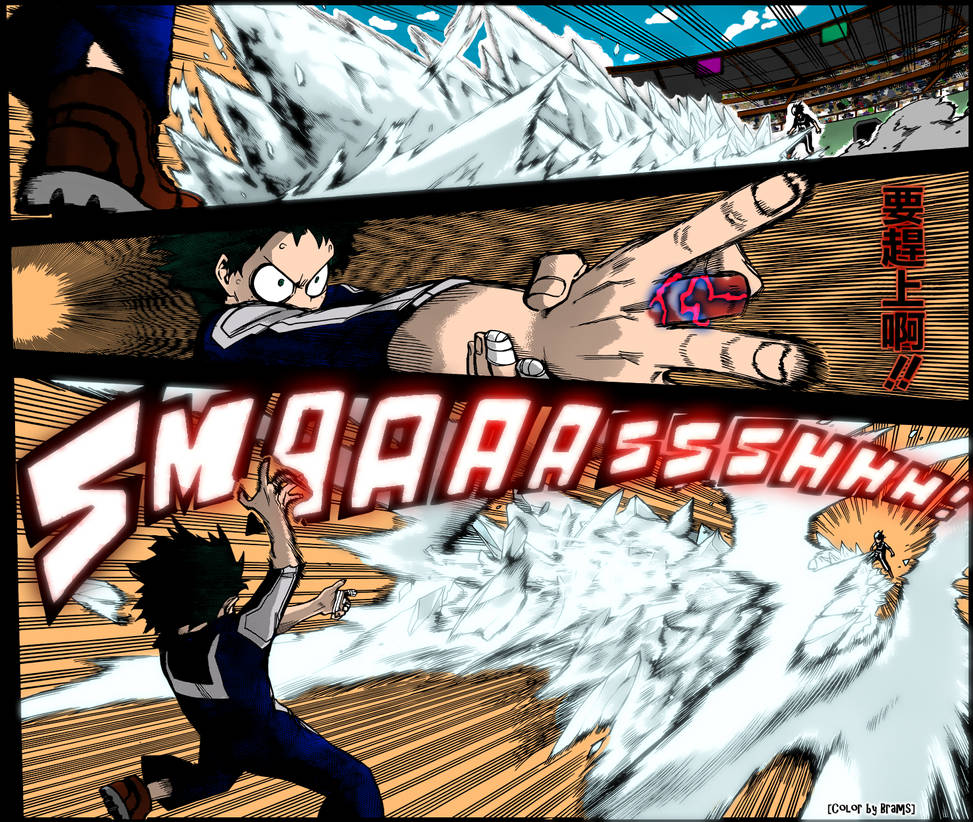
The core anime (there are a few) that has caught my interest right now is My Hero Academia, which is a very well-done, if a bit by-the-numbers, shonen anime about super-heroes.  But what has struck me is how well it engages in scale escalation, though it should be noted it's hardly the only one, and in many ways, scale-mismatch is the driving tension behind One Punch Man.

Let me explain what I mean: nearly everyone in the world has super-powers, but most of the super-powers are lame: one guy might have stretchy, elastic fingers, or they might be able to light a candle.  Even the cooler ones might be pretty subtle and "mystery-men esque" like they might shoot a strong tape out of their elbows, or they might be able to stick to things and that's it.  But some characters have truly devastating amounts of power, like the ability to freeze an entire building solid, or create massive explosions with their hands. Most fights between supers tend to be low-scale, the sort of fights one might expect between characters on the 250-500 point level in GURPS: cool, but not mind-blowing.  Like two skilled fighters could be contained in a room in a building in a city.  Then suddenly a fight will erupt between higher level characters, or a high level character will unbridle their full power and the fight escalates to a new scale. You can't contain it in a small room in a single building in one city.  Instead, it spills out, begins to destroy the area, or it would if it was in a city. It's no longer an "n-scale" fight, but a "d-scale" or "c-scale" where stray damage from this fight would seriously injure or kill a bystander.

We like this sort of scale escalation.  It rapidly ups the stakes, and makes the fight more dynamic.  The story sets the rules for us to understand. Once we have a grasp of it and the stakes, it kicks us out of that comfort zone like a mamma bird kicking the young out of its nest screaming "FLY!" The rules haven't changed so much as greatly expanded, the tensions much higher, and a few variables, which should be obvious extrapolations of the existing rules, and we watch the characters grapple with this sudden expansion.  Ideally, a well-written story should make the solution to the new problem obvious in retrospect, but watching the heroes solve this new, higher-scale crisis with their smaller-scale skills drives a lot of the tension of the story.

Of course, what works in an RPG and what works in television show or movie aren't the same.  Nonetheless, it's the sort of thing I've seen many a GM hunger to replicate, but it usually fails. Why?

Thursday, September 12, 2019

A Conditional Injury Deep Dive

Check out Douglas Cole's Site Here
If you’ve followed my material for a while, you may have noticed something of a love affair I have with the works of Douglas Cole. At one point, one my patrons joked that the general topic poll was “What Douglas Cole article do I want Mailanka to talk about this month?” It’s not really personal; I’ve gotten to know him and he’s a great guy, but this is purely business: the material he puts out regularly hits exactly the right notes for me, and reshapes how I run games. I’ve used his material in Cherry Blossom Rain, G-Verse and, yes, Psi-Wars.

So, this month, my Patrons voted for A Deep Dive into Conditional Injury, the latest optional rule by Douglas Cole that made it into one the last pyramid issues to see print (Pyramid #3/120). It entered Psi-Wars canon officially as a rule in the Action Vehicular Combat system, where I use to greatly simplify vehicular damage, to make normal vehicular damage look an awful lot like GURPS Spaceship Damage, and to more closely track vehicular damage as a series of destroyed systems, rather than an ever mounting escalation of concerns. Today, I’m going to be looking deeper into the article, its implications, what I’ve learned since I started using it, and in what ways we could spice it up.

I’d also like to add that in working on this article, I had a chance to speak to Douglas Cole himself about it. I’ll note some comments he made throughout the body of the article and clarify some points. One thing that Douglas wanted clarified was that he didn’t playtest these rules. Thus, if you wanted to use these rules, I wouldn’t worry too much about sticking to exactly what he wrote because he rigorously proved that they worked. Rather, see the article as a detailed exploration of an idea.  

Also, if you're not already aware, Douglas has a kickstarter program that's coming up.  If you like his stuff, or you like what you see here and are curious to explore more of his ideas, check it out here.


Thursday, April 21, 2016

Psi Wars: Smugglers and Stealth in Space

We've tackled scavengers.  What about smugglers?  To understand smugglers, we need to understand stealth in space.

Pyramid #3-71
Pyramid #3-71 page 13 has a fine article called “Smugglers' Blues” that discusses the ins and outs of smuggling. While its technological advice isn't so useful to us, it's a gold-mine for understanding how a smuggler could or would play, and has some implications for how we run, and design, ships.
To sum up the article in brief, a smuggler needs at least one of four tactics:
  • Superior speed, to maneuver blockades and escape the authorities if discovered.
  • Superior stealth, to avoid detection in the first place, when slipping past patrols or through customs.
  • Detailed area knowledge, to know approaches that will avoid detection
  • Social engineering skills, to know who to bribe, or to talk your way out of a sticky situation.
The first two matter for ship design and ship rules. The latter two are more a concern for how we might build a smuggler template. The first is already covered well-enough by the spaceships system and the chase rules in action: Just treat the acceleration bonus as the speed bonus from the chase rules, and have fun! Typical smuggling ships, like the Dark Horse, are already significantly faster than most other ships larger than fighters.

Stealth, on the other hand, requires some attention. Spaceships already includes a stealth/detection system for ships, but we should revisit it and simplify it for our purposes.

The problem with stealth in space is that it's impossible.  Space is an infinite plane that is very dark and very cold, while you're bright and hot with nowhere to hide.  We can literally detect planets that are light-years away and unpowered asteroids thousands of miles away, all with meager, TL 8 technology.  What are the chances that we'll miss the roaring engines of a starship mere hundreds of miles away with tech-level 11 sensors?  Not very likely, I think.

But the would-be stealth ships of Psi Wars have a few advantages.  First of all, the space of Psi Wars isn't really space: it's a vast and cinematic ocean made of black waters and dotted with stars.  Specifically, it brims with cinematic nebulas and debris fields!  Secondly, it has hyperspace, and things in hyperspace cannot be detected outside of hyperspace, and vice versa.

The problems with stealth in space is that you have nothing to hide behind, and even if you "go dark" after firing up your engines to go in a particular direction, people will be able to keep their eyes on you and track your dark form, since your motions are completely predictable.  The cinematic nature of the Psi Wars universe defies this.  Space is sprinkled with hiding places in the form of these cinematic nebulas and debris fields.  Hyperspace means that you cannot know the velocity of a ship coming out of hyperspace, and it also means that a ship that has just jumped in from hyperspace has no knowledge of drifting ships.  If you fired your thrusters to bring you into a debris field, and another ship jumps in later, it has no idea that a ship maneuvered there a day ago.  It just sees a debris field.  Suddenly, stealth becomes possible.

Moreover, stealth is expected.  Not completely, of course: An Empire-Class dreadnought should be a giant beacon of fire and death that blocks out the light of worlds.  But a smuggler's Dark Horse might be expected to slip across a border, and pirates should be able to lie in wait in an asteroid field for a passing freighter full of goodies and passengers they can turn into slaves.

Spaceships already provides us with the rules to do all of this, we just need to adjust them and simplify them for Psi Wars, and make sure they fill all our needs.


Thursday, April 14, 2016

Psi Wars: Scavenger-Tech (and other economic concerns)

I very much enjoyed the Force Awaken's addition to the Star Wars universe of Rey, primarily because she's a scavenger.  Star Wars centers on, among other things, a theme of a civilization in collapse.  The collapse began in the prequels, and it continued in the original trilogy as the Alliance and the Empire tore the galaxy apart, and Rey picks the bones of that civilization during her first moments in the Force Awakens.

Unlike much of the sci-fi that preceded it, Stars Wars depicts a run-down, second-hand future, full of worn gear, desolate landscapes and rust-speckled starships.  Only the empire, the evil of the setting, enjoys the clean lines and snow-white of pristine, new technology, and the films contrasts the newness of that technology with the patchwork technology of the Rebel Alliance.

Star Wars does not look forward to the future, but keeps its eyes firmly fixed on its own past.  The future that the Empire seeks to create is abhorrent, and the aim of the Rebel Alliance is to restore the glory of the past.  The exemplification of this is Anakin's lightsaber, which appears in all three trilogies.  It represents his virtuous past, and the heroes carry it, through the generations, seeking to restore what the original Anakin fought for.  The reason the heroes of Star Wars wield tarnished technology is that it is purer than the profane new technology wielded by the empire.  Better to fight with your grandfather's lightsaber, to fly your grandfather's ship, and to restore your grandfather's republic, than to build a sinister new future with sinister new weapons of mass destruction and sinister new industrial soldiers.

For Psi Wars to feel like Star Wars, we need to touch on this second-hand technology.  Action already offers us some clues and tips on how to do this, but Action depicts a very different genre than Star Wars.  In Action, heroes tend to be James Bond rather than Mad Max, and even when an action film makes a point out of a hero's poverty (such as in the Fast and the Furious), the hero still has cool toys, just usually hand-crafted.  In Psi Wars, our Action heroes need to get by with scavenged technology and old, second-hand starships, which means we need to examine how we handle wealth, as well as how to handle our scavenger-tech.

Thursday, March 31, 2016

Psi Wars: Spacehips Playtest -- the Revision

The Alliance fleet has escaped from the Dead World Styx and now attempts to liberate the verdant world of Arduín. The Alliance has concieved of a desperate, two pronged attack, and Tobin is in charge of the first, once more facing off against the now-repaired Arc of Dominion. He and Arrow squadron, featuring Punk and Starlet, Stubb's sister who has mixed feelings about joining Arrow squadron in her brother's place, and they'll escort two Wyvern fighters.
The Wyvern fighter can be found on page 12 and 13 of SS 4. They carry hydrogen rather than water for 150g acceleration and 900 mps delta-v (if it matters). They'll be loaded with 10 torpedoes. Punk and Starlet each have 2 torpedo and 3 missiles, and Tobin has a complement of 7 missiles.
The Arc of Dominion is guarded by the Resilient, a Tiger-class Frigate, and two squadrons of five typhoon fighters: Red and Blue. Blue Squadron leader, Lieutenant Harkin, has improved considerably since we last met him.
The particulars:
The Alliance:
  • Arrow Squadron 3 Starhawks:
    • Tobin (as previously described)
      • 7 Missiles
    • Punk: Gunner, Pilot and Artillery 15, Combat Reflexes
      • 2 torpedoes, 3 missiles
    • Starlet: Gunner, Pilot and Artillery 14
      • 2 torpedoes, 3 missiles
  • Breaker Squadron 2 Wyverns: Gunner, Pilot, Artillery 13
    • 10 torpedos
The Empire
  • The Arc of Dominion Empire-Class Dreadnought: All pertinent skills at 12
  • The Resilient Tiger-Class Frigate: All pertinent skills at 12
  • Red Squadron 5 typhoons: All pertinent skills at 12
  • Blue Squadron 5 typhoons: All pertinent skills at 12
    • Liuetenant Harkin: Pilot 16, Gunner 18, Higher Purpose (Dog Fighter), Combat Reflexes
The Arc of Dominion and the Resilient start Holding Course with +0 acceleration. They're keeping this quadrant free of interlopers. Red Squadron is Holding Course in Formation with each other near the Arc of Dominion. Blue Squadron has not been deployed.
Tobin gets to go first.

Psi Wars: Spaceships -- Simplified Space Combat 1.2

Simplified Space Opera Combat 1.2

Turns are 20 seconds long.
There are four categories of ship worth paying attention to:
Fighter (+0) SM+4 to SM+6
Corvette (+3) SM +7 to SM +9
Capital (+6) SM +1o to SM +12
Dreadnought (+9) SM +13 or larger


Action During Combat

Use the Cockpit Multitasking rules (SS4 33).
Command applies to squadron leaders and applies to everyone in their formation. Ignore it for minor NPC formations or NPC warships that are commanded by non-named NPCs.  Motivate Crewman can be done with Leadership or Shiphandling, but the former applies to members under your command in a fighter squadron.
Engineering applies to fighters only if they have a robot in an engineering room. Ignore it for NPC ships
Navigation: Ignore it (unless you're jumping to Hyperspace)
Sensor Tasks: Ignore it.
Piloting: See Piloting below.
Gunnery: As normal.
Communications: Ignore it. It never costs anything to communicate, unless someone is jamming you.

Space Movement

Use the Airplane-Style dogfighting rules. Every 25gs of acceleration give +1 to your acceleration bonus. Ignore MPS unless you're worried about long-term endurance for some reason. Assume ships have enough fuel to keep accelerating throughout the battle.
If you lack sufficient thrust to gain an acceleration point, you may not dodge, and you may participate in any Contested roll that requires acceleration at a -5 to your Pilot skill if you have at least half the necessary thrust, and -10 if you have a quarter of the necessary thrust.
Neutral Range is Short (-8). Engaged range is Close (-4). Hugging range is Point-Blank (-0).
Fights begin at Neutral Range.

Maneuvers

Close: Brings you into Close range with a target (Engagement is automatic). If you succeed in the contest by 10+, you may also become Advantaged or go straight into a collision (not hugging). If you are already Engaged and you succeed at the pilot contest, you may move closer (for a ram) or hugging (if at least two size categories larger than you), or you may become advantaged. All other rules apply as normal. Use Airplane-Style Dogfighting (SS4 p33): You may not close one someone who closed on you and is sufficiently advantaged that they have your rear facing them. If you choose to close with a target other than the one you closed with previously, you lose your engagement status with that target (unless they have previously Closed with you; That is, you can only be “engaged with” one opponent at a time, but multiple opponents can choose you as their single target to be “engaged wih” and remain close to you).
  • Dedicated: As normal
  • Ambush: As normal
  • Stunt: As per Action 2 p33: You may elect to make a second Pilot roll at a penalty of between -2 to -10. If you succeed, gain +1 to your closing roll per -2 you applied. If you fail, you go into an uncontrolled drift if you failed by less than your stability, or your engines you crash if you fail by more.

Evasive Action: If you engage in evasive action, you automatically give up any advantaged status and you can longer be engaged with any target (but other targets may remain engaged with you). If other targets are engaged with you, you must roll a contest of Pilot, similar to closing, but you get to double your acceleration bonus. Success breaks engagement with that target. Success is automatic if your opponent was in an Uncontrolled drift. Apply the +1 to dodge as normal.
  • Hiding: You may attempt to “hide” as part of an evasive move if you're in a nebula or an asteroid field or have a lucky break. As Action 2 p 32, except “Close” is -10, and “Short” is -5. Hiding is impossible at point-blank.
  • Stunt Evasion: As Stunt Escape Action 2 p34: Use a Lucky Break or Scenery to stunt (using the same rules as the Closing Stunt). If your opponent does not make an equivalent stunt, you Escape back to Short Range automatically.

Hold Course: Unchanged

Retreat: To retreat, you must have nobody Engaged with you. Otherwise, make the contest normally.
  • Stunt Escape: As Action 2 p34: Use a Lucky Break or Scenery to stunt (using the same rules as the Closing Stunt). If your opponent does not make an equivalent stunt, you Escape back to Short Range automatically.

Uncontrolled Drift: Unchanged.  You cannot maintain your own engaged status while in an Uncontrolled Drift (but others might remain engaged with you).

Advantaged Status: If you are Engaged, further successful Closed contests give you advantaged status. You may follow the standard rules for Advantage or, if you already face their rear, you may gain a cumulative +1 to hit with all shots, to a maximum of +4.

Engaged: When a ship becomes “Engaged”, it becomes engaged with a specific ship. Both sides may be “engaged” with one another. Engagement does not end until both sides have lost engagement, either by giving it up with an Evasive Action, or by forcing their opponent relinquish engagement with an Evasive Action. Thus, if ship A closes with Ship B, ship A is engaged with ship B. If ship A evades, engagement is lost. However, if ship A closes on ship B, and ship B closes on ship A, then both ships are engaged with each other. For ship A to escape, it needs to evade and to win at its evasion action. If a ship is engaged with a ship in formation, it is engaged to all ships within that formation. If the formation breaks, the ship must choose one ship to remain engaged with.

Weapons Fire


Simplified Beam Weapon Fire:
  • SM: +3 per size category, and -1.5 (round up) per size category smaller than you (for secondary or tertiary batteries) or -3 per size category (for spinal weapons, or major medium batteries from Corvette-class ships and larger). This does not apply to missiles. Use the point defense modifiers below.
  • Space Range: -8 for neutral, -4 for engaged, -0 for hugging.
  • ECM: +2 for targeting. This +2 bonus can be reduced by 1 to a maximum of 0 for each Defensive ECM system on the target.
  • Spinal or Fixed: +2
  • Target: -1 for streamlined front or rear. -5 for specific location. -10 for armor weakpoint or armor gap (against partially exposed systems).
  • Multitasking: As normal (use cockpit multitasking for fighters)
  • Point Defense: Apply the point defense penalty appropriate to the missile, and apply a bonus equal to half of the range penalty that the missile was fired at.
  • Rate of Fire: As normal

Point Defense: When making a point defense attack, note the range that the weapon was fired from. Apply half the associated range penalty as a bonus to point defense (A torpedo fired at Short range is +4 to hit, and a torpedo fires at Close range is +2 to hit). This reflects the fact that the additional travel time makes point defense easier to calculate.
All other rules are the same.

Missile fire
Make a single Artillery (Guided Missile) roll to attack with a missile or torpedo with the following modifiers
  • SM: +3 per size modifier difference
  • Accuracy: +1 if firing a missile, +0 if firing a torpedo.
  • ECM: -2 per defense ECM system possessed by enemy. +2 if you have a functioning Tactical Array.
  • Target: -1 for streamlined front or rear. -5 for specific location. -10 for armor weakpoint or armor gap (against partially exposed systems).
  • Multitasking: As normal (use cockpit multitasking for fighters)
  • Rate of Fire: As normal (Torpedoes always halve their ROF due to their heavier size)

Missile Type Cost Mass Point Defense Damage
Light Missile (20 cm) $125k 1/8 -7 6d(10)
Light Torpedo (20 cm) $200k 1/4 -4 6dx20
Medium Missile (40 cm) $2M 2 -5 6dx2(10)
Medium Torpedo(40 cm) $3M 4 -2 6dx40
Heavy Missile (80 cm) $30M 15 -3 6dx4(10)
Heavy Torpedo (80 cm) $40M 30 -0 6dx80

Collisions
Use the normal rules, but apply the following optional rule for named NPCs and PCs: A collision cannot destroy your ship. Apply damage normally to the system struck, but at most, destroy it. Additional damage is lost. Furthermore, if damage would have been enough to destroy your ship, your engines are automatically disabled. You are in an uncontrolled drift.

Dodging
Apply all normal rules, but apply ECM for missiles only.

Damage

Torpedoes: Torpedo damage is halved against hardened armor (treat them as having a 0.5 armor divisor against hardened DR).

Armor Gaps: Certain systems have armor gaps rather than armor weakpoints. Attacks to armor gaps require half the necessary damage to disable or destroy. Damage achieved via an armor gap cannot exceed the amount of damage necessary to destroy a system. Excess damage is lost. Systems with armor gaps include:
  • Defensive ECM
  • All Enhanced Arrays
  • Jet Engines
  • Ram Scoops
  • All Reaction and Reactionless Engines
  • Robot Arms
  • All Weapon Systems.

Action Aboard

Unchanged

Special Rules

Formation: As per the usual rules, but with the following additions: Advantaged status (and bonus to attack) apply to all ships in the same formation. Stunts performed by the squadron leader must be matched by the stunts of the other characters in formation, or they break formation. Use the sacrificial dodge rules on SS 4 p31. For simplicity, treat all massed fire against a formation as an attack against everyone in the formation and the GM may apply hits to whatever target he sees fit (favoring unnamed NPCs and Unlucky/Cursed characters first). If you are engaged with a ship in formation, you are engaged with all ships in formation. If the formation breaks up (or a ship leaves), all ships engaged in the formation may choose a ship to become engaged with automatically.
For other special rules, see Large Space Battles and Environmental Effects, both in SS 4.

Flesh Wound: The “Flesh Wound” rule can apply to ships! Spend a character point to reduce damage to your ship to 10% of your HP. That means that one system was disabled, but you suffered no further damage. Whew!

TV Action Violence: You can apply TV Action Violence if you take sufficient damage that your ship would be forced to take a survival check, or the damaged system put you in danger (life support, or a volatile system). Your ship loses one HT, you lose a turn as your systems blink and flicker, and you spend that turn in an uncontrolled drift, but otherwise you take no damage.

Designing Ships

We have a limited selection of ships available to us from the SS series, and we may need to expand that. Some design guidelines:
  • Hyperdrives: Hyperdrives cast a hyperspace shadow. This halves the acceleration a capital ship is capable of, and halves the reaction-based acceleration a corvette-class ship is capable of making. Hyperdrives on fighter-class vessels are too small to cast a shadow, but are also less efficient, and have 1/10th the speed/range as larger hyperdrives.
  • Reactionless Engines: Reactionless Engines are a function of interacting with your hyperspace shadow. Fighters cannot cast a hyperspace shadow, thus may not mount reactionless drives. Larger vessels may, but halve the speeds of all reactionless engines (and halve them again for capital-class ships, because hyperdrives halve their speed).
  • Force Screens: All force screens may be adjustable for free. Treat adjusting the force screens as an engineering action (possible without having an engine room, for fighters) that requires no roll.
  • Tactical Arrays: Remain useful for jamming transmissions, but they are less useful for ships without missile capability.
All ships can have armor (typically Light Alloy, Nanocomposite, or Diamondoid), cargo holds, contragravity lifters, control rooms, defensive ecm, Engine Rooms, Enhanced Arrays (often tactical), External Clamps, Force Screens, Fuel Tanks, Habitats (but never total: Ships carry supplies and need to make stops), Hangar Bays, Open Space, Passenger Seating, Super Fusion Power Plants, Super Fusion Torch engines, Super Reactionless, Engines, Star Drives (Hyperdrive), and Improved UV, Improved Plasma, Anti-particle, X-ray, Tractor and improved EM disruptors (SS 7 p19). For missiles, use those noted below.

Fighters

Fighters should typically have between 150 and 250 Gs of acceleration from Super Fusion Torch engines. They need at least 450 mps of fuel, but don't bother to track more than this except for “long range” fighters, which are more of a setting/background concern. Fighters have shorter (1/10th) range with Hyperdrives, so they should be rare.
Fighters typically armor themselves with Nanocomposite or Diamondoid armor, hardened. A fighter typically deals 4d(5) damage with its lasers, so should not have more than about 35 DR or it will be invulnerable to other fighters. For ships with a single missile system: A light fighter with a missile bay can carry 3 light missiles or one light torpedo. A medium fighter can carry 7 light missiles or three medium torpedoes. A heavy fighter can carry 20 light missiles or 10 light torpedos. Don't worry about whether or not a ship can actually fire 20cm missiles: All fighters with Major batteries can load light missiles.
Fighters typically have between 1-3 defensive ECM systems.

Corvettes

Corvettes should typically have between 50 and 100 Gs of acceleration from Super Reactionless engines.
Corvettes typically armor themselves with Nanocomposite or Diamondoid armor, hardened. A Corvette typically deals 3dx5d(5) damage with its lasers, so should not have more than about 150 DR or it will be invulnerable to other Corvettes. Corvettes can mount Medium missiles and torpedoes in Major batteries, or Light missiles or Torpedoes in Secondary batteries. Numbers of missiles aren't important.
Corvettes typically have 0-1 defensive ECM systems.

Capital and Larger

Capital ships should typically have between 25 and 75 Gs of acceleration from Super Reactionless engines.
Capital ships typically armor themselves with Nanocomposite or Diamondoid armor, hardened. There's no upper limit to armor or damage from Capital class ships. A capital class ship can mount heavy torpedoes or missiles in a major battery (and Dreadnoughts can mount them in Medium batteries). A capital class ship can mount medium missiles and torpedos in a medium battery (a dreadnought can mount them in a secondary battery). A capital class ship can mount light missiles in a tertriary battery. Numbers of missiles aren't important.
Capital ships rarely have Defensive ECM systems.

Simplified Missile Table

Missile Type Cost Mass Damage
Light Missile (20 cm) $125k
1/8
6d(10)
Light Torpedo (20 cm) $200k
1/4
8dx15
Medium Missile (40 cm) $2M
2
6dx2(10)
Medium Torpedo(40 cm) $3M
4
8dx30
Heavy Missile (80 cm) $30M
15
6dx4(10)
Heavy Torpedo (80 cm) $40M
30
8dx60

Character Concerns

We've got our combat system.  Let's compile all the traits we need to make it work.

Perks

  • Corvette Switchboard: You may use the Cockpit Multitasking rules while piloting a corvette, provided the GM agrees that such tasks are reasonably done from the cockpit.
    Duct Tape Savant: You may always attempt to jury-rig repairs to a starship during a 20-second turn, and you may ignore up to -2 points worth of penalties while doing so.
  • Equipment Bond (Ship)
  • Feel of the Ship: You can judge the state of a ship just by feeling how it flies.  You always know its state (its HP, what system is damaged and how) even if no computer system can tell you that information.  The GM may require you to roll Pilot(Starship) at some penalty to uncover truly unusual things, such as detecting the presence of a hyperspace tracer by the fact that the ship is just a touch heavier on one side.
  • Fishbed Flier: If the "Heavy" optional rule is in effect, you may ignore it.  SM +6 fighters, SM +9 corvettes, etc, do not get the -1 Handling when you fly them.
  • Intuitive Pilot: You may ignore the multi-task penalties for Pilot and Gunner(Beams), provided you are using Cockpit Multitasking.
  • Reacquire Target: If you have just dodged a missile, on your next turn, you may make a ballistic attack using Electronics Operation (EW) in place of Artillery (Guided Missile) on an opponent currently Engaged with you.  This attack doesn't use up one of your missiles (You're using the existing missile to attack your opponent).
  • Mark of the Ace: Whenever you defeat an enemy ship using Gunner (Beams), you may make a free Intimidation roll against all survivors.
  • Maverick: Increase your stability by 2 for the purposes of determining whether a failed Pilot roll resulted in a mere Uncontrolled Drift or a Crash.
  • Sidewinder: You may make deceptive attacks with your missiles.  Apply the same penalty to point defense attacks on your missile that you apply to dodge.
  • Soar like a Leaf: You may use the "Light" optional rule even if it isn't standard to your campaign. SM +4 fighters, SM+7 corvettes, etc, gain +1 handling.
  • Standard Operating Procedure: Calibrations: You always maintain your ship.  The GM never needs to ask if you did, or see you do so in game, nor can he penalize you for lack of maintenance unless you have been unable to access your ship for a long time (such as being in prison), and even then should be lenient ("Hey, those back-up power-convertors are still working!")
  • Standard Operating Procedure: Primed to Go: You always keep your ship primed and ready to move at an instant's notice.  Unless the GM has a very explicit reason for doing so (your ship has been heavily damaged, or the port authorities impounded it due to unpaid docking fees), you can always start your ship at an instant's notice.
  • Wing Commander: You may ignore the multi-task penalties for command tasks using Leadership and Tactics, provided you are using the Cockpit multitask rules.

Skills

  • Artillery (Guided Missile): All missiles and torpedos.
  • Electronics Operation:
    • Communication: Penetrating signal jamming
    • Electronic Warfare: Jamming communication, the Reacquire Target perk
    • Sensors: Detecting details (life signs, that a space station is no moon)
  • Engineer (Starship): For understanding how a starship works, or making sense of its plans.
  • Gunnery (Beams): All beam weapons
  • Leadership: Command tasks
  • Mechanic (Starship): All repair tasks associated with starships
  • Navigation (Hyperspace): To get your ship through hyperspace
  • Pilot (Starship): Piloting a starship
  • Shiphandling: For commanding vessels larger than a fighter.
  • Spacer: Repairing a ship, rescue, securing yourself during evasive maneuvers, general maintenance
  • Tactics: Command tasks

Wednesday, March 30, 2016

Psi Wars: Spaceships: Revising the Revision

A tester is just a developer with a bad attitude;
instead of trying to make things work, he looks for
how he can make things break.
-Charles Granier

The moral here is: If you want to get all
the bugs out of a game, playtest the dumb strategies
-Steve Jackson, the Ogre Book.


So, that was a great playtest! I walked away quite satisfied with it, because it worked far better than the standard rules. Then, I got to thinking about missiles again. Weren't they a little complicated? And exactly how did engagement work? When exactly was it lost? And I only showed combat between fighters, and between fighters and a dreadnought? What about between dreadnoughts? And what about corvettes? Was I sure that my ideas were actually structurally sound after just one playtest?

I prefer to design robust systems where the tactics within the system can stand up to a "munchkin's eye." Most people complain about munchkins, and I do believe you can push so deep into mechanics that you lose sight of the narrative fluff that also drives an RPG, but I find them similar to testers: Able to show the flaws in your system. And sometimes, completely well-intentioned players will fall into the same traps. I want to look at the game from multiple angles and make sure it works the way I intend it to, especially given how far afield I've gone.

And so I raced down a mathematical rabbit-hole, as I often do. What will follow are a summary of my thoughts and my notes on what works and what doesn't. I go deep into math, because that's just how I roll (nothing more complicated than percentages and basic algebra. If you can follow most RPG math discussions, you'll be fine here), so if you're averse to that sort of thing, just wait a day, and I'll show you the next refinement of my ruleset.

Tuesday, March 29, 2016

Psi Wars: Spaceships -- Simplified Space Combat 1.1

Simplified Space Opera Combat

Turns are 20 seconds long.
There are four categories of ship worth paying attention to:
(Missile)

Fighter SM+4 to SM+6
Corvette SM +7 to SM +9
Capital SM +10 to SM +12
Dreadnought SM +13 or larger


Action During Combat

Use the Cockpit Multitasking rules (SS4 33).
Command applies to squadron leaders and applies to everyone in their formation. Ignore it for minor NPC formations or NPC warships that are commanded by non-named NPCs.
Engineering applies to fighters only if they have a robot in an engineering room. Ignore it for NPC ships
Navigation: Ignore it (unless you're jumping to Hyperspace)
Sensor Tasks: Ignore it.
Piloting: See Piloting below.
Gunnery: As normal.
Communications: Ignore it. It never costs anything to communicate, unless someone is jamming you.

Space Movement

Use the Airplane-Style dogfighting rules (SS4 p33). Every 25gs of acceleration give +1 to your acceleration bonus. Ignore MPS unless you're worried about long-term endurance for some reason. Assume ships have enough fuel to keep accelerating throughout the battle.

  • Neutral Range is Short (-8)
  • Engaged Range is Close (-4)
  • "Hugging" is Point-Blank (-0)

Close: Brings you into Close range with a target (Engagement is automatic). If you succeed in the contest by 10+, you may also become Advantaged or go straight into a collision (not hugging). If you are already Engaged and you succeed at the pilot contest, you may move closer (for a ram) or hugging (if at least two size categories larger than you), or you may become advantaged. All other rules apply as normal. Use Airplane-Style Dogfighting (SS4 p33): You may not close one someone who closed on you and is sufficiently advantaged that they have your rear facing them.
  • Dedicated: As normal
  • Ambush: As normal
  • Stunt: As per Action 2 p33: You may elect to make a second Pilot roll at a penalty of between -2 to -10. If you succeed, gain +1 to your closing roll per -2 you applied. If you fail, you go into an uncontrolled drift if you failed by less than your stability, or your engines you crash if you fail by more.

Evasive Action: Ignore the rule that states all engagement is broken. You may attempt to break engagement and go to Neutral range. Lose any advantaged status you had, and roll a contest similar to Closing, doubling your acceleration bonus. Success put you at neutral range. Success is automatic if your opponent was in an Uncontrolled drift. Apply the +1 to dodge as normal.
  • Hiding: You may attempt to “hide” as part of an evasive move if you're in a nebula or an asteroid field or have a lucky break. As Action 2 p 32, except “Close” is -10, and “Short” is -5. Hiding is impossible at point-blank.
  • Stunt Escape: As Action 2 p34: Use a Lucky Break or Scenery to stunt. If your opponent does not make an equivalent stunt, you Escape back to Short Range automatically.

Hold Course: Unchanged

Retreat: To retreat, you must have nobody Engaged with you. Otherwise, make the contest normally.

Uncontrolled Drift: Unchanged.

Advantaged Status: If you are Engaged, further successful Closed contests give you advantaged status. You may follow the standard rules for Advantage or, if you already face their rear, you may gain a cumulative +1 to hit with all shots, to a maximum of +4.

Weapons Fire

Simplified Beam Weapon Fire:
  • SM: +3 per size category larger than you or -3 per size category smaller than you (for secondary or tertiary batteries or any weapons fired by a fighter) or -6 per size category (for spinal weapons, or major medium batteries from Corvette-class ships and larger)
  • Space Range: -8 for neutral, -4 for engaged, -0 for hugging.
  • Spinal or Fixed: +2
  • Target: -1 for streamlined front or rear. -5 for specific location. -10 for armor weakpoint or armor gap (against partially exposed systems).
  • Multitasking: As normal (use cockpit multitasking for fighters)
  • Point Defense: +0
  • Rate of Fire: As normal
All other rules are the same.

Missile fire
Missile attacks are two part. The rules for targeting are as follows: Roll Artillery (Guided) with the following modifiers
  • SM: +3 per size modifier difference
  • ECM: -2 per ECM system. +2 if you have a functioning Tactical Array.
  • Target: -1 for streamlined front or rear. -5 for specific location. -10 for armor weakpoint or armor gap (against partially exposed systems).
  • Multitasking: As normal (use cockpit multitasking for fighters)
  • Rate of Fire: As normal
Success gives you a lock and you may fire. From then on, the missile (controlled by the player that fired it) has 5 turns to close and strike the target. A missile begins at the range of the attacker to the target (if the attacker is hugging the target, the missile may attempt to strike immediately). It uses the normal closing rules using its own skill of 15 plus its own handling+acc modifier: It always makes dedicated close attempts, and it only stunts to keep up with a stunt evasion. If a missile is dodged, it returns to neutral range and must attempt to close again.

The roll for the missile to hit is made with its skill of 15 and the following modifiers:
  • SM: +3 per category size difference
  • ECM: -2 per ECM system. +2 if the attacker still has a functioning tactical array.
  • Target: The same as the attacker chose to lock onto when he fired.
  • ROF: For salvos only.

Collisions
Use the normal rules, but apply the following optional rule for named NPCs and PCs: A collision cannot destroy your ship. Apply damage normally to the system struck, but at most, destroy it. Additional damage is lost. Furthermore, if damage would have been enough to destroy your ship, your engines are automatically disabled. You are in an uncontrolled drift.

Dodging
Apply all normal rules, but apply ECM for missiles only.

Damage

Unchanged except that attacks to armor gaps require half the necessary damage to disable or destroy, and armor gaps go away if the system is destroyed. Damage achieved via an armor gap cannot exceed the amount of damage necessary to destroy a system. Excess damage is lost. Systems with armor gaps include:
  • Defensive ECM
  • All Enhanced Arrays
  • Jet Engines
  • Ram Scoops
  • All Reaction and Reactionless Engines
  • Robot Arms
  • All Weapon Systems.
Flesh Wound: The “Flesh Wound” rule can apply to ships! Spend a character point to reduce damage to your ship to 10% of your HP. That means that one system was disabled, but you suffered no further damage. Whew!

Action Aboard

Unchanged

Special Rules

Formation: As per the usual rules, but with the following additions: Advantaged status (and bonus to attack) apply to all ships in the same formation. Stunts performed by the squadron leader must be matched by the stunts of the other characters in formation, or they break formation. Use the sacrificial dodge rules on SS 4 p31.
For other special rules, see Large Space Battes and Environmental Effects, both in SS 4.

Designing Ships

We have a limited selection of ships available to us from the SS series, and we may need to expand that. Some design guidelines:
  • Hyperdrives: Hyperdrives cast a hyperspace shadow. This halves the acceleration a capital ship is capable of, and halves the reaction-based acceleration a corvette-class ship is capable of making. Hyperdrives on fighter-class vessels are too small to cast a shadow, but are also less efficient, and have 1/10th the speed/range as larger hyperdrives.
  • Reactionless Engines: Reactionless Engines are a function of interacting with your hyperspace shadow. Fighters cannot cast a hyperspace shadow, thus may not mount reactionless drives. Larger vessels may, but halve the speeds of all reactionless engines (and halve them again for capital-class ships, because capital-class ships cast heavy hyperspace shadows).
  • Force Screens: All force screens may be adjustable for free. Treat adjusting the force screens as an engineering action (possible without having an engine room, for fighters) that requires no roll.
All ships can have armor (typically Light Alloy, Nanocomposite, or Diamondoid), cargo holds, contragravity lifters, control rooms, defensive ecm, Engine Rooms, Enhanced Arrays (often tactical), External Clamps, Force Screens, Fuel Tanks, Habitats (but never total: Ships carry supplies and need to make stops), Hangar Bays, Open Space, Passenger Seating, Super Fusion Power Plants, Super Fusion Torch engines, Super Reactionless Engines, Star Drives (Hyperdrive), and the followiung weapon systems: Improved UV, Improved Plasma, Anti-particle, X-ray, Tractor and improved EM disruptors (SS 7 p19). For missiles, use those noted below.

Fighters

Fighters should typically have between 150 and 250 Gs of acceleration from Super Fusion Torch engines. They need at least 450 mps of fuel, but don't bother to track more than this except for “long range” fighters, which are more of a setting/background concern. Fighters have shorter (1/10th) range with Hyperdrives, so they should be rare.

Fighters typically armor themselves with Nanocomposite or Diamondoid armor, hardened. A fighter typically deals 4d(5) damage with its lasers, so should not have more than about 35 DR or it will be invulnerable to other fighters. For ships with a single missile system: A light fighter with a missile bay can carry 3 light missiles or one light torpedo. A medium fighter can carry 7 light missiles or three medium torpedoes. A heavy fighter can carry 20 light missiles or 10 light torpedos. Don't worry about whether or not a ship can actually fire 20cm missiles: All fighters with Major batteries can load light missiles.

Fighters typically have between 1-3 defensive ECM systems.

Corvettes

Corvettes should typically have between 50 and 100 Gs of acceleration from Super Reactionless engines.

Corvettes typically armor themselves with Nanocomposite or Diamondoid armor, hardened. A Corvette typically deals 3dx5d(5) damage with its lasers, so should not have more than about 150 DR or it will be invulnerable to other Corvettes. Corvettes can mount Medium missiles and torpedoes in Major batteries, or Light missiles or Torpedoes in Secondary batteries. Numbers of missiles aren't important.

Corvettes typically have 0-1 defensive ECM systems.

Capital and Larger

Capital ships should typically have between 25 and 75 Gs of acceleration from Super Reactionless engines.

Capital ships typically armor themselves with Nanocomposite or Diamondoid armor, hardened. There's no upper limit to armor or damage from Capital class ships. A capital class ship can mount heavy torpedoes or missiles in a major battery (and Dreadnoughts can mount them in Medium batteries). A capital class ship can mount medium missiles and torpedos in a medium battery (a dreadnought can mount them in a secondary battery). A capital class ship can mount light missiles in a tertriary battery. Numbers of missiles aren't important.


Capital ships rarely have Defensive ECM systems.

Simplified Missile Table

Missile Type Cost Mass Closing Rolls Attack Rolls Damage
Light Missile (20 cm) $125k
1/8
31
16
6d(10)
Light Torpedo (20 cm) $200k
1/4
23
14
4dx10(100)
Medium Missile (40 cm) $2M
2
24
15
6dx2(10)
Medium Torpedo(40 cm) $3M
4
19
13
8dx10(10)
Heavy Missile (80 cm) $30M
15
20
14
6dx4(10)
Heavy Torpedo (80 cm) $40M
30
16
12
8dx20(100)


Related Posts Plugin for WordPress, Blogger...