Showing posts with label Martial Arts. Show all posts

Thursday, September 30, 2021

Wiki Update: Dreamy Assassins


It's not all been Fun and Space Bestiaries at Mailanka's Musings; I still have a wiki to run, after all, and promises to fulfill to backers.  So I wanted to take a moment to quickly highlight a couple of major updates to the wiki.

Releasing the Balloon People: Dream Control

Every month, I offer a poll on what Patreon exclusives to release, and once again we have another "rare psionic power", this time an expanded version of Dream Control, which puts us up to three rare psionic powers! 

I worked out Dream Control as part of the creation of House Harrow, as I wanted to explore alternate Psychic Vampires, one that would feel distinct from the Ranathim, so I found myself delving into Dream Theft, but if we're going to have Dream Theft, we might as well get into the rest of the Dream Control powers, and this suggested a willowy, dreamy Maradonian Noble that didn't quite fit what I had in mind for House Harrow. This resulted in them becoming a genetic muddle, with the hidden Orphean bloodline lurking in their mutt DNA.  I also wanted to integrate some of the Labyrinthine imagery, as Akashic oracles seem to often dream of the labyrinth which provides them with insights. This doesn't literally send them to the physical labyrinth, of course: this isn't astral projection, though that's an interesting idea.  

In any case, what came out is what I would consider a fairly modest set of abilities, and one you could use for a character.  Unlike Probability Manipulation or Machine Telepathy, I don't think I've seen anyone take it; it is, after all, fairly niche and largely amounts to telepathy with a less convenient vector.

Assassins

And this is likely the one you've been waiting for.  Assassins could have gone in numerous directions, but I wanted them to be the Space Ninja to the Space Knight's Space Samurai.  Where the Space Knight was mystical, psychic, and focused on defense and forthright defense of the innocent, the Assassin was focused on stealth and murdering targets from the shadows.  This could be done with a blaster rifle from afar, but that feels too easy and not especially ninja like, at least not in the cinematic sense of the ninja. We expect someone who uses nunchucks or kusari or shuriken to defeat their opponents: the cinematic ninja uses exotic weapons, and each ninja is often different, specializing in their own particular weapon.  Shouldn't space ninjas do the same?
The current version of Reaver's Hand

Melee Weapons in Psi-Wars

There's another reason to want to stop and focus on exotic melee weapons: Psi-Wars is a melee oriented game.  Oh, sure, people have blasters and shoot at one another, but they often do it no farther than about 20 yards, often much closer: you can shoot someone in a space port bar, but chances are, with a little effort, they can punch you too.  And the Space Knight is more iconic of Psi-Wars than the Bounty Hunter (though not by that much I think), so as fun as shootouts between bounty hunters and criminal scum would be, so would a duel between a space knight and some weird assassin wielding a strange, alien weapon.  More than that, we expect to see ax-wielding primitive aliens, or gladiators armed with dual alien khopesh and so on.  

So melee weapons matter in Psi-Wars.  Which means I should put some effort in thinking my way through useful melee weapons, and I even wrote a post about it ages ago.  The core conclusion, based on feedback from my readers, was that we needed a solution that made melee weapons awesome.  Rather than just give melee weapons special treatment (though it should be noted that the tight confines of Psi-Wars and other rules do already heavily favor melee weapons), we should make melee weapons that justified their place on an ultra-tech battlefield.  Weapons like the Force Sword and the Neurolash baton already did this. Vibroweapons somewhat justified it, but mostly as a cheap alternative.  What else could justify it?

The answer has been an ongoing series of ideas that have mostly been geared towards assassination, because that was the template I've been working on, but I've been coming up with a mess of ideas, some more practical than others.  As a result, the melee weapon has been slowly broadened out and now has its own specific page.  The biggest change are new rules for weapon breakage, mostly to simplify force swords striking targets, and a heavily updated section on the Psi-Sword (so updated I've considered making it IT its own section).

As noted, this has been mostly geared towards the Assassin so far, but I don't think every melee weapon would necessarily fit the Assassin, who focuses on stealthy, glass cannon, one-hit kills rather than heroic last-stands or battlefield tactics. I also think there are melee weapons, and specialists that would use them, that don't fit as either assassins or space knights.  The staff-wielding, temple-guardians of the Keleni, the gladiators of the Lithian arenas, the spears and war-axes of the Nehudi, the vibro-wire halberds of the Jackalmen of the Umbral Rim, the Pit Fighters of the deep undercity of Kronos and so on.  I think there's room for a Warrior template: if the Assassin is the ultimate realization of a DX-focused melee fighter in Psi-Wars, perhaps the Warrior would tilt the balance more towards ST (though not completely; even the Big Guy of Action 3 had generous DX).  They'd need some work, though, and they're not the focus of today's post.

The Assassin's Weapons

So what do we have for the assassin? I showcased a lot of ideas for backers over the past few months, and these were the ones that stood out and seemed to fit the niche the best... for now.

Monowire

The most successful of the backer posts had to do with my worked version of Monowire Mugging. But where Monowire Mugging focused on the stasis switchblade (which is a very interesting weapon) I wanted to explore the "razor floss" depiction we often see in anime and sci-fi.  The result was the Gossamer Art, which has a strong emphasis on traps, entanglement and strangling people with razor-sharp wire.  Of the new styles, I'd say it's the most unapologetically ninja-like. The rest either borrow elements from other niches or could be used by, for example, a Warrior or a Space Knight in the right context.  The Gossamer Art, though, is a style that only really works for an assassin. It's not great at parrying attacks or attacking a hardened target that's prepared for your attack, though it does deal surprisingly well with groups of (unarmored) opponents.  To me, it also evokes a certain amount of terror: a Gossamer Assassin, and their razor wire, could The current version of Reaver's Handbe lurking anywhere!

The Monowire Whip is an interesting weapon that I hadn't really looked at before. Even Monowire Mugging doesn't really look at the Monowire Whip as a whip. Which is a shame, because there are all sorts of interesting things you can do with a whip.  Hopefully, this art will give that humble weapon a little more attention.

The Ceramic Katana

One of the reasons I started working on melee weapons was to find some way to get a cybersamurai in the game. The proper katana is so embedded in the imagery of space opera and sci-fi that it even managed to make it into Star Wars Visions which featured a Sith Hunter who inexplicably wore sheaths just to maintain the proper image of a katana!  

The core benefit I saw to a proper katana was the ability to apply strength directly, which meant it could reach higher levels of damage than the force sword (well, to a point; ST damage does cap out, after all, at triple the ST value).  Monowire also has an armor divisor of 10, rather than 5, which means it has superior armor penetration, though a monowire sword looks more like a cheese knife than a katana, but we can fudge and call it a monomolecular edged weapon (Nanothorn is probably even more accurate, but I didn't want to mess with corrosive damge). The only remaining problem is that the weapon needs to stand up to the force sword's destructive potential, and we can justify that with some form of beam adapted armor coating the blade.  Why not make Beam Adapted armor if that's an option? Let's not think about that too much right now, other than to note several forms of Psi-Wars armor (like Battleweave) is already optimized for dealing with blasters and force swords. But the result is a sword that can leverage the ST of a genetically engineered super-samurai, or a cyborg, into higher armor penetration than a force sword and can deflect blaster bolts without being destroyed. 

All it needs is a style that teaches its use: Seven Vector Swordsmanship. The "Seven Vectors" is inspired by Musashi's five circles, but used in a Shinjurai-coded context. I originally called it "Seven Vector Kendo" but that overemphasized Japanese origins, and "Seven Vector Swordsmanship" has a nice alliterative quality to it.  It's a deeply traditional style with a great deal of focus on meditation and repetitive, almost ceremonial trademark moves, as one might expect for a largely obsolete art.  I understand that a force sword is a superior melee weapon in most cases, and so Seven Vector Swordsmanship reflects that. It also has a strong emphasis on predicting the outcome of one-on-one combat (predictionism being a signature Shinjurai  trick) and on defeating force swordsmen, which suits the role of an assassin as a Space Knight spoiler.

Is it really an Assassin Art, though? Well, we tend to imagine ninjas as wielding katanas, so in that sense, yes. It also has an emphasis on one-on-one combat, which is ideal for an assassin, and it's a silent and dark weapon, which is useful for an assassin. Some have pointed out that it could stand to have a "disappear" trick, though I have a harder time justifying it for seven vector than I did for Combat Geometrics, as it's more focused on small scale combat rather than analyzing the sight-paths of everyone in a room.  So, yes, a warrior or a variant space knight could certainly stand to use Seven Vector Swordmanship, but that's not a deal breaker for including it on an Assassin.  After all, more than one character template can use a martial art.

The Psi Blade

It's a shame that the force sword is already the ideal assassin's weapon -- Shinanoki
Far in the past, I made Janura, a martial art for the Keleni inspired primarily by the Sicarii zealots of the last days of the Roman Occupation of Judea, but also by the Hashashin and the Assassins of Assassin's Creed: a style of brazen, daylight murder that risks the martyrdom of the assassin and has strong, religious connotations to it.  It was largely for this style that I included the Psi-Bade, the shorter Psi-Sword, in Psi-Wars at all. The Janura on the wiki is mostly just a power-up update of the old Iteration 6 version.  We have a Janura user in Undercity Noir, so there have been updates based on his feedback too.

Some people have pointed out that Sefelka Sonostra, the martial art of the Lithian Satemo, would make a great assassin martial art, and that's true!  It's actually my intention to include it in the Assassin Template at some point.  I'd like to do a small pass on the style first.  As noted with Seven Vector Swordsmanship, it's possible for a martial art to be available to more than one template.  The only real problem with Sefelka Sonostra is that it relies on you having psychic powers to power its precognitive defense, which the Assassin isn't guaranteed to have.

Psychic Vampirism

Of course, some assassins will have psychic powers!  I've always liked the idea of a psychic assassin, and the Ranathim, with their innate psychic vampirism, seem especially adept at it.  Christopher Rice wrote a psychic martial art for Psychic Vampirism and I, as a backer, got it, and I loved it. It deserved a power-up suite!  Which I gave it, here. It deserved to be in Psi-Wars itself, but it proved too unwieldy to do as written, and it's not practical to expect someone to emphasize every aspect of Chris's work.  So, as with other examples of me borrowing inspiration from his material, my final version got "cut up." In particular I focused on Reave itself, rather than grappling, steal life, etc.  The result is very much a Death Touch style. I have one move in the style that still references Chris's original and I claim for the style itself, for the original composition, that you need Chris's stuff. This isn't strictly true, as what I've done branches off from his original content and does some new things.  But please don't fault me for trying to funnel traffic towards one of the creators who regularly very useful material to Psi-Wars!

The current version of Reaver's Hand is an attempt to integrate the power directly into the martial art, as opposed to requiring you to get it before buying the style.  That makes it more self-contained.  I may expand on this with other styles too, so that a psionic martial art is actually its listed cost: if a 300-point assassin can be an Adept of one style, he can be an Adept of Reaver's Hand as well without needing to go hunt down the points for Reave on its own.  It's also different from the backer version, which emphasized pressure points and pressure secrets, which is still a concept I like very much, but it pulled the style in too many directions and required me to make questionable mechanics, such as perks that were probably okay, but mostly in the context of the character already possessing a means to bypass armor and if that means exists, why not just use that means, rather than trying to justify making other skills useful? Alas, this probably means we'll never see Pressure Points or Pressure Secrets see use in Psi-Wars because a psionic power is better and more appropriate, but that's also rather the nature of Psi_Wars and its emphasis on advantages over magical skills.

But What About...

Backers have been treated to the Nuclear Knives of Acheron, and some people on the discord may have heard rumors of Sliverblade, aka the "Riddick can kill you with a teacup" style.  I have others too. These four are where the Assassin begins, but it won't be the end. When will I get to them? I don't know, my plate is pretty full, and the Assassin has taken long enough, and these styles take a long time to write, and I didn't want to slow down the release of the Assassin. But I do intend to revisit them!

The Assassin

So here we have it: the Assassin. With this release, we have only the Spy, Commando and Mystic to catch up to the original Iteration 5 templates.  Templates like Occultist or Warrior may come later.

The point of the assassin is, of course, to showcase these exotic weapons and to combine it with stealth.  There's really not much more to the character than that, other than the ability to think ahead, trap foes, and possibly to be gorgeous for no real reason (If you can see the assassin to know how hot she is, she's not doing her job! But the "sexy ninja" is a time-honored tradition by this point, I suppose, and Psi-Wars unabashedly embraces the naughty aesthetic of old pulp novel covers, so I can hardly complain about sexy ninjas. It likely comes from eyebrow-waggling discussions of a ninja's flexibility, or perhaps some vague assertions that they might seduce their target to get close to them to kill them).

I've had some complaints about the "Pet Ninja." No, they don't murder your space dog or space cat.  I've often heard the term "pet" applied to a character who is devoted to a particular character, and very useful to that character: "Your pet bounty hunter" or "your pet assassin." Assassins seem the most likely to find themselves in this role, answering directly to some powerful character, and I created a lens to reference that.  I've also heard the term "pocket" to describe that sort of character too, so I might change it to that, but for now, I like the term.

Saturday, January 30, 2021

Quick Wiki Update: Blaster Ballet Updated

 The Martial Art formerly known as Undercity Noir has been renamed, cleaned up slightly, its formatting improved, and it's Power-Up set improved to 20 points/level (on par with the "Big" pistol-based styles), with the new version of how we handle assault blasters integrated.  So for those who you intent on playing a highly kinetic Asrathi blast-slinger, there you go.

I've had a question about the Rite of Luck, and how it was "constructed."  Originally, it was a highly limited version of Higher Purpose with Preparation Required, Limited Use, Requires IQ roll etc, but eventually I realized it was just a classic example of the extremely limited bonus used under race circumstances. It's sort of a deferred "Occultism or Religious as Complementary Roll" with enough limitations placed on it that I felt it was acceptable to increase the bonus to a +2. I originally liked the idea of adding the bonus after the roll, but I thought this might be too powerful.  However, on reflection, I've decided to give it a try: I've reduced it to a +1 bonus, but you're allowed to apply it after you've made a roll, but the ritual, whether you use the bonus or not, can only be used once per day, and it runs out after an hour.  I think this makes for more interesting play, as you'll "say your prayers" before a big event, and it might do nothing, as there may be no roll that would benefit from a +1 improvement in margin, but if there is, well, it helps you luck out.  We'll see how it plays.

Monday, October 12, 2020

Musings on the Psi-Wars Gun-Fu

 There's a rule I've noticed about the Psi-Wars Community: if you mess with martial arts, you will get feedback.  The community seems to love the martial arts, and investigates the details of the styles with a fine tooth comb, more than anything else except, possibly, Communion.

So I wasn't that surprised to see my inbox pop up with some thoughts and suggestions for more gun-fu and also more force sword forms.  So I thought I'd cobble together the feedback into a single place and discuss it.

Existing Gun Fu

Generally, the Gun Fu I've released has been well-received.
  • Coda Resolute is surprisingly popular. I suspect it's the flavor and the low buy-in cost to be "cool."
  • Undercity Noir is also quite popular. I think it, as well as the Graceful Form, need a bit more work, though.  Acrobatics is always a rather complex topic.
  • Imperial Markmanship hit with a dud as "Fine." This is understandable.  It's meant to be an unglamorous workhorse style.  I originally intended for it to be like Coda Resolute, with only two "levels," but the price proved an insurmountable obstacle.  I think the fact that it raises both rifle and pistol at the same time also really slows progress, which is unfortunate.  I would like to give it a "Mozambique Drill" style trademark move, however, so this style will see a slight retouch.
  • The Way of the Rim was accepted with less fanfare than I expected.  It fits, and it's suitable, and people like it, but I don't think it really surprised people much.  The schtick of aim-then-draw rather than the other way around was uncontroversial.  I think it'll see a lot of use, but not as much buzz as some of the others.
  • Shineido was the big star, which didn't surprise me (that's why I released it last), but the level of feedback and love it got actually managed to exceed my expectations. In fact, a lot of the request from other styles came from Shineido.

I think it's worth unpacking why Shineido generated the excitement that it did.  Of course, everyone loves Gun Kata, and everyone loves the idea of inserting it into a setting with Jedi.  It's the sort of kitchen-sink crazy that every RPGer seems to yearn for.  But I think there's more going on here than that.

The Martial-Arts-As-Power-Ups, in my experience, tends to highlight what a martial art can do.  It's one thing to see a list of appropriate traits, and it's another to see a martial artist in action, especially when there are certain combinations that work especially well together. These Power-Up systems generate way more feedback than the previous martial arts I've done, even though they're based on the same martial arts I already did, precisely because they make what those styles can do more visible.

 Shineido highlighted two things.  First: the power of math!  Thus far, the setting has focused almost exclusively on psychic abilities (and, by extension, Communion).  We have cybernetics and, eventually, bio-mods, but by-and-large, if you wanted to be "cool" you had psychic powers. Neo-Rationalism, instead, focuses on the power of pure genius and cinematic logic to create nigh-supernatural effects, which is an exciting idea, especially as a foil for the "superstitious" psychic powers.  It creates a nice tension. It's always been there, but Shineido makes it more obvious.

Shineido is also an explicity anti-space-knight style.  You use it not just to cool cool in combat, but to duel with a space knight.  The imagery of that is nice, but the idea of creating someone who can defeat a space knight, (The "Psi-Hunters" concept are we referred to them in Iteration 3) is an interesting one people seem interested in exploring further.

New Gun Fu

Are there are any plans for a gun fu style that utilizes psionics similar to psionic force swordsmanship? -KZRK


I haven't seen as many calls for new Gun Fu as I have for force sword forms, but there are definitely some calls. In particular, there's a request for a Psionic Gun-Fu style.

Now, I'm not shy about my love of the film Push, which is definitely a huge inspiration on Psi-Wars, and the moment he suggested it, I immediately thought of the TK Gun Fight from Push.  I think it would do a lot to cement how different Psi-Wars can be from Star-Wars. There are, however, a couple of problems that need to be overcome.

The first problem is that Psionic styles are a nightmare.  Psionic Force Swordsmanship needs another pass, and it was already one of the most difficult ones to design. You have to make a lot of assumptions about what characters are capable of.  For example, if you take EK then while Psionic Force Swordsmanship still has some value for you, but a lot of its moves are locked away.  What psychic power would Psionic Gun Fu use? TK? That's cool for the guns and moving them around, but it won't help you deflect blaster shots.  EK? That'll let you deflect blaster shots and maybe super-power your gun, but it won't let you wave your blaster around in the air in a cool way.  What about something else entirely, like an ESP or Telepathic Gun Fu style?  See, it opens up a can of works, and whatever choice we pick, the psychic power creates a hurdle to overcome: if you don't have one of the powers associated with Psionic Force Swordmanship, the style is blocked off to you; but anyone can learn one of the other styles.  Thus, this is inherently a niche style that most people won't care about and it takes more than the usual amount of work.

The second problem is where do you put it? We haven't hard "Free floating" styles since Iteration 4.  Our styles have been grounded in the cultures that created them: Shineido is associated with Denjuku and the Shinjurai Royal Family.  The Furious Form is associated with the Satemo of the Umbral Rim.  Who would use this psionic gun-fu? It probably wouldn't be the maradonians, as they see the force sword as a badge of honor.  You might see some psychic additions to the Coda Resolute, but aristocrats generally didn't settle their differences with that style.  What about aliens?  Well, we don't really associate the Ranathim or the Keleni with blasters. We might see a "temple maiden" concept for the Keleni, but they'll be closer to commandos than to gunslingers (though it must be said that telepathically linked commandos might be scarier than Combat Geometrics). The Asrathi are associated with Probability Manipulation, and that's worth touching on a bit more in Undercity Noir, but I don't think that's what KZRK had in mind. We have no PK- or EK-using aliens.  So who gets this?

One concept I do want to touch on at some point are non-space-knight, non-sage psychics.  I see Psi-Wars as a bit like Rifts in how it handles psychic powers: sure, there are mystics and knights out there, but there are also "mind melters," rare and unexpected talent erupting somewhere like an X-men, with the Empire trying to register and/or imprison them, and space knights trying to recruit, but powerful "rogue" psychics who lack force sword training or who don't live in temples or don't pretend to be witches should definitely be a part of the setting, and this style might suit them well.  But other than these vague ideas, I'm not sure how to solidify it yet.

New Force Sword Forms

(H)ow about a force swordsmanship style that takes a more scientific approach similar to Shineido or Combat Geometrics? -KZRK

I think it speaks volumes for the popularity of force sword forms that when I introduce gun-fu, people use it as a platform to ask for more force sword forms. But there's more meat here than just "I want more force sword forms."  As we noted above, Shineido highlights that you can gain "cool powers" from math, science and logic in Psi-Wars, and given that people use "cool powers" to upgrade their force sword fighting.


Using math to be a better fencer is definitely not the craziest idea. In fact, we already have a style that does it: La Verdadera Destreza on GURPS Martial Arts page 158.  Of course, the math does nothing, but we could try to introduce some elements.  We could borrow some of the elements from La Verdadera Destreza and mix them with the essential kendo that underlies all force sword forms and toss on some of the Math tricks of Shineido.

But where would we put it in the setting?  The Shinjurai wouldn't use a force sword, and a Maradonian wouldn't use Neo-Rationalism? Where would we find such a character?

Maybe a branch of the imperial knights would work for the scientific force swordsmanship, since the empire is governed by the same philosophies that gave rise to combat geometrics -KZRK
There are actually several factions that would meld force swordsmanship and Neo-Rationalism.  KZRK is correct in pointing out that Imperial Knights might do it.  Another faction that might use it would be House Tan-Shai.  After all, they are neo-rationalist to their core, and lack psychic powers (being anti-psi themselves), but need to be able to win force sword duels, as they've been tangled up in Maradonian culture.

This brings up another concept such a style would likely seek to explore: the Stance Breaker Form. A core element of Shineido is defeating space knights.  This style might do the same, and wuxia is full of stories of a style that's built around defeating the elements of a particular style (or "all styles,"), a "Stance Breaker Form." Those who created this style would have wanted to beat space knights on their own ground, and would have had the data to do it. They would have analyzed all their styles incessantly and sought the weaknesses of each.  This would make the style a bit like the Simple Form in that it seeks to understand all forms, though it would likely focus on Maradonian styles.  I had a similar concept with the Skairosian styles, and I could borrow some of those ideas and use them here, but with more of a mathematical twist.

This puts the style into an interesting niche as a "Dark Mirror" style, which I always like: it's the style you would give to characters who are designed to defeat or mirror the PCs. If you are a Maradonian Space Knight (one of the most popular concepts), then a Tan-Shai space knight is your "Dark mirror" able to exploit the weaknesses of your style and shut down your psychic powers. Imperial Knights would also represent a good "Dark mirror" to the style.

And we even had a good idea what it would look like: the aggressive flexibility of the Simple Form, the anti-Maradonian techniques of the Skairosian forms, the mathematic schtick of Shineido, and echoes of La Verdada Destreza.  I think it could work.

Wednesday, October 7, 2020

Psi-Wars Gun Fu: the Ten-Thousand Battle Kata: Combat Geometrics and Shineido


Back when I started working on the Frontier Marshal's update, I realized I needed to work on the Way of the Rim, and if I was going to work on the Way of the Rim, I needed to work on the other Blaster styles in conjunction, so I could define some niches.  And no blaster style attracts more interest from the community than Gun Kata Shineido, the blaster art of the royal guard of the Shinjurai Royal family.  Thus, I had to take my time with it and get it right.  And so, it will complete our exploration of Gun Fu in Psi-Wars, at least for now.

You can find them here

Tuesday, September 22, 2020

Psi-Wars Gun Fu: the Way of the Rim and Westerly Marksmanship

I do not aim with my hand; he who aims with his hand has forgotten the face of his father. I aim with my eye. I do not shoot with my hand; he who shoots with his hand has forgotten the face of his father. I shoot with my mind. I do not kill with my gun; he who kills with his gun has forgotten the face of his father. I kill with my heart. --the Gunslinger, Stephen King


Here it is.  The whole reason I started this deep dive into Gun-Fu for Psi-Wars was for the coming update to the Frontier Marshal, and if a Frontier Marshal can't sling his blaster, then what are we even doing here?  Thus, the previous three styles were "practice" for this one.  In principle, I should do Shineido first, but I expect that one will be the most popular of the Psi-Wars Gun Fu styles, but I could be wrong. This one is certainly likely to see more use.

This post isn't about one style, but two closely related styles:

Wednesday, September 16, 2020

Psi-Wars Gun-Fu: Imperial Marksman Academy Training


Alright, let's draw this out a little longer.  This is another style that came late, mostly as I was working on Undercity Noir and I realized two things: first,  Ultimate Shootist was cool, and second, I needed a contrast between what a rogue Imperial Security Agent who comes from the Undercity might use, and what his "by the book" partner might use.

You can find the style here.

I know that "Imperial Stormtrooper Marksmanship Academy" is a joke (thus, I had to use a variation of it as a name), but if there was any faction in Psi-Wars that would use highly professional, tacticool style that is becoming increasingly frequent among "agent" characters in our films and TV shows, with the crouching run, the two-handed grip, and "not a movement wasted," it would be the Empire.

What results will no doubt inspire quite some complaints about the GURPS prerequisite system.  There's no practical way to build up two different skills at the same time when they default to one another.  Beam Weapons are both a little more reasonable in this regard (as the -4 is a pretty big gulf), but at the same time, I suspect that several people will complain that -4 is "too much" and that we should use the -2 from Guns.  I look forward to that debate.  I often find that Psi-Wars inspires a lot of debate around GURPS, I think because it confronts the reader with the reality of certain GURPS rules.  It's a debate I definitely want to have, because it's completely reasonable to want to have characters who are well-trained in a variety of weapons, even if those weapons default to one another.  That's what Imperial Marksmanship does, because its agents, fighter aces and commandos are equally at home with any Imperial weapon (and, frankly, any weapon they can get their hands on). It'll also come up with other styles, especially Combat Geometrics, so it's best to get the discussion out of the way now, with a style that people care less about.


In contrast to other styles, there's very little cinematic here.  I do argue in favor of Infinite Ammunition, but more because at some point, the character is "fast-enough" with reloads that it becomes irrelevant to track their loading, and unlike Undercity Noir, imperial marksmen don't use reloading as a moment to impress a girl.  Beyond that, though, this is not a Gunslinger style, but a hard-headed style about the "realities" of blaster combat.  This, paired with its breadth, makes it an expensive style, which ironically makes you, point for point, a worse marksman than other styles have (perhaps better said, it's a more realistic level of marksmanship).

I still feel it's justified as a style, though, because the students all train under a similar regimen and you can readily recognize the "signature" of such combatants, and how they contrast with other gunslingers in the setting.


Monday, September 14, 2020

Blogosphere Roundup: Alternate Feints and Cover, Cover, Cover

 I've seen a couple of posts that I'd like to at least link to, for your reading pleasure, and to discuss.

Cover Power-Ups

This is sort of a back-and-forth at this point, so I won't talk that much about these.  Chaotic GM was inspired by my discussions of gun fu, and thus posted this, and now I'm inspired, because I really wanted at least one of my styles to have a focus on taking proper cover, and this power-up structure fits very much with how I need to write things up for my martial-arts-as-power-ups.  I'd need to go over it all with a fine-tooth comb and the result would likely be too wordy for even one of my lengthy posts, but I just wanted to say "I intend to use this."  As such, you might find it useful too.

Fixed-Effect Feints

This is actually a few posts, which Dell'Orto links to in his post, but I thought I'd just hit up the other pertinent one real quick. It covers both fixed-effect deceptive attack and fixed-effect feints.

Fixed Effect Deceptive Attacks

I personally have less need for fixed-effect deceptive attacks.  I understand the logic, which is that if it's a fixed effect, it reduces your flexibility.  You're either making a deceptive attack or you're not, so you can't do things like perfectly tailor your attack to maximize your deceptive attack while maintaining your desired ability to hit.  It also makes it easier to create trademark moves, to create techniques, and encourages people to start mixing and matching their attack options as they increase in skill.  If Deceptive Attack is always -4 for -2 to defense, then what sets apart a skill 15 character from a skill 14 character is that they can make a deceptive attack and hit more than half the time; what sets a skill 18 character apart is that they can make a deceptive attack and also a rapid strike (with extra effort) and hit more than half the time. Or they can make a deceptive attack for the vitals and hit more than half the time, etc.

But for me, I tend to play at exceedingly high skill levels, as I run kung fu games where people expect to be able to pull off a wealth of complex moves. I have literally had readers and players complain if I hand them a character with less than skill-18 in their combat skill.  When skill 20-24 is not out of the question, something as small as a -4 becomes uninteresting (though, do note that Dell'Orto suggests a second tier to help with this). More importantly, though, I find that the standard way of handling Deceptive Attacks makes it similar to a contest of skills that always improves in grades.  A skill 22 character is always demonstrably better than a skill 20 because of that additional -1 they can layer onto their attacks if they want, and that strikes me as accurate: each additional increase in skill adds a subtle bit of nuance in this arms race of attack vs parry that gets abstracted away in the rules for deceptive attack.  Fixed Effect makes this less granular.

That's not to say that I'm not interested.  There are some interesting things it does with combat, namely that tendency to force players to think more about their options.  But I'm not 100% sold on it.

Fixed Effect Feints

Fixed-Effect Feints, on the other hand, are a great idea.  I've commented before on the problem with Feint and how unwieldy it can get. A lot of players dislike the Feint skill precisely for this: yes, you lose an attack, but every point you spend in it is a -1 to your opponent's defense; the only way to beat it is to raise your defenses (5/level) or to invest in Feint yourself, which makes it a must-have trait.  It also allows a more skilled opponent to absolutely destroy less skilled opponents.

For example, Alexa is skill 20 with the force sword, and Barlo is skill 18.  She has Parry 13, he has Parry 12.  In a 3e fight, they would just hit one another until someone screws up their parry roll, which eventually means Alexa should prevail, but Barlo could get lucky. In 4e, Deceptive Attacks speed this process up: Alexia is applying a -8 to her attacks to apply a -4 to his defense (Reducing Barlo to Parry 8) and he's applying a -6 to his attacks to reduce apply a -3 to her defenses (reducing Alexa to Parry 10). This means that Alexa is likely to beat Barlo in a few turns (he can keep himself going with retreats, for example, and extra effort), rather than a 10-20 turns. If she feints first, she'll beat Barlo by an average of 2 points, and then she can make a Deceptive Attack to drop his effective Parry to 6.  If Barlo feinted at Alexa, he would likely fail, and even if he succeeded, he's unlikely to apply more than -1 to her defense. So with a single feint and attack, Alexa will probably defeat Barlo in two turns, with only a 2 point difference in skill.

This gets far worse with a character who is mostly defenses.  Say Cain has a neurolash Staff with skill 14, but it has +2 parry, and he has Enhanced Parry.  He has an effective parry of 13, just like Alexa does.  But he can't reduce her defense by more than -1 without risking failure half the time, so she's effectively at Parry 12, and she can reduce his by -4, dropping him to a (reasonable) 9 or less. But her Feints will likely beat him by 6, which drops him to a 3 or less on parry.  The fool doesn't have any weapon skill, so she'll crush him like a bug, despite his impressive defenses.

If we go with a fixed effect feint, then it becomes a contest to see if you can get the -4. It's like stunning an opponent, but with skill rather than damage. In this version, Alexa can drop Barlo's defense more on average, making the move more valuable to her than under the normal rules, but Barlo has a chance of dropping Alexa.  If he gets lucky, he might beat her by a single point, which instantly translates into a -4 to her defense. Thus, he sees value in trying to do something other than frantically defend all the time, and there's a real chance he could beat her.  Cain likewise caps how much she can beat him.  Sure, she's still likely to win the feint contest, and she'll apply that full -4 to his defense, but that's not as bad as -6, and it only drops his defense down to 5 or less, which is a survivable value (it requires extra effort, retreats, all-out defense, etc, but Alexa is giving up a turn to make the feint, so the fact that you could survive it means she's more wearing you down with it than guaranteeing her victory).

This does something else: it prevents the Feint technique from being an effective bonus to defense.  When you get to the point where Feinting becomes so powerful, then players become highly incentivized to take it, not just to defeat their opponents with it, but to prefer their opponents from using it against them.

Say Cain purchased Feint as a technique and then bought Technique Mastery. He has Feint-20 and Staff-14.  If Alexa tries to Feint him, she's unlikely, under the standard system, to apply more than a -1 or -2 to his defenses.  By purchasing feint and technique mastery (RAW that's 8 points, which would only raise his Staff skill to 16 and only give him a +1 to defense), he's effectively increased his defense rating against her by ~+4.  Thus, she cannot reduce his defense to more than about 7 or 8, which is much better than the 3 she was dropping it to before.  He has little incentive to use it against her, for the same reason Barlo has little reason: he's unlikely to get more than -1 or -2, which will not be enough to regularly land a hit on her.  But if we use the fixed effect version, his high level of Feint still acts to protect him, but it becomes all-or-nothing: if she feints, he's trying to prevent the feint from working.  If he succeeds, she gets nothing, but if he fails she drops his parry to 5 again.  At the same time, he has incentive to feint against her, because a successful feint will drop her parry to 8 if he pairs it with his deceptive attack, which would legitimately force her on the defensive.  And he can succeed at that 50% of the time.

The counter argument I hear is that this makes Feint less effective.  First, that's rather the point, as it's one of the more powerful techniques, more powerful than it really should be.  Second, as you can see with poor Cain there, it actually creates more value for it.  I've discussed "capping" feints, but someone points out that greatly reduces the utility of maximizing your feint.  I think this fixes that problem: being a feint expert now becomes about maximizing your chances at getting that -4 (as well as preventing others from getting that -4 on you) than it is about maximizing what penalty you can apply to your opponent. Yes, it's less useful against unskilled opponents, but you don't need much help against those.  It becomes more useful against skilled opponents, which makes it more interesting.

I'm less sold on the idea of a higher tier of a fixed feint, though.  Setting aside my total embrace of uncapped deceptive attacks, I think a penalty to defense of more than -4 really needs some justifications.  Being prone is a -3, being stunned is -4, being unable to see your opponent is -4, but somehow, a feint can be -8? How bad are your defenses that you're as bad off as if you were blind and stunned? What did he do?  It also, again, allows you to crush unskilled defenders even worse than before, but we already have deceptive attack for that.  That said, you might need something like that to deal with extreme opponents, but you're unlikely to succeed by 10+ against a similarly skilled opponent; this is only really useful against people with ridiculous defense values that don't have comparably high skill levels to match. So I'd have to think on it.  This might be better handled as a sort of perk or special technique that allows you to take a greater risk, or caps how low you can bring the target's defenses (it can apply a full -8, but not if your opponent is already "underwater" and so can't drop your opponent's defenses below, say, 10).

So I like this. I might introduce it, but given how passionate my readers are about martial arts in Psi-Wars, I'll doubtless hear quite some debate back and forth on the merits of it before I do it, hence this post.  I also wanted to highlight what I think is a great idea.

Thursday, September 10, 2020

Psi-Wars Gun Fu: Undercity Noir

For my second gun-fu style, like my first apparently, I went with something that I hadn't already done.  I've been busy at work on the Way of the Rim and Shineido, and in my research, looked more closely at Double Trouble, and thought "You know, there's actually a lot I can work with here." This resulted in Undercity Noir.

One reader pointed out that they couldn't tell the difference between Double Trouble and, basically, all the other dual-wield styles. This is a problem with all of the gun-fu styles, because Martial Arts in GURPS are written as a list of options, and if everyone takes the same options, regardless of their sources, they look the same ("I use Guns (Pistol) and Dual Weapon attack from Double Trouble.  You?" "I use Guns (Pistol) and Dual Weapon attack from Way of the West!" "Oh that's totally different").  But I find with my martial-arts-as-power-ups, I can greatly accentuate the differences and give the player a greater sense of what differentiates his style from another style, both by embedding the "fluff" of the move closer to the mechanics, and by presenting those mechanics in a context.  For example, both Coda Resolute and Undercity Noir make use of Off-Hand Weapon Training, but the former focuses on using the blaster as an accessory to their force blade, while the latter actually uses Dual Weapon attacks.

So the thematic hook I hung my Double Trouble on was the idea of extreme mobility. I think that's the core of Double Trouble anyway: slow motion leaps while blasting your guns.  There's also a strong mechanical benefit to high mobility, as noted in my discussion of gunslinger survivability: mobility gives you greater defense in depth, and lets you bypass other people's defenses. Another reader insists the best trick is to jump behind people and shoot them in the head from behind, where they can't dodge (or have a penalty).  Naturally, I had to fold this into the style.  I also wanted to give them Enhanced Dodge, but it turns out +1 Basic Move + Enhanced Dodge 1 is objectively inferior to +1.0 Basic Speed.  So I gave them Trained by a Master (Evasion) instead. It suits them.  I also continued on with making these 15-point power-ups, rather than 20 like force sword styles.  I think that might continue: gun styles just don't demand as many skills as the force sword or unarmed combat do!

But where does it fit into Psi-Wars? The whole point of Iteration 6 and 7 is to fold these things into a defined setting.  This was a high mobility style, and we already have a style for each "human ethnic group." So, an alien perhaps? I could give it to the Ranathim but, like, they get everything cool and alien.  Also, the Ranathim would really seem to prefer to get stuck into melee.  What other highly agile and flashy race do we have? Well, the Asrathi! They also fit well because they're, culturally, basically human.  So, I made it a style associated with Psi-Wars' cat-folk and tied it up with the criminal elements of the galactic core and, to keep it from being too dominated by a single, relatively minor race, I let the rest of the Galaxy start to pick up on it.  To justify it going to full Master status, I gave it a bit of legend and lore and some interesting characters for practitioners to moon over.

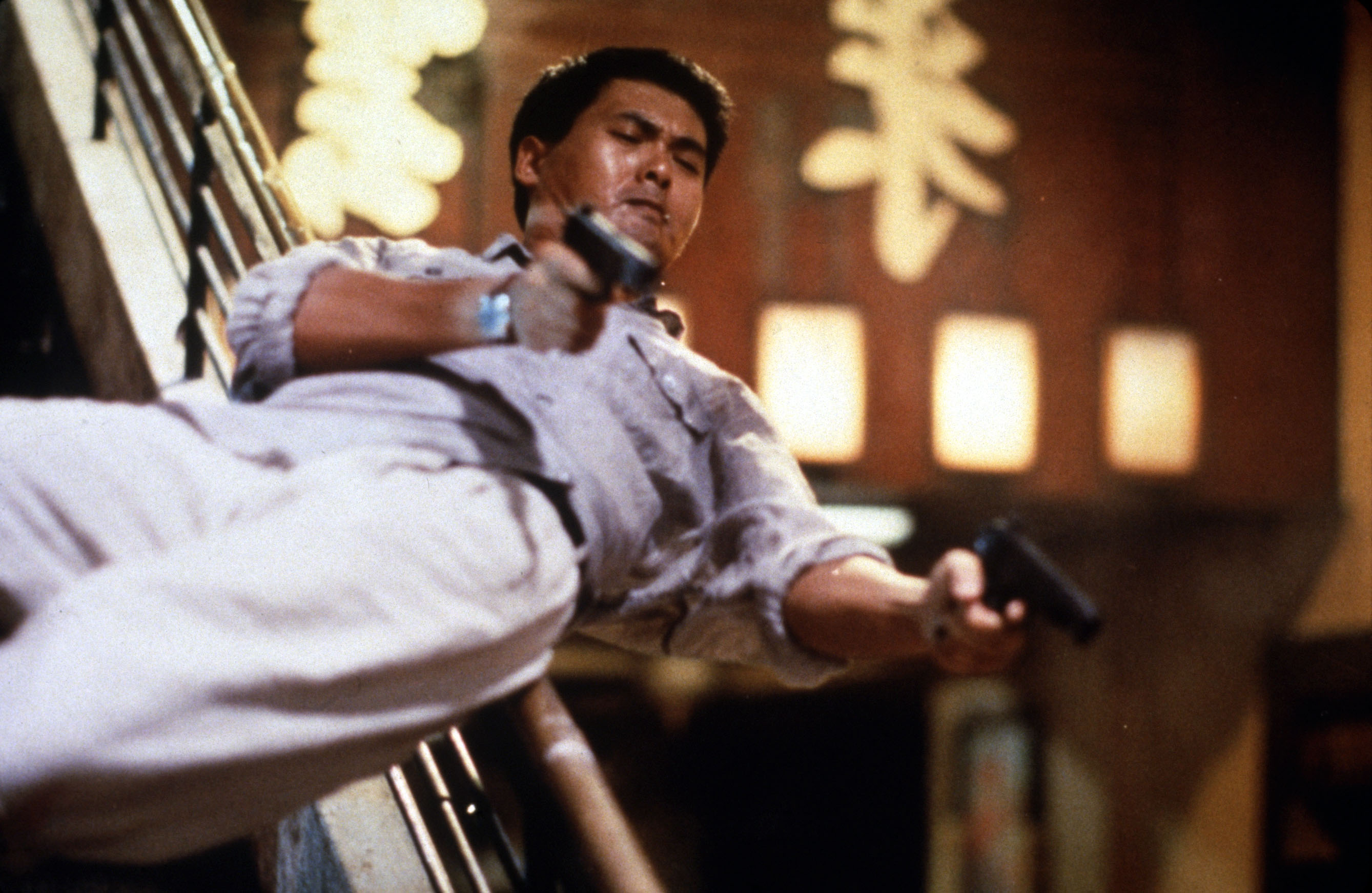
Then, uh, I had to give it a name. After much struggling, I came up with "Undercity Noir." I felt this captured the cinematic, criminal vibe of the style.  I think the result is very true to the core inspiration of John-Woo-in-Space.

Wednesday, September 9, 2020

Psi-Wars Gun Fu: the Coda Resolute

So, if you couldn't tell, in keeping with the exploration of the Frontier Marshal, I've been exploring Gun Fu in Psi-Wars.  This isn't a new topic: I touched on it back in Iteration 4, but now we have a setting to tie these ideas to, and I have a new system for writing up martial arts.  So, I wanted to explore some.

The first I want to reveal is the Coda Resolute, the Maradonian "Gun-Fu."  This isn't the first I've designed, nor did it exist back in Iteration 4, and I don't expect it to be wildly popular, which is why I'm starting with it, because it's better to have a minor style torn apart by my readers than a major style.  The others will be more detailed and more powerful: Maradonians are all about the Force Sword, and so would look on most forms of Gun Fu as a secondary concern at best.

When I created the Resolution-pattern blaster, the idea, even the name, was with an eye towards the dueling pistol or the flint-lock pistol common among swashbuckling pirates. Thus, it has a low Rate of Fire, little ammunition, and deals a lot of damage at once.  I envisioned it as a side-arm for a space knight who wanted to blow a hole in a well-armored target who was too far for him to cut down with his force sword. I could also see it being used in duels, though it would have been in a different era than the present. 


The Coda Resolute brings the Resolution into focus and emphasizes its role as a dueling weapon.  Naturally, like many things Maradonian, it's a style that's more about style than substance: this is a style that teaches a false sort of accuracy, the sort that's best on the firing range or when showing off, rather than under the pressure of battle.  Thus, I created a new technique called "Plinking," which improves your accuracy when there's no pressure on, when the shot is about showing off, rather than hitting an enemy.  It's a style that also has a lot real accuracy: the weapon is high in accuracy anyway, and Dead-Eye (modified in Psi-Wars to simply give you additional turns of aiming, rather than complex rules with Precision Aiming which are too detailed for a space opera kung fu action game) that allows them to take their time and aim.

Those who are willing to invest more deeply gain access to even greater real accuracy and get to play with some of the neater tricks of the Resolution.  I wanted to explore the idea of the "Cult of the Gun," so I created a cinematic option perk for the Resolution that makes it more lethal post DR, and makes the hot-shotted versions are less prone to failure ("It's the superior cladding; they made them tougher back in the day.").  I wanted to make the style monomaniacal about the gun: like all things Maradonian, they think their stuff is better than everyone else's, and this sort of makes it true.  It does make me want to explore more variations (a multi-barrel version, perhaps?).


As a dueling style, it's more of a curiosity, but if we have space-flint-locks, we should be using them to buckle some swashes.  In 7th Sea, the most common things I saw players do was wield a pistol while they also had a sword, and this classic pose is covered in Ray-Gun Gothic. It allows the character to "dual wield," but the primary focus isn't actually dual weapon attack: I mean, sure, you can shoot while you swing, but most people will either shoot or swing, and the style reflects that.  The other thing I saw a lot of people do is ask how many they could carry.  The "coat full of pistols" was a common "twink" approach to 7th Sea.  So why not embrace the crazy and give our Maradonian pirate-swashbucklers cloaks full of blasters? It's the sort of over-the-top expenditure that I could totally see a Maradonian doing.

It's alright offensively.  Defensively, it obeys two rules from my post on Gunslinger survivability.  First, it uses an actual melee weapon for defense, in this case a force sword.  That makes it a secondary weapon and a secondary concern, but the style accepts that and is cheap as a result.  The second rule is luck, as manifested in the Duelist's Courage trick. I struggled for awhile to find a way to make aspected Impulse Buy points work for me and I've finally given up and focused on Serendipity instead, which is probably what I should have used since the beginning: a single use of luck to do something specific.  In this case, they get a last ditch "lucky" roll to not get hit, or a single use "This doesn't count as combat" moment, allowing them to use their full accuracy for some very cool shot even in combat.

The result is a noteworthy style that suits Maradonian culture and puts a nice lampshade on a weapon that I think not a lot of people notice. I doubt it'll be a must-have for many, but I've been surprised by the popularity of the Maradonian aesthetic before.  But I think keeping this as a "minor" style is still important, given the secondary role of the blaster in Maradonian society.

Friday, July 10, 2020

Design Diary: the Akashic Form and Cosmic Kung Fu


Cosmic Kung Fu

When I wrote the Akashic Form, it was quite some time ago, near the beginning of the design of the Labyrinth, and it became obvious to me as I wrote it that it might change as a result of the designs of the Labyrinth, so I parked it while I worked on labyrinthine monsters. As the posts turned from days to months of writing I naturally lost track of my original thought process when writing them. I have some notes, but it seems I am missing the specific designs of the Labyrinthine Revelations techniques. Some people have asked for them, or expressed skepticism or concerns, and that’s fine (the reason to post these to a blog is to elicit feedback), but given how interesting they were to design, I thought it might be useful to you, dear reader, to see how it worked so you could do the same yourself, if you wanted (say, for a Wuxia campaign).

This is all an exercise in Modifying Existing Damage, from GURPS Power-Ups 4: Enhancements, staring on page 9. I think most people are familiar with the idea of modifying unarmed damage, but you can modify armed damage too. The caveat here is that it only modifies the damage of one weapon, but it allows you to swap it out if you change primary weapon. I think the intention here isn’t to prevent people from using their modifiers with a variety of armed weapons, but to prevent the overhead of working out the specifics of a ton of weapons. That is, if you apply a modifier to a broadsword, you shouldn’t also apply it to a greatsword or a staff, because the point value would be different and, ugh, it’d be a whole thing. However, with force swords, we don’t have that problem. We know how much damage they do: 8d(5) burn. That’s it! We could make the argument, then, that characters who use these modifiers can’t deal more damage than 8d(5): no weapon master bonus, no extra effort, no power blow. But we can safely allow them to apply it across all such weapons, especially given how we’ll limit it.

So, now we need to calculate the damage: 8d (5) burn is 60 points, ignoring the melee modifiers, which Power-Ups tells us to do. All we’re worried about is the base damage. Now we can work with our modifiers.

Okay, so can we apply cosmic modifiers? Yes we can! We’re not allowed to apply “penetration modifiers” other than (among others) Cosmic. Thus, we’re allowed to buy Cosmic Modifiers. And this makes sense. In the previous section on Cosmic modifiers, they talk about indefensible attacks vs cosmic defenses! I can buy an indefensible, innate attack that ignores DR. Why could I not do the same with the weapon I wield?

So, given that, we can look at the modifiers. We apply our particular modifiers to the cost of the weapon and take the value that comes out and apply it as our advantage cost. We can also apply limitations, but if the intention is to only apply to the enhancement, then we apply it to the enhancement only. If we did something like “Cosmic +50%; Limited Uses Once per day -40%”, then you need to follow the rules on page 10 of GURPS Power-Ups 4: technically, the limitation should be divided by 5 and applies to all attacks. That is, if you take this, then you can only attack ever with a force sword once per session. What we want instead is this idea of a mode, attacking in a particular way. Thus, what we actually want is a limitation to an enhancement: Cosmic (Limited Uses Once per day -40%) +30%.”

Labyrinthine Revelation of Crowns

So, here we have a fairly straightforward version of the +300% version of cosmic, making an attack indefensible. It requires an All-Out Attack (-25%) and it has a limited impact against non-Maradonian styles (We’ll call this a nuisance effect at -10%; this is somewhat arbitrary but we could argue that this only works against maradonian styles and apply an Aspect at -20%, and in this case, we halve it because you can sort of use it against non-Maradonian styles). This gives us a -35% to the +300%, which gives us a total of (about) +200%. 200% of 60 is 180, but we ignore the original 60, and it drops to 120. We should further note that innate attacks in Psi-Wars are 1/3 the cost, so this drops to 40, and then we make it cost an impulse point, which drops it to 8.

We can make further arguments to lower it further. Technically the advantage we’re buying is a “permanent” one. It’s like buying flight or invisibility: “my attacks always enjoy this bonus,” is what we’re saying, which means we need to limit the maximum duration, which will be -75% to -80%, which drops us down to a minimum -80%, and means all additional modifiers are pointless, which is less fun and it’ll disrupt some mechanical parallels I’d like to draw. It also drops the advantage cost to 2.5 points. If you didn’t like 8 points, you really won’t like 2.5. If you go above and beyond the -80% to make sure they can “be different,” you’re looking at a perk.

So what value is fair? Should it be 1 point? 3 points? 8 points? These all feel low, especially given the cosmic defenses we’ll see in a bit. I think offense should cost more than defense. So I think I originally doubled it in price, but perhaps 10 points is fairer.

Labyrinthine Revelation of Swords

This is the same as the above, except we’re changing the 150% armor modifier to a 300% armor modifier for a net increase of +150%. We’ll add a +50% to allow it to bypass limitations like Unkillable, and we’re at +200%. That means it costs the same as Labyrinthine Revelation of Crowns, which makes it conveneint.

Labyrinthine Revelation of Staves

This one is different. Here’s we’re looking at Cosmic Active Defenses. This is intend for parrying with the force sword or blocking with the shield. This naturally varies based on the skill of the user, but we can pick a “sufficiently high” value, such as skill 20. This makes the base cost of block 25 points, and the base cost of parry 25 points. We’re adding a +50% modifier, so +50% to both comes out to 25 points; if we divide that by 5, we get 5 points.

Is that fair? It seems to be. Characters could go higher, but they’re not going to double that value. We’re quibbling over a value that will be between 4 and 8 (at the extreme high end of skill 30 in both). So I think 5 is probably a nice, pentaphilic value. We could go with 10, but that’s definitely overcharging.

Note that it talks about “enhancing Enhanced Defense advantages,” but this is only if you’re actually basing your numbers on your actual skill. If you pay close attention, the cost of the advantage is priced as though you bought it up from 3 using enhanced defense alone, so our values should be fine.
Given the lack of utility in 90% of cases with a cosmic parry, I’ve also tossed on a “halve defense penalties” benefit for free.

Labyrinthine Revelation of Hearts

This one is different. Here’s we’re looking at Cosmic Active Defenses. We’ll look at Dodge, and we need to determine the Dodge of the target, because that will determine the core cost. We don’t know what that is, of course, and we’re trying to create a static advantage, so it might be enough to take “a sufficiently high value.” If we want to price it like Staves above, for 5 points, we’re looking at a Basic Speed of ~6.5, which is a little on the high side for a starting character, but not much. If we went with a 10 point advantage, that would cover up to ~13.25, which is excessive. I can’t imagine someone going higher than a Basic Speed of 10, maybe 11. If we’re pentaphilic, 5 seems closer to right than 10, which is definitely overpriced. You’re getting a bit of a deal here at 5, but I think it’s fair and, more importantly, pentaphilic and similar in value to

Given the lack of utility in 90% of cases with a cosmic dodge, I’ve also tossed on a “halve defense penalties” benefit for free. Perhaps I should ditch that to bring its cost “more in line” but the utility of spending 5 character points for the privilege of spending 1 character point for the privilege of dodging the Revelation of Crowns seems excessive to me, so I’ll keep the bonus.


Disappeared Signature Moves

One question I got was "why did you remove the flavorful moves from the original?" One of the problems I face with these updates is that most of the signature moves from the previous iterations don't cost anything. They're just things people with the style often do.  I don't think that's a bad idea at all; it's a perfectly reasonable approach, but if you're shooting at players spending 5 points to get "a kung fu trick," you need to come up with something.

Accept Fate: This was functionally an "Evaluate while using Combat Sense," which we've folded into the new Accept Fate.  It didn't do anything except stand there and look at your foe before either.

Mirror Fate: This allowed you to turn the natural defensiveness of the technique into an attack. This is still a pretty valid approach, though this runs afoul of the fact that Ripostes don't cost anything.  We could create a new technique, of course, but then what are we buying off?  The point of this signature move was to collect a lot of defensive bonuses and then turn them into an offensive bonus.  However, the new version of Accept Fate does that anyway, making this redundant.

Challenge Fate: This was a Stop Hit, which is the signature trick of the Serene Form.  We could use it here too, but I see no reason to step on the toes of the Serene Form.

Open the Third Eye: So, in the original Akashic Form, I borrowed heavily from Third Eye Fighting, which introduced this variation of Combat-Sense-As-Enhanced-Time-Sense, and that's what this move handled.  However, once again, perfect reactions (which is what this gives) is the bailiwick of the Serene Form, and it already has a move that gives Enhanced Time Sense. It's also not really a "move" as you don't really do much.

So most of the Akashic Form moves either did nothing that players could spend their points on, or were already handled by the Serene Form.  We could ditch the Serene Form in favor of the Akashic Form, but I feel like the Serene Form fits the motiffs of the Templars better than the Akashics and the new model better suits the idea of the Akashic Knight as a super-Maradonian who listens closely to fate.

Thursday, July 9, 2020

The Akashic Form

Ages ago, I finished transcribing all the Force Sword forms over to the Wiki. I dusted off my hands, patted myself on the back and announced I was done.  At which point, my Psi-Wars faithful said:

What about the Akashic Form?

Sigh.

Right, I had forgotten that one.  One especially faithful Psi-Wars faithful, calmquist, tried his own hand at it, creating his own updated power-ups.  They were not that great, though, and when I finally settled down to take a look at his version, and the original version, I quickly saw why: it's not a good martial art; there's just not much you can do with it.  Or, better, it's been made obsolete by the Serene Form.

The central concept of the Akashic Form (and Three-Eye Fighting, from which it draws many of its concepts) is the integration of precognition and Combat Sense into force swordsmanship. It's a nice concept, but that niche has been better filled by the Serene Form.

  • Want to use your precognition to better defend? Serene form does that.
  • Want to use your precognition to draw and attack the instant before your opponent does? Serene form does that.
  • Want to fight blind, relying on your psychic sense? Serene form does that.
The result is necessarily that the Akashic Form as written looks like an inferior copy of the Serene Form that requires you to be psychic while Serene Form doesn't.

Thus, I had to largely scrap most of the original concept and shift to a different focus, not on what the Akashic Form had been, but what it was evolving into. I noticed that it's original description had been about "layering over" Maradonian styles, and that became my central focus for design.  It became a utility style, a bit like the Simple Form, where its moves and exercises folded the religious practices and insights of the Akashic Order into whatever Maradonian form you already had.  This turned it into a "Super-form," a higher-level technique that characters might aspire to, rather than a basic style one might start the game with (though that's an option too).

As I designed the Labyrinth, I tried to add techniques and concepts for defeating creatures of the Labyrinth into the style.  I may revisit it to further update them, to make Akashic Knights into natural "Labyrinth Hunters" as that's their obvious domain.

Friday, January 10, 2020

Cross-Post: The Reaver's Hand as Power-Ups

I've been a backer for Christoper Rice's (of Ravens and Pennies fame) patreon for quite awhile, at varying degrees of commitment, for a long time.  A lot of Rice's material has made it into Psi-Wars, from Keleni Stickfighting (Ishen Denshin, from his pyramid article, Mind and Body) and the Dead Art (Thanatokinesis, from his article, Necro-Psi) as well as likely others that don't spring immediately to mind.  He's not an explicit collaborator, but I borrow so much of his stuff that I sometimes think of him as one.

At some point, he saw fit to show me a preview of what became his Mind and Body martial art follow-ups, to give feedback.  This was quite some time ago, so I went hunting for my notes on it, but could not find them.  Nonetheless, I remember I was busy so I only really had time to discuss one, which was the Reaver's Hand, and I discussed it because I found it so profoundly engrossing and inspiring.  It was, and remains, a martial art that I could see integrated into Psi-Wars (though I'm never sure how to integrate his patreon material into my game, as I don't want to reprint it, but I can't very well point to a pyramid article somewhere either), especially as an assassination technique for the Ranathim death cult.

To honor its release, I've written a version of the Reaver's Hand as an upgrade set (with Chris's permission).  Now, as with all upgrade sets, I've taken some poetic license with it; in particular, I've focused on Steal Life as the primary psychic ability of the style, with Detect Life and the Reaver's Hand relegated to exercise and super-cool secret, respectively. I'm not covering the full scope of the style, and while you will doubtless get a sense of what the style is like, if you truly want to understand it (I will reprint no rules), you'll need to go get the original article itself, which you can do right now by becoming a backer.  It will cost you $2 (two dollars!) to gain access to, so if this interests you,  you'll have to make the sacrifice of an overpriced latte this month, but I think its worth it and, who knows, maybe you'll stick around and read more of his stuff.  Poke around and see if you like what he has.


Thursday, October 24, 2019

Wiki Showcase: the Simple Form as Martial-Art-As-Power-Up


When I held a snap poll for the martial art most people wanted for their own space knight, the Simple Form won not only the Non-Maradonian styles, but proved the most popular style overall, handily winning the poll.  This quite surprised me, as it was the newest of the styles, created in Iteration 6, exclusively for the Templars, who remain the main people who will use it.

With the Simple Form, I wanted to explore two major ideas.  First, if we're going to have people learning multiple styles and integrating them together, I wanted a style that really exploited that.  In that regard, I created Infinite Stance Mastery, which allows the character one "free" 5-point move from any style.  Incidentally, this works much better in the power-up form, because you can just go pluck an existing 5-point move, rather than designing them yourself.  Second, I wanted to reward players for exploring multiple styles.  Originally, I gave them a "Style Mastery" perk, which let them upgrade their Style Familiarity from allowing them to ignore -1 in Deceptive Attack or Feint penalties to a full, outright +1 to defense. I had intended to give them a universal version of this, so they gained it with any style they had style familiarity, but I found myself thinking "They'd literally be better off with Enhanced Parry (Force Sword), or Higher Purpose. Hey! Not a bad idea!"

For the rest of the style, I had a couple of problems.  First, most moves are built on a single trademark move and then whatever techniques required to make it work.  But the Simple Form doesn't really teach techniques other than Feint.  The whole point of its original trademark moves were to codify pretty standard tactics, like the basic attack, or the basic parry.  I see the Simple Form as taking what new players to GURPS typically do ("I attack.  I parry.  I feint. Then I attack with everything I can.") and making them better at it.  So, the only way I could do that in a move was by collecting all of them, and thus First Steps was born.  Then I wanted to make them good at fighting in general.  I pondered what most players generally did in addition to the basic moves (retreats, extra-effort, etc) and made those better in the style. Finally, I rounded it out with a few Judo tricks. One concept I still like, but didn't fully emphasize here, was something similar to the Fell Form's approach to Karate, only with Judo.  Judo can, after all, parry armed attacks, so a character with Judo 20 is as good at defending themselves from Force Sword attacks as someone with Force Sword 20 (technically better, because they gain the +3 retreat bonus even without Chambara rules).  I added the Warding Parry to answer questions as to whether you can parry a force sword with an unarmed skill (from what I can see, it's perfectly permissible, but some people might have some doubts, so, you can do it with a -1).

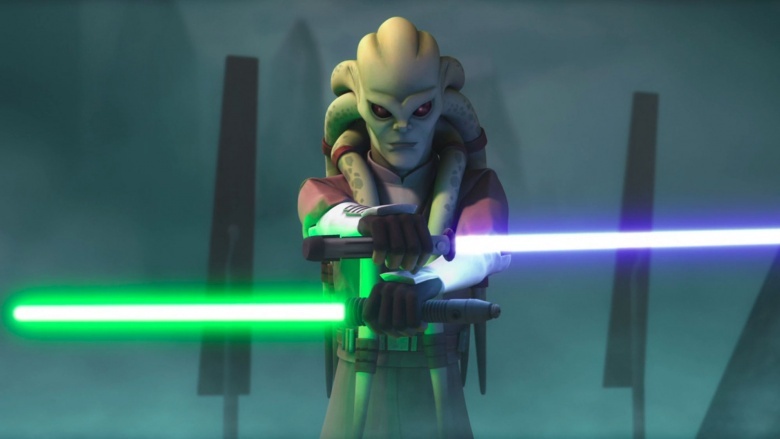
This is the bit where I explain that this might have drawn loose inspiration from a Star Wars ligthsaber form and then point out which one, but in this case, I was explicitly inspired by Form I, or Shii-Cho, especially their discussion about how most Jedi don't take it seriously, but people who master it tend to be extremely flexible and effective.  Like all other lightsaber forms, you don't really see this in the fiction; even Kit Fisto, who is supposed to be a true master of it, doesn't seem to fight in a particularly distinct way, and doesn't seem especially impressive in any of his video-game outings.  Nonetheless, I wanted to explore the idea of a force sword form that seemed unimpressive at first, something only worthwhile to students, but really profited those who invested deeply in it.

"I guess people really want Wuxia in space." --Nemoricus

The other major inspiration, natural from its description and other inspirations, are Chinese martial arts and the traditions around them.  If the Serene Form is the epitome of Japanese swordsmanship, then the Simple Form is the epitome of Chinese Swordsmanship.  My experience with many Chinese styles is that where Japanese martial arts often focus on perfecting a single move or a single tactic, Chinese martial arts tend to focus on the fighter in a holistic manner.  This is where these "Miyagi"-style traditions of putting a martial artist through lots of training that seems to have nothing to do with fighting comes from.  We get concepts like "Internal martial arts" from this approach: improving the fighter's core, endurance and "chi" and only then teaching them to express it through their "external" martial arts, or their actual combat techniques.  This likely means people will ask if they can use some of these moves with other martial arts precisely because they're so broadly applicable, and I think the idea is valid, though I'm not sure if I'll migrate them to other, non-force sword styles n exactly these forms (the Simple Form needs to maintain some sort of niche, after all).

Given that it's evidently the most popular style, I hope those who came to love it back in Iteration 6 still love it in its Iteration 7 incarnation.

Wednesday, October 23, 2019

Wiki Showcase: Psionic Force Swordsmanship as Martial Arts-As-Power-Up

In my snap poll to see which Psi-Wars martial arts everyone favored for their personal space knight, the Maelstrom Form (aka, Psionic Force Swordsmanship) came in second for non-Maradonian styles... and second over all.  Because, of course, the most complicated and difficult style had to be (almost) everyone's favorite and couldn't be quietly shuffled away.

A common complaint I hear about Star Wars when it comes to the Force and the Jedi (or the Sith) is that they don't do "enough" with Force while fighting.  Indeed, we see entire discussions online about integrating the Force into combat moves in cool and tricky ways pretty regularly, one of which I, for the life of me, cannot find anymore (edit: Here it is), where someone posted a bunch of pictures about cool tricks and counter-tricks to defeat your opponent in a force-heavy duel.

Psionic Force Swordsmanship was meant to address this.  If you have psychic powers, you expect you might use them to help you fight.  The problem, in Psi-Wars, is that psionic powers aren't the force.  The Force is probably closer to "magic" than as how GURPS handles psychic powers.  That is, in Star Wars, anyone who can use the Force can use all of the Force, there might just be some things they're better at than others.  In Psi-Wars, someone will have one or two powers, but rarely will have all: a Knight of House Grimshaw has Electrokinesis, but doesn't have Psychokinesis, and someone with Psychokinesis may never have Electrokineses.  This means I can't write a single style for all users; I have to write several styles for a variety of possible users.

As a result, you can see Psionic Force Swordsmanship as roughly three styles in one: a psychic vampirism style, a psychokinesis style, and an electrokinesis style.  I could probably explore a Telepathic style (though it would need to differentiate itself from Ishin-Denshen) or a Probability Manipulation style (but Probability Manipulation is considered a "Rare" power in Psi-Wars).  That is to say, we could expand the style, but I have a limited amount of time to work with, and it's complicated enough as it is.  I've tried to bundle the commonalities down and to make all three powers relatively interesting, but feel integrated into a cohesive whole.

This style has existed since Iteration 4, and has seen numerous rewrites, into the broader Maelstrom Form in Iteration 6, and now back into Psionic Force Swordsmanship in Iteration 7.  It's a complex style with lots of moving parts and different ways to interact with it, so if you see mistakes in it, that's why.  It's a fairly defensive, but also ruthless style, one suitable for a dark space knight, and we tend to see it more in the Umbral Rim than in the Glorian Rim (though a member of House Grimshaw who gets ahold of it is pretty cool).

If you're cribbing my material for Star Wars conversions, while I find the description of Form VI (Niman) vague to the point of uselessness, Psionic Force Swordsmanship (specifically, the Resonance Omen Moveset) works more or less how I picture Niman to work, as a fusion of psychic tricks and patient, cautious force swordsmanship.

Ugh, Electrokinesis

"Lightning, as it's written now, is only good for assassination" -- Lord Buss, paraphrased
This style, naturally, made me revisit Electrokinesis, and Lightning has been seeing some pushback, because people have to pick over every piece of Electrokinesis in ways that they don't over other powers (and I'm not sure why that is, other than perhaps people actually take electrokinesis, and it has a lot of crossover with actual gadgets).  As I returned to the "Lightning" powers, I noticed a few things about them.  First, I had originally edited out some elements from the original version that didn't seem to make sense (such as it stunning people) to save points for the fact that you don't draw your power from around you.  After all, we picture Lightning as erupting from the hands of the space knight, not drawn down from nearby power-lines.  But as I explored how Psionic Force Swordsmanship worked, I realized several things.

  • We tend to picture this lightning blast erupting from the hands of the character, and attacking someone relatively close by
  • We want to make this work sort of like a melee weapon, capable of feinting or making rapid strikes
  • We expect our target to survive a hit, but perhaps to be very much not happy that he got hit
  • The character can spend the whole fight doing nothing but lightning blasts
  • We expect lightning to work like it does in GURPS Magic.
This last is especially interesting.  I went back and checked GURPS Magic, and discovered that the original description worked like Lightning in GURPS Magic, so I dutifully went back in and restored those values: longer range, the ability to stun the target, etc.  With the removal of the channeling ability, this made it cost more, and I like the 12-point cost, because it means you can have ~6d for a single, 25-point power-up.  So, I fiddled some more, reducing the damage to 3d-3 per level (to match the Lightning spell), gave it a 2-fatigue cost, and added a wait time to "power-up" the lightning blast. The way you should picture this the character channeling energy, and then zapping a powerful bolt of lightning that strikes a target very far away. This is a sniper shot lightning bolt, not an arc of electricity.  So, yes, you primarily use it to one-shot people.

So, we need to make an arc of electricity.  I called this "Electric Lash" and focused on smaller-scale damage: rather than buying it in big chunks of 3d at a time, you can pick it up for 1d per level. It's a Jet, it costs no fatigue, and it has a maximum (and 1/2D range) of 20 (chosen because that's the same range as TK-Grab in Psi-Wars).  This comes to about 5 points per level.  This is your more Star-Wars-like "casually toss off some electricity at a nearby enemy" sort of power, and it lets you do all sorts of fancy tricks, and this is the power that goes into Psionic Force Swordsmanship.  I've also split the techniques up a bit, so that chain lightning and arc lightning goes to Lightning proper, and Painful lightning and Lightning Blast go to Electric Lash.  I've also given the option for adding Electric Lash to Lightning as an Alternate Attack.

I've also created a TK-Hand, since people seem to like the idea of wielding a force sword with their TK, and the easiest way to handle that is some form of Extra Arm with the Weapon Mount option.


Related Posts Plugin for WordPress, Blogger...