Showing posts with label Rambling. Show all posts

Wednesday, August 25, 2021

A Sorcerous Obsession


Sometimes, I just can't get something out of my head.  Back in the good ol' days of the blog, it would end up as a blog series.  Lately, since I need to curate my material more, I hesitate to just brainstorm on the blog, but perhaps that's a bad approach.  After all, the point of this blog is to blather on in a way that gets my juices flowing, which helps me to think, and helps you to think about your own setting, and often starts a conversation. So while this post may or may not result in some changes to Psi-Wars, it will be useful for me to get some thoughts straightened out, and perhaps to inspire you as well, dear reader.  Consider this less of an "article" and more a musing.

So here it goes: The though I can't get out of my head is "Does Psi-Wars need magic?"

Monday, October 5, 2020

Why your RPG Campaign is a Joke


I tend to follow GURPS blogs, which means I mostly read my own stuff and Toadkiller Dog's blog, because we seem to be the most active ones in my reading list (we've diminished a lot from the heady days of the surge of GURPS blogs back when this blog started).  And, of course, reading up on Dungeon Fantasy, especially the "Rogue-like" approach he seems to favor, got me to thinking about randomness.  We tend to associate that sort of gameplay with very grimdark games, but my experience is that they often lead to hilarity and a lot of jokes.  Of course, most campaigns do, and I think I've made the connection between why, and why so many RPG campaigns "devolve" into comedy, and it is this:

Anytime you introduce randomness into a story, you create the opportunity for the unexpected subversion of expectations, typically in a hilarious way. Also, players need a release valve for tension.

Thursday, July 30, 2020

The State of the Blog (and its future): August 2019

I've lost some Patrons recently to two things, both of which I feel I need to address.  I'd also like to talk about some decisions I've made about how I'm going to handle content moving forward, as best as I can, and manage expectations in general.  Don't worry, this is not a "I'm out!" post, just a discussion pertinent to anyone thinking about supporting my blog, and a broad roadmap for content I'd like to work on and remain focused on, as well as pushing back some stuff I know you guys want to see, and why I'm pushing it back.

For a TLDR, I also have a list of projects that I'm working on behind the scenes for all backers, both to give you a sense of what I'm working on, and to invite feedback on what you'd like to see. It is, of course, not entirely exhaustive

Backers: Patreon and SubscribeStar

COVID 19

The first thing that's hit me has been that I've lost some backers to failing finances due to layoffs from COVID 19.  I think this is hitting the GURPS community harder than people realize. At least one big blogger lost his job and is blogging/producing content full time right now to support his family.  And I've lost a few backers to this, as has Chris.

I want to be clear about something here: I'm a computer programmer who works in the health insurance industry in the Netherlands, with a permanent contract.  You have no idea how hard it is to fire someone in the Netherlands with a permanent contract, and how hard it is to get a good programmer these days.  So I'm about as finacially stable as you can reasonably get.  Sometimes I use my backer donations to take my wife out to dinner or to buy a game, but for the most part I just funnel them back into Psi-Wars. I use them to buy art and to pay for books (this month's fund mostly went to the Kickstarter).

This is to say: I don't need your contribution.  I like it!  It's nice! We're making art together! I buy GURPS books with them! You're helping Psi-Wars! But I don't ever want anyone to feel like they must contribute to keep me going. If it's a choice between you and me, please choose you.  There are some writers that depend on this income for food.  I am not one.  If you need to go, go.  If circumstances change and you want to come back, I will welcome you with open arms.

Engagement

I've had at least one backer leave because I was not as engaged as he would like.  And let's admit it, I am less engaged than I was a  year ago, or even earlier this year.  It used to be we had at least two polls a month, usually several major polls a year, and lots of content streaming out.  Now, I've also seen worse Patreons, but mine could use a bit of a shine on the current content.

A lot of the change has to do with family life.  It's not the sort of thing I trot out often, because it's not really relevant to you.  I also don't want to this to sound like an excuse.  It's an explanation.  I have a very active 3 year-old son, who is charming and delightful, but needs constant monitoring so he doesn't rip the curtains from their rails by swinging on them, and an adorable 1 year-old daughter who loves to clamber onto chairs, bounce against their backings while doing her best impression of a very loud duck until the chair tips over and she runs crying to mommy.  Also, the fight over toys.

One of the things I've learned about parenthood is the inevitable zero-sum game of time management: every moment I spend here, writing a post, is a moment I don't spend taking my little girl on a bike ride and showing her more ducks (or birds or flowers) or taking my son on a walk through the woods, or swimming in "the big pool" as he calls it, or letting him tell me about his school day.

More than that, my wife is constantly exhausted from the fact that they get up all hours of the night, so any minute that someone can watch the kids is a minute she can sleep longer, or perhaps get a chance to unwind and play.  They've been worse than usual (my daughter is really at a point where we should sleep train her by letting her cry, but that wakes up the boy, who then must be helped back to sleep too, so one kid waking up can turn into an hour of putting the kids back to sleep, and this can happen 3-4 times a night!), and with school and daycare out because of COVID, my wife doesn't even get a flicker of time in the day to herself while the girl naps and the boy is at school.  Thus, slowly, I've found myself giving her more and more time to sleep, rest and recover and to be herself (like, getting a chance to play one of her favorite games for once).

This naturally cuts down on the amount of time I have to generate content.  Again, this is not an apology.  This is not meant to make you go "Awww," and be okay with the level of engagement you're getting, it's my explanation as to what's going on, and when it'll be fixed, which is "not soon." My wife is very aware of my writing, and she argues I need it to relax (and she's not wrong), and she does what she can to give me that space, but this level is probably going to be it for awhile.  Decide if you want to stick with backing me based on that.

That said, there are some things I can do to improve engagement, which is mainly about focusing on quick wins and what matters, which brings me to:

A Blogging Road Map: Iteration 7

The single greatest thing slowing everything down has been me working on space monsters and their environments, such as the Labyrinth (but also the Skairos, the Eldothic Deep Engines, the Dark Mothers of the Gaunt, etc). I've gotten very lost diving down that rabbit hole, and I've generated pages and pages of unreleased content. Given that, why not release them? I think the core problem here is that I've gotten ahead of myself and this is not what I should be working on right now.

The point if Iteration 7 is to build upon what Iteration 6 laid as a foundation.  We have the basics of Psi-Wars, such as the major factions and ideologies. Now we need to move those templates to the Wiki, round out all the major races, work out the major elements of technology, and hit up some of the major planets and factions, all with an eye towards standard Psi-Wars, the 250-300 point gameplay focus.

A lot of you really want to see the 500 to 600-point level, with Templars and Tyrants, Akashic Knights, the Skairos, the Saruthim in their full glory fighting the Anacridian Scourge or the undead minions of Domen Tarvagant. I'd like that too, it'd be a lot of fun, but I think we need to finish this base.  If you're going to play an Imperial Knight uncovering a conspiracy that uses a criminal organization as a catspaw, we need to know the stats of your armor, your ship, and the criminal organization and what their ships and gear and vehicles and robots are, as well as the planet they operate on, before we need to think about the structure of the conspiracy or what full-powered Imperial Knights look like.

Given my short time and the need to prioritize, I'm going to focus my attention on this baseline and leave the "Epic Psi-Wars" material for "Iteration 8."  I'll still take requests and I'll still talk about it, but if I let myself delve down there, I'll lose focus and things will seem to seize up while I do so.  So, for now, it's not the priority.  Instead, I'd like to focus on:
  • Finishing up military technologies (Trader Tech and perhaps a few other factions)
  • Civilian/Spy/Law-Enforcement tech (some vehicles and spaceships that don't get involved in big space battles, but are still important)
  • Alien Races (filling out the remaining aliens, and adding more detail to the ones that already exist)
  • Factions and organizations (criminal cartels, pirate warlords, corporations, etc)
  • Some planets (not all, but a few)
  • Answering some long standing issues and questions (like navigation and travel times)
  • The Wiki
    • Finishing established templates and rules
    • Expanding out with a few new templates whose need has become obvious by now, or who need some sort of lens structure to address (the Mechanic, the Psion, the Pirate, etc)
I'd like to get back to polls, but mostly with a focus on "what to do next" and perhaps a few more "Let's build this together," especially when I get back to alien races and organizations.  But this should keep us busy for awhile.

Hopefully,  you're still enjoying it. I'd like to hear from you one way or the other.  I do this mostly for fun, but I do want it to be useful to you, and I definitely want to hear if some of my material is or isn't useful so I can adjust accordingly.

I will have more playtests in the future, but that depends on how much time I can get in large, useful blocks, and given the constraints and issues, they'll have to focus very tightly on timeboxed ideas, such as a singular adventure premise (like a heist) rather than a sprawling campaign idea.

Friday, July 10, 2020

On the "Erasing" of the Sequel Trilogy

I like to pay attention to corporate boardroom drama, because I find management successes and failures to be profoundly interesting, likely because I'm a computer programmer by trade, and "automating procedures" is what I do, and studying how companies fail or succeed at these things are interesting.  So one of my side hobbies has been tracking the management, and mismanagement, or Star Wars since Disney bought it.  I'm more interested in the tales of woe from behind the scenes (such as the stories behind why nearly every director for a Star Wars film has been fired before completion, leading to often expensive reshoots and reworks), and it's not just Star Wars that interests me, but studying up on the stories behind (for example) the Snyder Cut has been very interesting to me as well.

This means I sometimes delve into the rumor-monger parts of Youtube, as that's where you'll get these stories, as what comes out in official memoirs is always carefully sanitized.  My preferred channel here is Midnight's Edge, as they tend to be fairly professional and look into the parts I'm most interested in, which is the management stories themselves.  There are others, such as Doomcock above, who prefer to focus more on bashing on what they perceive as failures of the franchise, and condemning what they feel are bad narrative choices or "abusing the audience." To be clear, I think that's happened, and I think there's an interesting discussion to be had about the creator/audience interactions on platforms like twitter, and how they go sour, and how the platform itself interferes with those discussions, but that's not the core topic that interests me.

However, recently, something has happened that I find remarkable.  Doomcock, who reports rumors, that he claims to get from inside sources have suggested that Disney might be preparing to "erase the sequel trilogy from canon."  Midnight's edge hears similar rumblings, but they report it in a more nuanced way.  This is not remarkable, as rumor outlets like this are always reporting the demise of their hated foe, Kathleen Kennedy. What is remarkable is how much traction it's getting, when "mainstream" Star Wars commentators, like trades or Eckhart's Ladder, start responding to these rumors, and not to "their own sources" but effectively just to Doomcock's report.  That is, we're getting papers reporting on someone reporting on rumors.

So the first thing I want to say before I go further is to make sure it's clear what the state of this is: some guy who likes to talk crap about Disney's Star Wars discussed an unconfirmed rumor he heard from a source who may or may not be lying that Disney is considering erasing the Sequel trilogy, and people are talking about that guy.  There is nothing, nothing, confirmed about this.  I'll let you decide for yourself what this says about the state of modern journalism that it's getting picked up some widely.

Nonetheless, given that it's hip to talk about, and it touches on several themes important to why I do Psi-Wars, I thought I'd talk about it a bit myself, and what it says about audiences and how you can translate that to your own games.


Wednesday, June 10, 2020

Destiny is a strange advantage

If you search "Destiny" on p
pinterest, all you get is
references to some weird
Warframe knockoff
My apologies for my absence from the blog lately.  I write, because I always write, and I've managed to build quite a backlog of material that I should wind up and publish, but recent events in my home country have weighed heavily on my heart and I find it difficult to concentrate of focus. I say this not in pursuit of sympathy, but as way of apology and explanation.

One of those things that I've been obsessed with lately, after playing Cultist Simulator (which, I must confess, likely also plays some small factor in my absence from the blog) is the Destiny advantage and a more thorough treatment of it. This has led to me making a deep dive into Destiny in GURPS, as well as its treatment in other RPGs, and the result has left me scratching my head and more disappointed than I expected at a paucity of Destiny mechanics in other games, as well as the surprising lack of support of the Destiny advantage.

The first thing I notice is the mean-spiritedness of the text, talking about punishing those who try to avoid their fate, or suggesting that maybe a character who achieves a glorious destiny might, like, immediately die thereafter.  This, I suppose, is meant to prevent people from exploiting the advantage, but what is the purpose of an advantage if not to be exploited.  I think if I took a 15-point Destiny Advantage to, say, become King, and the GM allowed it, if my character became king and was immediately killed thereafter by some jealous courtier, or I "technically" become king because some looney cultist crowned me the "King of Fools," I'd feel pretty cheated.  I'll chalk that up to the legacy of GURPS being originally from an era of a more hostile GM/Player relationship than is fashionable in today's gaming culture.

The next thing I notice is that I can't find it anywhere.  I've done quite a few searches for Destiny in various books or works featuring worked NPCs, and it doesn't show up at all, and I've only found a few templates with it: the True King in GURPS Fantasy and the Mystic in Horror.  Of all the campaign frameworks, only Monster Hunters allows its highly modified version of it.  I can't actually remember a single PC taking it in any game of mine.  In fact, I searched over several books for a reference to it, and while a lot of things talk about how to use it (Curses might create negative destinies; precognition might act as a form of Destiny, and lots of references to lower-case "d" destiny), there are no worked examples of it.

Why doesn't anyone take Destiny?

I think the core problem with Destiny-as-written is that, first of all, it's very nebulous.  There are other nebulous traits, like Higher Purpose, but this brings us to the second problem: Higher Purpose gives a concrete benefit, while Destiny doesn't.  Destiny acts more like a compact to allow a particular story.  For example, if I'm destined to Reclaim my Rightful Throne then you, as the GM, agree that there is a throne, it is rightfully mine, and I'll reclaim it.  What does that mean in practice?  I dunno.  But at some point, that needs to happen. For 5-15 points, that's a pretty steep price to pay for a nebulous promise from a GM that, at some point, I'll achieve my destiny, with no promises after that (what happens when I reclaim my throne?  Can I lose it immediately? Rules say yes).

You can find a thread on the forums exploring it, mostly griping on these topics (To my embarrassment, I'm in the thread.  Oh those were the days). I think they hit on a core problem there: you're paying a lot of money for something that will happen eventually.  Maybe.  If the campaign lasts that long.  Now, me personally, I find a good rule of thumb is you shouldn't rely on a campaign lasting more than 3-5 sessions.  Sure, there are campaigns that last years, and I've certainly run my share, but even then, I'm strongly of the opinion that pretty much every trait should see some use in 3-5 sessions under ideal circumstances.  Setting aside 15 points for something that might happen 50 sessions later feels like a waste, especially given how much can change in a campaign after 50 sessions.

It should be noted, even worse, that you don't actually choose your destiny.  The GM does.  You purchase Destiny 5-15, and the GM decides what to do with it.  That's how it's written!  So, essentially, it's really just a promise to have something cool happen to your character.  This feels a bit like Common Sense, where GURPS charges you for something the GM should be giving you "for free" anyway. It also violates other secret advantages I've seen, which should give you double their value when revealed.  So is a 15 point Destiny actually a 30-point trait?!  Nope, because by the rules, once your destiny is achieved, you can convert it into Reputation on a point-for-point basis.

Monster Hunters did a lot to fix this by giving Destiny a fixed mechanical benefit in the form of Impulse Buys, and I love this version, but it's left me scratching my head.  Christopher Rice dives more deeply into it in "Impulse Control," but I must confess it left me even more confused.  See, as I understand it, this new version of Destiny replaces the original rules for Destiny by treating it as generic trait (you are never destined for something), and you get 1 impulse buy point per 5 points spent.  This makes sense: if you buy an expendable piece of signature gear, such as bullets, you pay 5 times the cost and then you always have a single use of that expendable gear per session, right? So you spend 5 points to have one expendable impulse buy point per session.  But that's not how it actually works.  You recover 1 impulse buy per session.  So, if you spend 5 points, you have one impulse buy point at the beginning of the game, and if you spend it, you'll recover 1 per session.  If you double that cost, you have two impulse buy points (okay, makes sense, twice the points for twice the power) and you'll recover... one per session.  And if you pay 15, you'll start with three and recover 1 per session.  So, a 5-point destiny looks the same as a 15-point destiny character, if they spend 1 impulse buy point per session, except that for the extra 10 points, the 15-point destiny character can spend 2 extra destiny at some point.  I'd rather pay 7 for that, if I'm honest: 5 points for the 1 impulse buy per session, and 2 spare points I can use "at some point."

Impulse Control helps by offering some new options and converting existing luck-manipulation advantages into forms of Destiny, and discussing how to increase the number of destiny points per session.  It suggests a stand-alone advantage worth 10 points per +1 destiny point, but I'm not clear what the thought process behind that is; you're effectively paying 15 per +1 IP and +1 IP refreshed!  You don't "save points" until after 15 sessions at least, and it doesn't really break down well for other traits.  For example, Chris suggests Luck might be Destiny 1 (Aspected, rerolls only -20%) [4] + 2 IP per session [10].  This means you recover 2 IP per session, but you can only have one (so how does that work), and you get a single Luck-style reroll per session, or two if you allow the character to go over their limit.

I find the idea of Aspecting the IP from Destiny to be a very interesting one, as it fits my vision of Destiny better.  I rather like the idea of Destiny being a way of declaring what your character is fated for, which is sort of how it's sold in the core book (except for it being secret).  By declaring what you intend to be, you can sort of help direct the story a bit, and this also fits with the other uses of the trait, such as a curse being an Affliction that gives you some disadvantageous destiny or, more importantly, the "temporary" destiny suggested with Precognition, which has some interesting interactions with the Impulse Buy rules.

So let's explore a few possible variations.

First, what happens if we dispense with the 1 IP per session recharge rate and go with every 5 destiny gives one point of IP per session.  This seems much more intuitive to me, and more obvious.  If you have Destiny 15, you get 3 IP per session, period, whether or not you use them.  Thus, Destiny [15] is 3 times more useful than Destiny [5].  The problem with this is that Serendipity is only really worth essentially 2 points of Impulse Buy, but is 15 points, so that skews the trait cost.  It doesn't for Luck though: Luck is (assuming a 4-hour session) roughly on par with a 20-point Destiny with Aspect (Rerolls only -20%), clocking in at 16 points.  So this might have some issues.

If we assume the "directed destiny" idea, that's essentially an aspected version of Impluse Buys, thus -20% to the cost.  So, buying 2 IP is 8, rather than 10 points, and buying +1 refresh (thus 2 IP per session) is 8 points, giving us 16 points total for 2 IP per session.  You're still paying about 12 points per +1 IP, though.

A "Temporary" Destiny should be a "one off." If I look into your future and I see that you're going to win the next fight, I might give you a Destiny to win that fight, and once that fight is done, so is your trait.  This is a single-use trait, which are... 1/5 the cost.  So if that's a Destiny [15], that's 3 points.  And that gives you... 3 IP to use.  That's convenient!  But it also returns us back to our idea that 1 IP per session should probable be 5 rather than 3 (that is, you're better off collecting a series of temporary destines every session than you are buying 15 destiny, even though they should be literally the same thing).

But what if we treated all Destiny as like Temporary Destiny?  Rather than give the PC 1 IP per session and up to 3 for 15 points, what if we... just gave them 15 impulse buy points?  Chris addresses this in his article and points out that points that don't ever recover are just... earmarked CPs.  And that seems an interesting idea too.  5-, 10- and 15-point Destinies grant this highly specific magnitude of power: you get this number of IP points to spend, and when they're gone, your destiny "is fulfilled."

This feels somewhat arbitrary, like why earmark them at all, but if we give our Destiny an aspect, like "I shall reclaim my rightful throne," then we're effectively getting a "promise" from the GM for free.  We can even assign the -20% modifier to our cost, requiring our points to be aspected.  This means that we should get 6 IP for every 5 CP spent.  That seems like "free points," and it is, but we're taking CP that you could spend on your character, turning it into IP that you can't and limiting how those IP can be spent! You get your GM/Player compact "for free," as you should, you get a small IP reward for that fact, and you're limited in how you can spend your IP, mainly in advancing your destiny.  We could even stick with the rule from GURPS Basic where, once your destiny is achieved,  you can spend your Destiny points in traits.  In this case, what IP you didn't spend get converted back into CP that you can spend on traits appropriate for your destiny.  Again, we're getting free points... but it amounts to 1 per 5 points invested in Destiny, which is a far cry from the 2 cp per 1 invested in most secret traits, and it feels like a reasonable reward for someone who has managed to achieve their Destiny... and it assumes they didn't spend any IP to begin with.

Monday, May 4, 2020

May the 4th Be With You!

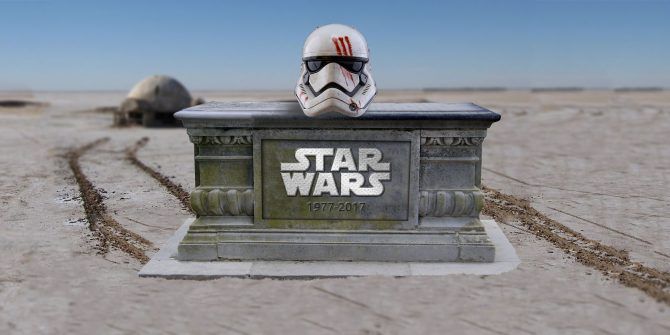
Ahh, it's that one day of the year when us Star Wars geeks get really annoying and think we're cute!  Given the day, I wanted to take a moment to reflect on the current state of Star Wars for myself.

Personally, I'm fascinated by the current era of Star Wars, but for all the wrong reasons.  I like digging into politics and management stories, especially when they fail, and the behind-the-scenes stuff on Lucasfilm lately has read like a disaster investigation, but for management.  It seems the power-struggle is, in fact, still on-going, with some weird (shady?) things going on in the background.

So it should come as no surprise that the Star Wars community is, shall we say, pretty divided over the current state of Star Wars.  One common refrain I hear is "Star Wars is dead to me."  I think that's a mistake.  It's certainly not dead for me. In a lot of ways, Star Wars is more alive for me than it has ever been before.  To my ear, that refrain sounds like when a new edition of an RPG comes out, and you dislike it, so you throw out all your old books.  The old works are still around. Just because you don't like the new stuff doesn't mean the old stuff got retroactively worse.

I will never be the guy who tells you to like something out of brand loyalty.  I think if you didn't like the Last Jedi or Rise of Skywalker or anything that's come from Kathleen Kennedy's Lucasfilm, that's your right, and you should acknowledge your experience.  There is an entire world of interesting space opera and pulp adventures that I can recommend to you instead.  But at the same time, I don't think you should throw the baby out with the bathwater.

I've really enjoyed the Mandalorian.  I've really enjoyed Rebels.  I've really enjoyed Clone Wars, and its latest season (with the exception of one episode which, while fun, you could have missed and not realized you had done so; for the "last season ever," I don't think you have room to waste on a literal filler episode; the fact that you're spending time on money on a wasted episode makes the episodes or moment you didn't do but could have seem all the more galling).  Jedi: Fallen Order is actually really good!  I'm actually increasingly curious about the other Streaming Star Wars offerings.

But for me, what's really jumped out at me hasn't been the galaxy of the future, but the galaxy of long, long ago.  As a kid, I had skipped the EU as bad knock-off of the real thing. This was a mistake.  It's got some great stuff! I've been hunting for "space opera pulp that feels like Star Wars, but isn't the familiar Star Wars" and it turns out what I was looking for was... Star Wars!  A lot of the Old Republic stuff is especially good.  I've gone through the Dawn of the Jedi, the Old Republic Comics (including, especially, the Knight of the Old Republic comic, which is some of the best stuff I've read, even if the art has varied wildly in quality over that series).  I finally sat down and beat KOTOR (I'm still trying to get through KOTOR2, which I suspect I'll enjoy more, but I keep running into technical difficulties) and while Star Wars: the Old Republic is held back by its insistence on copying Warcraft mechanics, the stories in it, and the worlds it shows you, are magnificent.

I think what writing Psi-Wars has helped me do is liberate my mind from the confines of the original trilogy and get a better feel for what Lucas was trying to do in the first place.  When I was a kid, a lot of my friends liked West End Games Star Wars, but for me, back in the early 90s, it was too bound to the trilogy.  All you could be were knock-off characters of the trilogy, and all you could do were knock-off things of the trilogy. The trilogy dominated everything and it was hard to figure out how to be creative.

But now that I've explored what inspired Star Wars to begin with and seen other people dive into new and interesting directions in Star Wars (especially in the Old Republic, the Prequels, Clone Wars and Rebels), and now that I've done it myself with Psi-Wars, I think I could do it with Star Wars.  If I were pressed to run a Star Wars RPG, I could easily whip up an innovative set of star systems with unique cultures and underworlds and exciting new bounty hunters or criminal cartels, and create a totally new Star Wars adventure.  Or I could draw on the broader material of Star Wars.  The ideal would be a synthesis of both: the familiar (to remind you that it's Star Wars) interwoven with the novel (to keep you from being bored). Given a choice, I'd rather run Psi-Wars, but mostly for similar reasons that I prefer DF over D&D: I like how GURPS runs, and I feel like I have more explicit freedom from my players when I'm running "my own thing." But I could do Star Wars, which is something I couldn't really do before.

So I suppose, in the End, I'm pretty okay with the current world of Star Wars. Sure, a lot of stuff is burning down right now, but that's often what it looks like when an era is ending.  The Star Wars community is passionate, which means passions run high, but at the end of the day, you can go to marvel streaming comics and get every Star Wars comic ever released (or close to). You have an unbelievable amount of Star Wars available to you at your fingertips on Disney+.  You have a ton of Star Wars games that go on sale every May the 4th every year. And if you tire of official Star Wars, I can show you dozens of interesting settings and worlds that will scratch that space opera itch.  It's a bumpy ride, but that doesn't mean that there isn't a ton of stuff to enjoy. You just might need to leave the guided tour to find a lot of it.

Wednesday, April 3, 2019

Rant: My problem with flexible magic systems

If we can set aside Psi-Wars for a second, I came across a video that I want to comment on before I forget it.  The video discusses essentially why Avada Kadavra is a terrible spell, and he's spot on, but this also has broader implications, especially in one of my pet peeves, and why I've not adapted RPM like the vast majority of GURPS fans seem to have.

The problem with flexible magic systems is that, despite purporting to allow unlimited flexibility in magic, they suck all the need for creativity out of a game.

(I was originally working on this when someone asked me for help on a flexible magic system so I, uh, paused it. It was also turning into something longer than I expected and I wanted to put my time on Psi-Wars, rather than a personal peeve of mine.  However, this was the Patron General Topic of the Month, so I posted it; well, actually it was a tie, but this was more ready than the other topic, so this topic went up.  If you'd like to vote on next month's general topic, feel free to support me via the link in the sidebar.  All I ask is $1 a month).

Sunday, March 17, 2019

I backed the GURPS DF Monster 2 Kickstarter

I've never backed a kickstarter before (don't have a credit card) and while kickstarters have been shakey, I do believe the "kickstarter then PDF long tail" is the future of PDFs, and it's nice to see SJGames beginning to rev up into that direction, especially since the sense I get from SJGames is that the Munchkin bubble may have burst and their attempts to navigate the dawning era of whatever the 2020s will be for gaming has been expensive and dangerous, so hopefully they'll come out of this ahead.  So I backed the kickstarter. You can back it too if you go through here (assuming you haven't already).

So why am I posting this?  Well, to preen, of course, and to earn your admiration for my good deeds. But I want to make a few points about GURPS Dungeon Fantasy based on some comments I've seen elsewhere, try to explain some of my logic and to give you some context.

I backed the $95 version, which nets me a printed copy of the DF boxed set as well as a printed copy of DF Monsters 2.  If I'm honest, I could care about DF Monsters 2. I'm sure it'll be fine, but I can buy it in PDF eventually.  What really interested me was the reprint of the boxed set of DF, as I really regretted missing that. 

Why DF?

The internet often asks what my favorite dungeon-crawling fantasy RPG is, and I have a few answers, but the deepest and most correct is usually Dungeon Fantasy not just because it's GURPS, but because what I look for in a fantasy game, DF provides in spades. For example, I often complain that fighters in D&D aren't interesting enough ("I hit! I hit again! When I gain a level, I'll be able to hit three times!  So exciting!"), that magic is too focused on combat effects, and this can be said of a lot of the mechanics of the game, that races are too samey and not particularly nuanced, and that I have a hard time really differentiating my character and I feel I lack a good variety of options. Gaining levels feels pretty rote, rather than watching the organic growth of my character. And look, DF addresses all of this out of the box simply because it's GURPS: fighters get to play with techniques and a great host of highly specific combat options that make combat feel visceral; mages get tons and tons of non-combat options (and arguably lack decent combat options, which frankly feels better to me than walking artillery platform), I can build characters however I want, and blend together multiple classes how I want or just build a character from scratch, races have a ton of mechanical nuance, and I can shift the focus of my world however I want.

Having a DF boxed set makes it more of a pick-up game, which is really what I need to show some of the newer players how GURPS works, and GURPS actually works really well for new players, which will shock a lot of people who aren't a fan of GURPS, but it's true.  GURPS is hard to learn to run, but it's not especially hard to learn to play.  What you need most is something to focus on (rather than the deep oceans of "Anything you want!") and DF does that nicely, with a familiar arena. That makes it a great entry way to the rest of the GURPS world.

I've been interested in another game called Numenara for a bit now, ever since I picked up the whole set on Humble Bundle and I was looking at buying a copy of the basic books: Discovery and Destiny. These together came to $120, plus shipping and handling.  D&D 5e, if you want the player's handbook, the DM guide and the Monster manual, comes to $150.  $95 gets me the DF boxed set.  Oh, and Monsters 2.  It's a steal, so much so that I'm worried that SJGames may have undercharged for their product.  They seem to often underestimate the production costs of their products and walk away from successful kickstarters taking a loss, and I hope that doesn't happen this time.  Regardless, if you want a complete dungeon fantasy product, you're not going to do better, bang for buck, than DF unless there's some other dungeon crawling product that I don't know about (Dungeon World maybe?), certainly not at the level of detail and support that GURPS DF offers.

"But I like Science Fiction"

So this was the comment that made me re-evaluate my position in the first place (and seeing the boxed set available finally convinced me to take that last step).  Given that I haven't run Dungeon Fantasy ever, and that I've only played in a couple of games, why should I even bother paying for it, given my focus on Sci-Fi, one that isn't likely to change (not out of a lack of interest: I'd love to do some urban occult stuff too, but because I sense a void in the market that I'm trying to fill), why bother to fork over this kind of money.

Because you shouldn't think of Dungeon Fantasy as Fantasy, but as GURPS.

I'm a big fan of math and literature ("English") and I get frustrated when I see kids who ask things like "Will we ever use this in the real world?" as though unless the world were a series of tests (such as strangers lying in wait at street corners to pounce you with algebra questions), the exercise is useless (this sort of reflexive mindest can leak its way into gaming and it causes problems there too, but that's a post for another time).  In fact, math and language skills are tools.  The same people who ask if anyone will ever actually use algebra in the real world are the same sort of people who recoil from GURPS Vehicles as "too hard," not realizing that engineering a real world vehicle is even harder. The world is a sandbox full of possibilities that are easier to tackle if you have communication and STEM skills (determining the shortest route between two places; accounting and coding complicated things into your spreadsheet; working out why gambling is always a horrible idea, especially lottery tickets; dazzling a lovely lady with wordplay; articulating why people should follow your proposed policy; getting your kids to listen to you, etc).

GURPS is like Math and English: it's not there to solve a specific problem, but is instead a great toolbox to let you build your own solution to whatever gaming problem you have.  And just because it labels a particular product as belonging to one genre doesn't mean it's useless to you for another genre.  Let me list just a handful of books that aren't in the sci-fi genre that apply to Psi-Wars:
  • GURPS Action
  • GURPS Action 2
  • GURPS Action 3
  • GURPS DF 3: The Next Level (especially for its races)
  • GURPS DF 16: Wilderness Adventures
  • GURPS Powers: Divine Favor
  • GURPS Thaumatology
  • GURPS Thaumatology: Magical Styles
  • GURPS Thaumatology: Sorcery
  • GURPS Horror
There are quite a few that are, genre-wise, on the borders of generic enough, or I would start to get repetitive, but all of these have played fairly key roles in the design of Psi-Wars, which is a sci-fi setting.

"But is it really, Mailanka? Isn't it more space fantasy?"

Personally, I dislike the term space fantasy. I don't know why "space opera" isn't good enough anymore, but fine: the structure of DF has informed every campaign framework book that has followed it.  It provides numerous ideas on how to handle specific elements, like henchmen, races, power-ups and load-outs, in compact and useful ways, discarding superficial elements to get what you want.  I got started on this sci-fi kick by working on a GURPS Captain-and-Crew set up that has evolved into all of this, and I got started with that after seeing Dungeon Fantasy.

Yes, the line does eventually begin to get into more specifically pertinent material.  Rather than fantasy templates, you want sci-fi templates, rather than fantasy henchmen, you want sci-fi henchment, and so on, but the innovation begins with DF, which sells, and only after, does it spread to the rest of the frameworks, and even if it never does, all of GURPS is mutally compatible.  This is not The Fantasy Trip they're selling, or Munchkin, but GURPS.  Even if they never produce any more sci-fi than they already have, their DF line would continue to provide plenty of "how to" inspiration for you to build your own sci-fi game from it (and they will continue to build more sci-fi content).

So that's why I backed the kickstarter, even though it seems counter to my interests.  My interests are broader than just space opera and even if they weren't, they're still well served by GURPS continuing with DF.

Tuesday, June 26, 2018

On the Demise of Star Wars

"You were the chosen one"? Or maybe "Strike me down
and I shall only become stronger."
Forgive the provocative title.  My part of the internet bubble churns with much rage at the current incarnation of Star Wars, and especially at Kathleen Kennedy, at whose feet the perceived "Ruined Forever!" has been laid.  There is much angst and schadenfreude over the failure of Solo, but Solo is the crux of what inspired me to write this, as it's the first Star Wars movie in a long time that wasn't an instant "yes," though not the first Star Wars product in a long time that I had looked forward to, and then changed my mind about.

Then I put this post on ice, because I hesitate to post anything that sounds remotely political in this day and age as discourse is getting extremely divisive and it's hard to please both sides (and there are sides here) when you say anything, and because I have better things I should be putting my attention towards (the next post is almost done, I promise!). But as news continues to evolve and the corporate narrative of "a few disgruntled trolls vs the Last Jedi" explodes to reveal that the Star Wars franchise is Not Okay, I wanted to get my two cents in, especially given how my blog seems to eat, drink and breath Star Wars.

I hope you forgive this opinion piece.

Monday, April 24, 2017

Presenting Theodore Cayden Dover


He was born April 21st, 2017.  He is the first born son of the first born son of the first born son of the first born son of the first born son of Flix Dover, and the third in that line to bear the name Theodore. He's also super cute.

Obviously, as a first time dad, I have less time for things than I did before.  I don't know what that'll do for the blog, but it'll be a little touch and go for a bit.  I appreciate your patience.

Saturday, January 7, 2017

Mailanka Rants: It's okay to like bad movies

So, a friend recently linked me to this guy's channel on movie editing and criticism, and he gets into some pretty deep stuff, but the one that leapt out at me, that I felt demanded greater discussion, was this video.  The question he is asked is this:
Jurassic World: I liked the movie because it felt like a bad B-movie.  Do you think movies can be genuinely good because of their "badness"?
 To which Folding Thoughts stumbles a bit, because how can you call something good because of its badness?  Then he begins to discuss genre, but I think his initial confusion signaled something important: the questioner framed his question badly, and I think I know why.

The question isn't really "Can bad movies be good?"  but "Is it okay for me to like a critically panned movie?"

The answer is yes.  It's also not the point.


Monday, July 25, 2011

Burn Notice vs Covert Affairs

Burn Notice
A former CIA agent is mysteriously dismissed from his job, burned, and suddenly finds himself on the run from enemies he didn't know he had, trying to uncover who burned him and why, with only the help of his extensive experience, a few old contacts, and a really cool car.

Covert Affairs
The girl next door with a knack for languages decides to serve her country by joining the CIA.  She quickly finds herself in over her head, but adapts quickly to the demands of the job with the help of a blind former field agent and her mysterious lover who vanished one day (and seems connected to the CIA in some fashion).

Both shows by USA, on USA right now, both solid shows about spies, and yet they have marked differences. The first is clearly meant for boys: It constantly shows flashes of hot chicks in bikinis, there's lots of explosions, the main character is a tough loner that doesn't need nobody (and yet has good friends, including the gorgeous girl who desperately wants into his pants and the drinking buddy), they drive a totally cool car, and Michael solves many of his problems with tactics, forethought, and sweet gadgets he invented himself by working in a garage.  The second is clearly meant forgirlss: It's about a babe-in-the-woods character who needs to learn to adapt quickly.  There's an interesting male character in every episode, and she tends to succeed by understanding the people involved and navigating a very tangled set of relationships in storylines that seem ripped from the pages of romance novels.

Bee and I enjoy both, and it certainly confirms my thoughts on spy series appealing both to men and women, since they contain elements that stereotypically fascinate both genders.  They also highlight, I think the difference between genders when it comes to roleplaying... and the common ground they usually find.  After all, everyone likes relationships, even if they approach them differently, and everyone likes totally sweet action, again, even if they approach it differently.  Mainly, the difference between the two comes down to angles and perspectives.

Personally, though, I'm hoping for an inevitable crossover ^_^

Tuesday, July 12, 2011

Subtext and the Art of Painting Without Words

Let me begin with two stories.

Recently, I turned my Arts of Rhetoric posts into actual lessons at recent Tea@Knights, which turned out to be quite popular.  Marco, in particular, enjoyed it.  He told me that he'd long had a dissatisfaction with how flat some scenes felt, and had begun (without knowing it) practicing elements I discussed, like "Show, don't tell," and "Active Voice," only he called it "Painting with Words."  Like me, he felt that showing people the world on a visceral level was a vital element of running a good game, that you had to let people see what the dungeon looked like, and that it wasn't enough to tell them about it.

Further back, back at the Summer Weekend, returning to Desiree's Steampunk Gypsies, I had another interesting experience, though it had little to do with Desiree herself.  I played this conservative, rugged gypsy with a horse, who (obviously) fell in love with a dancer gypsy.  Of course, he never claimed to be in love.  He worried too much about his kin to take the time to romance this beautiful girl. Instead, he taught her to ride horses, revealed his dream of rebuilding a whole herd of gypsy steeds, and worked on getting his brothers married while ignoring his own needs.  Every player could see that my character and she were madly in love, but neither of them admitted it, neither of them actually said those words.

In contrast, we had another player, and I'm not condemning his approach, merely highlighting the difference, who played a suave, sexy gypsy dancer-boy, who tried to sweep this innocent and younger girl off her feet.  After a dance, he said (and I quote), "I tell her, without sounding like some middle school kid, that I like her."

Both of these stories touch on the truth that a story is about showing people what's going on, rather than telling them.  In the first romance, we showed the audience everything they would see: awkward moments between two passionate people, the way a proud man refused to admit his need but still cast longing glances at the beautiful girl, or the way she tried to dance for him even while dancing with another man, or the way watching her dance with another man made him lose his concentration while playing his guitar.  In the second romance, the storyteller informs the audience "Hey, these two people are in love."  Personally, I agree with Marco, and I prefer the former approach to the latter.  I feel it's better to show, rather than tell.

While discussing description, Jozef touched on this very thing when he said "How to do you make something scary without saying that it's scary?"  One of the key elements of Marco's "Painting with Words" is that you don't come out and say what things are.  Instead, you let the player draw his own conclusion.  When you describe a man as "Looming," and "Dark eyed," with a "sinister smile," you don't need to say "And he's scary."  The player is capable of deciding that for himself, and his scariness is rather obvious, if you paint the right picture.

But this applies to broader concepts as well.  When you begin to discuss situations, you can do so without saying "And this is going on."  You can simply outline events: A boy brings a girl flowers, a bright smile on his face.  A girl laughs, covering her mouth.  The flowers end up on the ground, petals broken and drifting on the wind as the boy walks away.  The girl's laughter fades as she watches him walk away, tears glistening in her eyes.  We don't know what happened.  We can guess.  We might want to know more, but it's more interesting than saying "A boy thought a girl loved him, and she did, but she feels they cannot be together and so broke his heart to chase him away."

People like games.  People are clever.  You don't explain the punchline of a joke to them, you let them ferret out the implications of your words.  Likewise, you don't start the murder mystery by explaining whodunnit.  You don't even point out the clues.  You let the reader realize what's important and what isn't and then put together the truth.  People don't want to be told that two people are in love.  They want to see it, they want to guess, they want to gossip based on events.  People want to exercise their brains.  In many ways, the whole point of role-playing games is the art of turning abstract situations ("Three medieval warriors face ten ravening monsters under the ground.  What happens?") into an immersive scenario where players lose themselves in what's going on.

And that requires less, not more.  Sometimes, what you don't say is more important than what you do.  Sometimes, you must paint without words.  Leave things unsaid, unspoken, and merely imply them with your silence.  Rather than show people something, refuse to talk about it and create powerful implications by describing everything around it.  Just as a tough, lone-wolf guy might never admit he's in love, you might never actually describe the feelings involved and let the players guess (Oh, in WotG, we had one of those great, unspoken romances and the player in question was so angry when our Secret-Art-wielding Scholar tried to force them to talk about it...).  Leave gaps, and let the players fill it in with their own imagination and speculation while smiling and listening.

Real life doesn't hand you answers.  It merely has events you witness, often without proper context.  The closer a role-playing game is to real life, the more immersive it is.  The next time you want to run a romance, I encourage you to not describe the feelings of those involved and merely imply them based on their actions.  The next time you run a horror, consider refusing the describe the monster beyond the evidence he leaves behind (the gashes in the victims, the sickly sweet smell that foreshadows his attacks).  Remember to show, rather than tell, and remember that some things you neither show nor tell, that you leave unsaid, that you merely imply with everything else.

Subtext.  Painting without words.

Sunday, May 1, 2011

Allegria is already pregnant

I just finished the Spring Weekend, and I'll tell you more about it when I'm better recovered.  Spoiler: It went great.  Probably one of the best weekends that I remember.  But with the weekend over, and Cherry Blossom Rain revealed to the world, it's time for me to let that field lie a little fallow, lest I burn out, and to focus on my next big project: Extending Lady Blackbird for Bee, her birthday present.

Bee plays very differently than I do, and so expanding Lady Blackbird involves thinking very differently than I generally do.  What does this have to do with Allegria and why she's pregnant?  Let me explain:

Desiree ran a game about "Steampunk Gypsies."  I'll tell you more about it later, but for now, I want to tell you what I discovered after the game was over and I peeked at her "notes."  She had a few pictures of NPCs, a list of a few names, and a small list of events, including "Allegria is already pregnant."  Allegria was one of the NPCs, a beautiful dancing girl who fell for my character, and at no point was she pregnant.  So why had she written this fact down? Because, as Desiree explained, she didn't know how the story would play out until she actually began to run it.  She had listed numerous little "ideas" to draw inspiration from on the spur of the moment.  Perhaps a romance bloomed with Allegria too quickly and she needed conflict, and thus, it would occur that she was already pregnant.  Or perhaps Desiree would need some other complication to keep the game spicy, so she'd draw on something else.  Or perhaps, as was the case this time, the player would feed her a neat idea that she could run with.

In some ways, as I said to her, that's really not different from how I run things.  She notes interesting ideas as a sentence, I note them as a full paragraph, but in retrospect, I don't actually think that's true.  When I put together a game, I envision it in great deal.  I can see scenes playing out in my mind.  For example, I ran a scene in Cherry Blossom Rain where the Witch of Jukai offers to "free" Yukiko from the terrible grasp of Ren.  I could see her fox, could smell the scent of her swamp, see her j-horror features looming in Yukiko's mirror.  I write those paragraphs because I can see them, like a movie, and I need, very much, to make those scenes more likely, more probable.  I come in the game knowing, more or less, what I want.  I still need to be surprised, I still need the game to flow and change based on what the players do, but those scenes often drive my inspiration like no other source.

What she does, what Bee does, is ultimately different, I think.  I believe they simply walk into a game with no expectations.  They have a premise and little else, and what happens, happens.  They want to have a fun game, and like me, they want to drive the action, though they drive it less towards actual, concrete scenes and more towards general themes that they enjoy: Desiree drives her game towards romance and tragedy, and Bee drives her game towards action and adventure.  What they need isn't details, but inspiration that they feed into the game like one feeds tinder into a dying flame.  They guide the flame, they stoke it, but they don't truly control it.

Returning to Lady Blackbird, what I think Bee really needs amounts, essentially, to a giant book of lists containing things like "Allegria is already pregnant."  Lady Blackbird, in particular, excels at this.  The game master needs only supply the difficulty level and, if necessary, the consequences of the players' action.  It presents those difficulties in the form of story-ideas: "A sky-squid attacks! Difficulty X to defeat it, with the danger of being lost or wounded if you fail!"  It gives you a difficulty, yes, but mostly, it just suggests that Sky Squids exist, and offers the idea that, perhaps, one might attack.  Instantly, you have a potential story idea, one that's useless for many GMs, but one that's rich fodder for one like Desiree or Bee.  I need more, but they need less.  Simple, small and beautiful, little seeds that bloom into full stories.

That's what my book will be: Little seeds.

Monday, October 18, 2010

HotBlooded: Release Day

I've heard nothing from my editors, meaning that there's no disaster in my material, and that means: Release day. I have a few things to work out, but I'll be editing this post with constant updates.  Because I know you guys are totally watching this blog breathlessly.  Look, I'm excited, awright?  Awright.

^_^

Release day!

EDIT: Character sheets separated, and PDFed.  Cover Sheets complete.  Waiting on word about release.

EDIT: They want to have a meeting first.  Ok.  But that means we won't see release until sometime after 5:00 pm :(

EDIT: They've decided they want to send all the sheets themselves, so I went to bed.  Got to zip them all up now.  It'll be a bit.  Hopefully today, though.

EDIT: It should be out!  Enjoy!

Wednesday, October 6, 2010

Back from the Dead (Again)

I think I mentioned that I was fighting computer troubles before.  They finally metastasized into a full-blown crash (helped by human hands when a well-meaning Bee did exactly the same thing that lead to the crash I created the last time. Now we both know that's a bad idea).

Fortunately, I learned a lot from the first crash, and since it had been flailing for a week, I had everything prepped and prepared, and so when it finally collapsed, I had it up and running again after a single night of work.  Better than I expected!  And no real loss of data (though I seem to have lost a CD I bought from iTunes, as it seems they don't "keep" them the way pdf sites or Steam does.  Might think about that the next time I buy from them...).  Anyway, it's good to be back.

Monday, August 16, 2010

After Action Reports: Your thoughts?

I've found some RPG blogs that simply sum up a previous session quickly, a few brief notes on what occurred, perhaps to refresh memory at a later time, or to give outsiders a little glimpse of what they're doing.  Also, it's pretty easy to do.  On the other hand, some seem to go all out, not just giving some description, but lavishly describing everything.  When I wrote an Actual Play of Slaughter City with such detail, I received a huge response from those reading it (but, due to the weight of it, never got to the second, especially with the fact we never got past three sessions).  I haven't tried that here because I thought nobody wanted to read pages of After Action Report... but perhaps you would like to.

So what are your thoughts?  Like 'em short and sweet, or do you want to read depth and detail on what other people are playing?  Leave a comment!

Houses of the Blooded: the Beauty of Systems

I literally had a three-hour sit-down with one of my players because she was curious about the system (but didn't want to look stupid asking alot of questions: Trust me, asking someone about a system doesn't make you look stupid), and a sticky question came up:

"Say I want to just sneak past someone.  Why can't I, you know, just sneak past him?  Why do I have to roll it out."

It's actually the sort of question that routinely plagues RPGers.  Why use a system at all?  Some people get huffy: You use a system because you're supposed to.  But that's a cargo cult, people who do something because, well, that's just the way it's done.  I use systems because they are beautiful and, as one RPG.netter elegantly put it: "Rules shape play."

The player in question will be under the shadow of the Fox and as I've designed the game, she'll be loaded to the gills with Style (especially since she loves costumes) but her house lacks the resources and military power of other Houses. This will shape their ability to play the Great Game, shape who they ally with and why.  Her high cunning and beauty rewards her when she wants to play in an underhanded fashion or engage in romance, both of which are perfect for her, and her low prowess and strength punish her when she attempts to engage in combat and "adventuring."  Tricks like the Black Kiss, Chambers of the Heart and the Most Subtle Weapon highlight the Fox's dangerous mastery of romance, and their subtle ability to manipulate, in complete contrast to the Wolf's All War All The Time tricks of Tooth and Claw or the Invisible Cannot Be Touched, or the Bear's defensive, motherly tricks like Circle of Protection and No Fool.

Play must inform the rules.  As interesting ideas come up, they should receive representation within the abstract mechanics of the game.  Rules must inform play.  As you run headlong into rules, they should shape how your story flows, preferably in interesting ways.  Where rules do not do this, rules should get out of the way.

This is one of the reasons I selected Houses of the Blooded.  John Wick's philosophy agrees with mine.  Aspects, Virtues, Blessings, Resources, all shape how the game plays out (Ever notice how Serpents all have a bunch of swamps so they can harvest herbs for their rituals?  Ever notice how those same swamps produce poison?  Food for thought...).  But unlike how our local Changeling group LARPs (using the standard, tabletop rules), roleplaying doesn't grind to a halt whenever a mechanical challenge comes up.  They just played a session of "war" where everyone had to sit down for hours rolling dice.  Houses of the Blooded would tackle that faster, more interestingly, and in a way that suits the LARP environment (using the Hunting/Mass Combat rules, in fact.  Those with my version of Tooth and Claw would rejoice!)

She's learned to avoid rules.  I suspect she does this because she believes that "she doesn't get them."  I think, rather, that rules have harmed her play, so she's discarded them, a completely reasonable approach.  I hope and believe that Blood and Tears offers rules that will facilitate, rather than slow, play and I suspect she'll actually use them (bribing someone with a couple of style tokens is easy and casual and requires memorizing nothing).

The real reason I wanted to post this: Making the characters has been a joy. I'm almost finished, in fact (just have the Falcon left to go), and the process highlights why I love good systems.  Poring over the Blessings and the other concepts in the game has shown me the "shape" and the "feel" of each house and how the game works.  I delight in that exploration, and I hope the color and flavor shows when people actually play.  Houses of the Blooded is very elegant: With just a few simple rules, you can explore so much with such detail.  Yes, it's "rules-lite," but it doesn't lose richness as it shed complexity.

Thursday, July 29, 2010

Sunday, July 25, 2010

Callousness

I've made a mistake.

The SJGames forums has a discussion on the Callous disadvantage, primarily on how its disadvantages seem highly situational while its advantages seem rather common.  In particular, the -1 it applies to reaction rolls only applies if people have suffered your cruelty before, or if they have Empathy.

In G-Verse, all Tennin, including their little Goblins, have some level of Empathy (even the Goblins are Sensitive).  I've had the Goblins, in particular, react well to Lieutenant Sam Abrams, but she's known for her Callousness.  Thus, they should probably react in a negative fashion to her.  I'll have to discuss this the next time she's in the game, and try to remember that Tennin should generally dislike Callous characters.
Related Posts Plugin for WordPress, Blogger...